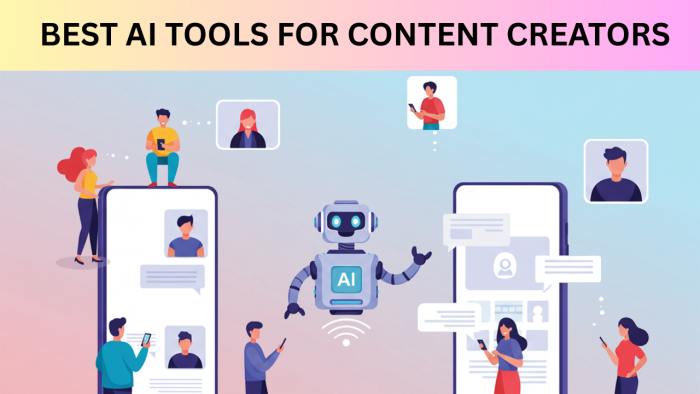
Artificial intelligence has quietly moved from being an optional productivity enhancer to becoming the operational backbone of modern content creation. Whether someone produces long-form educational blogs, short-form vertical videos, email campaigns, product marketing funnels, or social storytelling threads, AI tools now shape the speed, structure, and scale of output. However, not all tools operate at the same level of sophistication, nor do they solve the same problems.
Let’s examine each major tool deeply and realistically.
ChatGPT remains one of the most widely adopted AI systems in creative workflows because it functions less like a template generator and more like a collaborative assistant. Clearscope’s review emphasizes how AI writing tools have evolved from simple content spinners into structured ideation partners, and ChatGPT exemplifies that shift.
What makes ChatGPT powerful is its adaptability across use cases. It can generate blog drafts, outline YouTube scripts, refine brand tone, rewrite headlines for emotional impact, summarize research papers, draft LinkedIn thought leadership posts, and even simulate interviews for case studies. Its strength lies in iterative refinement. A creator can produce five variations of an introduction, then instruct the system to adopt a more authoritative tone, inject storytelling, or align with SEO goals.
However, ChatGPT requires strong prompt engineering. Weak prompts produce predictable, generic writing patterns. The tool does not inherently “know” brand voice unless explicitly guided. Furthermore, it does not include built-in SEO competitor scoring or keyword optimization dashboards like specialized SEO platforms. It is best used as a creative drafting partner rather than an autonomous publishing engine.
For content creators who understand direction and structure, ChatGPT becomes a multiplier. For those expecting instant perfection, it often disappoints.
Jasper appears frequently in AI writing comparisons because it was built with marketers in mind rather than general users. According to industry evaluations like Clearscope’s comparison, Jasper distinguishes itself through campaign-based workflows rather than open-ended prompts.
Jasper excels in environments where a creator needs structured output for sales pages, email funnels, ad variations, and landing pages. Its brand voice memory allows teams to maintain tone consistency across multiple pieces of content. For agencies managing several clients, that continuity is operationally valuable.
However, Jasper’s pricing tiers are significantly higher than some competitors, and long-form content still requires human editing to avoid repetitive phrasing. It is optimized for conversion-focused writing rather than deep narrative storytelling. Creators focused on editorial journalism or nuanced thought leadership may find its outputs overly templated without customization.
Its true strength lies in scaling marketing operations rather than artistic expression.
Copy.ai, visible through its tools overview, targets speed over literary depth. It shines when generating email subject lines, ad copy, product descriptions, and short-form social posts.
What differentiates Copy.ai from broader AI systems is its template ecosystem. Rather than prompting from scratch, users select content categories, define parameters, and generate multiple variations rapidly. For growth marketers running A/B tests, this dramatically reduces turnaround time.
However, Copy.ai is less suited for 2,000-word analytical blog posts or investigative long-form content. Its outputs are optimized for persuasion and brevity rather than depth. Many creators use Copy.ai in combination with broader systems like ChatGPT to handle different layers of workflow.
Its role in the content ecosystem is tactical acceleration, not comprehensive authorship.
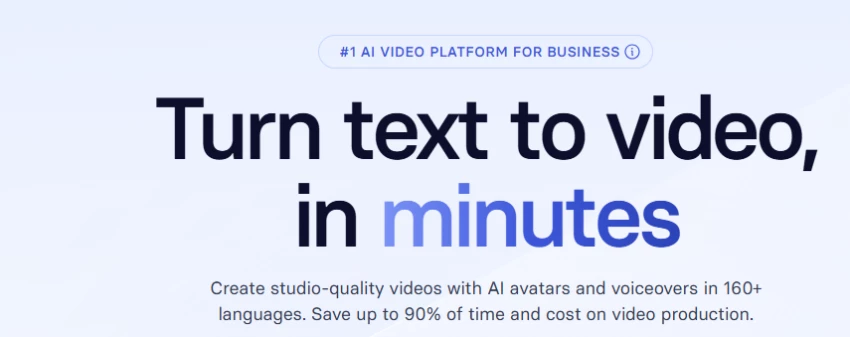
Synthesia represents a different category of AI creativity: avatar-based video production. Instead of filming a presenter, creators input a script and generate a polished spokesperson video using AI avatars capable of speaking multiple languages.
This tool is particularly powerful for training modules, onboarding videos, internal corporate communication, product explainers, and multilingual campaigns. Its efficiency lies in eliminating filming logistics. No cameras, no lighting setups, no studio rentals.
However, Synthesia’s realism is optimized for clarity rather than cinematic storytelling. It is not meant to produce dramatic narratives or emotionally layered films. It excels in structured communication. For businesses requiring consistency across global teams, Synthesia can significantly reduce production costs and localization timelines.
It replaces logistical friction rather than creative artistry.
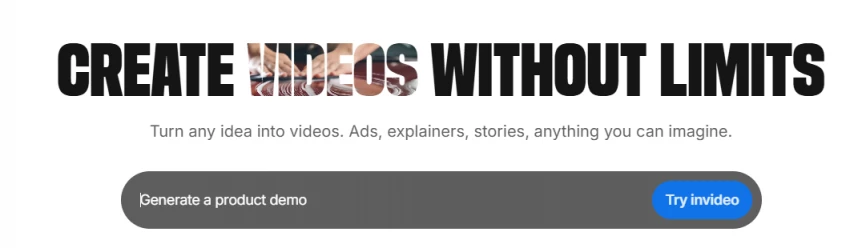
InVideo’s AI generator converts written prompts into structured social-ready videos with automated visuals, transitions, and captions. It targets creators who need rapid output for Instagram, TikTok, or YouTube Shorts.
Its strength lies in accessibility. A non-editor can input a concept and receive a visually organized video draft within minutes. For short-form creators operating on high posting frequency, this tool compresses production cycles dramatically.
The limitation is creative uniqueness. AI-generated visuals often require manual refinement to avoid looking templated. High-end cinematic storytelling still benefits from manual editing.
InVideo works best for speed-driven creators, not film purists.
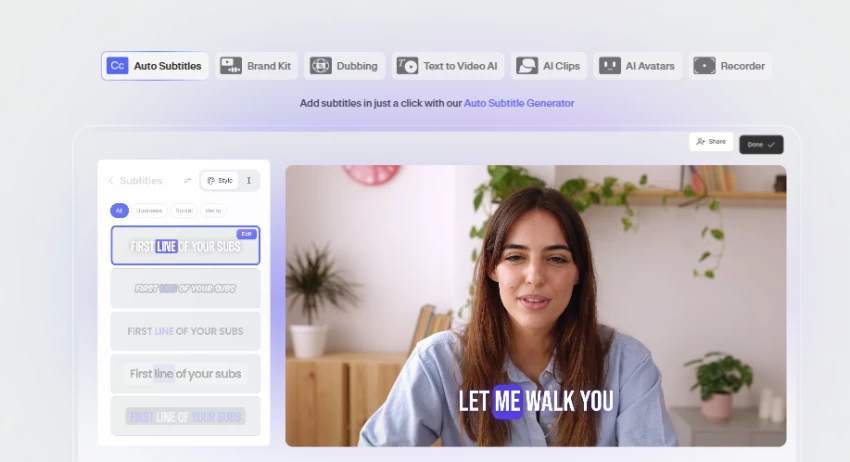
VEED, accessible at https://www.veed.io/tools/ai-video, focuses on editing optimization rather than raw generation. It automates captions, silence removal, background noise reduction, translation, and formatting adjustments.
For podcasters and YouTubers, this eliminates the most tedious post-production steps. Captioning alone can save hours per week.
VEED does not replace creativity, but it dramatically improves efficiency. Its impact is measured in saved time rather than artistic novelty.
Piktochart’s social AI guide highlights AI’s role in infographic and visual storytelling automation. Piktochart excels at converting raw text or statistics into structured visual slides and presentations.
For LinkedIn creators publishing carousel-style educational posts, this tool reduces design workload significantly. It helps translate information into digestible visual formats.
However, brand-level design precision still requires manual adjustment. It simplifies structure but does not eliminate aesthetic responsibility.
Reddit discussions such as https://www.reddit.com/r/aipromptprogramming/comments/1m4p6dd/whats_the_best_ai_tool_youre_using_right_now_for/ reveal that most creators do not rely on a single platform. They layer tools strategically.
A common workflow might involve ChatGPT for ideation, Jasper for email refinement, InVideo for short-form clips, VEED for polishing, and Piktochart for visual storytelling.
The winning formula is not “one tool to rule them all.” It is intelligent combination.
The best AI tools for content creators are not necessarily the most advanced or the most hyped. They are the ones that fit naturally into your creative rhythm.
Writing-focused creators need adaptable drafting engines. Video-focused creators need editing acceleration. Social creators need design automation. Marketing teams need campaign scalability.
AI does not eliminate creativity. It reallocates effort away from repetitive tasks toward strategic thinking and storytelling.
Be the first to post comment!
Whitney Scott Mathers, today known as Stevie Laine, is one of the most discussed...
Sakshi Dhingra2 months ago
Introduction: Why People Want to Download Instagram StoriesInstagram Stories are...
Parveen Verma3 months ago

TikTok has its own secret language, and no, we’re not just talking about inside...
Sakshi Dhingra4 months ago
Ever captured a great photo and later noticed an annoying distraction—maybe a st...
Sakshi Dhingra4 months ago
What Exactly Is Granny Space? The Fine Print They Don’t Lead WithAt first glance...
Sakshi Dhingra5 months ago
Late one night, I stumbled across ChatBlink, a free random chat platform that pr...
Sakshi Dhingra5 months ago