Technology
7 min read
HINAI Web: A Complete Hospital Management System
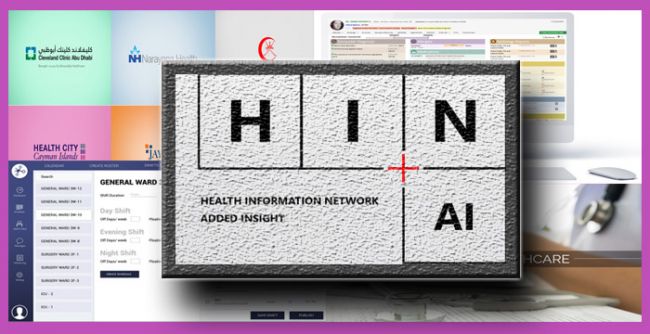
Healthcare operations have grown significantly more complex over the last decade. What once could be managed with paper files and manual billing now requires an integrated digital infrastructure capable of handling patient records, laboratory workflows, pharmacy inventory, compliance documentation, and financial tracking, all simultaneously.
This is where hospital management systems (HMS) enter the picture.
Hinai Web positions itself as a complete hospital management system designed to streamline clinical and administrative processes under a unified platform. But what does that actually mean in practical terms? And more importantly, who is it best suited for?
Let’s break it down.
Hinai Web presents itself as a web-based hospital management system, which typically means it is designed to be accessed through a browser rather than installed on individual machines. This type of architecture generally allows healthcare institutions to access the platform across multiple devices and departments without complex local installations. It also makes centralized updates more practical, as system improvements can be deployed across the network without requiring manual upgrades on each workstation, unlike many traditional on-premise systems.
From an operational perspective, hospital management systems built on web architecture are usually designed to improve administrative efficiency at scale. By digitizing patient registration, consultation records, billing workflows, and inventory tracking, they aim to reduce reliance on paperwork and manual reconciliation. Billing processes often become more accurate because charges are directly linked to recorded services, minimizing human calculation errors. Real-time access to patient records across departments can also enhance coordination between clinical and administrative teams. In addition, centralized data storage reduces information silos, which are common in fragmented hospital environments where departments operate on disconnected systems.
When implemented effectively and supported by proper staff training, such systems can significantly reduce operational friction. They streamline data entry, minimize duplication of patient information, and create a more unified workflow across outpatient, inpatient, laboratory, pharmacy, and billing functions. In healthcare settings where multiple departments interact continuously, this level of integration can make day-to-day management substantially more structured and predictable.
While hospital management systems often differ in depth and customization options, Hinai Web appears structured around the core operational pillars of healthcare institutions.
Patient Registration and Front Desk Management
The system enables structured patient registration, capturing demographic information and generating unique patient IDs. This foundational module supports appointment scheduling, outpatient tracking, and record continuity across departments.
Centralized registration reduces duplication and ensures that patient data remains consistent from admission to discharge.
Outpatient and Inpatient Workflow Management
Hinai Web supports both OPD and IPD operations. For outpatient services, the platform allows doctors and staff to record consultations, prescriptions, and follow-ups. For inpatient management, it tracks admissions, room allocations, treatment history, and discharge processes.
By digitizing these workflows, the system aims to minimize manual record-keeping errors and improve coordination between departments.
Electronic Medical Records (EMR)
A significant component of modern HMS platforms is electronic medical record integration. Hinai Web enables storage and retrieval of patient medical history, diagnostic reports, prescriptions, and treatment documentation within a unified interface.
The availability of centralized digital records supports faster clinical decision-making and reduces paperwork dependency.
Billing and Financial Management
Billing integration is one of the most operationally impactful aspects of any HMS. Hinai Web connects services rendered — consultations, lab tests, pharmacy purchases, procedures, directly to billing modules.
This linkage reduces discrepancies between clinical services and invoice generation. It also simplifies reconciliation and reporting for finance teams.
Pharmacy and Inventory Control
Managing pharmaceutical stock and medical supplies is critical in hospital environments. Hinai Web includes inventory tracking that helps monitor stock levels, purchase orders, and usage rates.
Effective inventory oversight reduces both stock shortages and over-purchasing, contributing to cost control and patient safety.
Laboratory Integration
Laboratory modules within Hinai Web allow diagnostic test orders to be recorded and results to be linked directly to patient records. This integration reduces redundant data entry and supports efficient reporting between laboratory technicians and physicians.
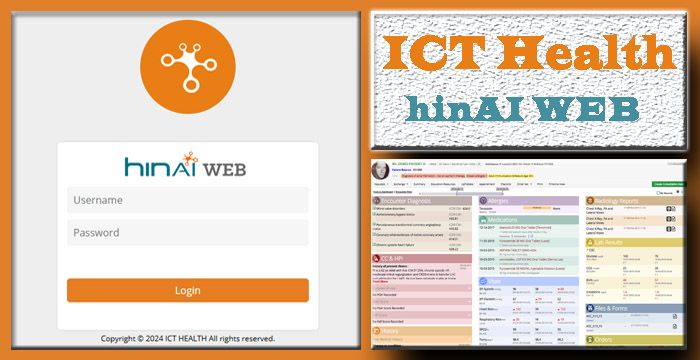
HINAI Web provides complete hospital automation. It connects all departments of the hospital to work together smoothly. From front-desk to pharmacy, every process becomes simple and quick.
It also includes:
These services reduce paperwork, save time, and improve care quality. Hospitals using HINAI Web can offer faster services and manage resources better.

Hospitals that use HINAI Web see real improvements:
Though detailed case studies are not public, many hospitals using this system report higher patient satisfaction and smoother workflows. For more information, users can reach out to ICT Health.
HINAI Web does not operate on a publicly listed, fixed pricing model. Instead, ICT Health follows a customized pricing approach, meaning the total cost depends entirely on the specific requirements of the healthcare institution implementing the system. This is common among hospital management software providers because no two hospitals operate at the same scale or complexity.
Pricing is typically influenced by several core variables. One of the primary factors is hospital size. A small specialty clinic with limited departments will require significantly fewer modules and user licenses compared to a multi-specialty hospital with inpatient wards, laboratory units, pharmacy operations, and administrative departments. As system scope expands, so does pricing.
The services and feature set selected also directly impact cost. HINAI Web includes multiple functional modules, such as outpatient management, inpatient tracking, electronic medical records, billing integration, pharmacy inventory, laboratory systems, and reporting dashboards. Hospitals may choose to implement only essential modules initially and expand later, which can alter the overall pricing structure.
Another important variable is the number of system users. Access permissions are usually assigned to roles such as doctors, nurses, reception staff, laboratory technicians, pharmacists, and administrative personnel. Institutions with a larger workforce requiring login credentials will typically incur higher licensing costs due to expanded access and usage capacity.
Deployment type further affects pricing. If the system is deployed via cloud infrastructure, costs may include hosting, maintenance, server management, and periodic updates bundled within subscription models. On-site (on-premise) deployment, on the other hand, may require upfront infrastructure investment, including local servers, IT setup, and maintenance support. Each deployment model carries different cost implications over time.
Beyond base licensing, hospitals should also clarify whether implementation fees, staff training, customization requests, data migration from legacy systems, and technical support services are included in the quoted package. These often represent a significant portion of total cost of ownership.
Since HINAI Web follows a tailored pricing approach, hospitals must contact ICT Health directly for a detailed quotation. The vendor typically evaluates operational size, departmental structure, required integrations, compliance needs, and long-term scalability before proposing a pricing estimate.
In practice, this means decision-makers should approach pricing discussions with a clear understanding of their institutional needs rather than expecting a standardized package rate. A customized quote allows alignment between budget and functionality — but it also requires careful evaluation to ensure transparency in cost breakdown.
Hinai Web presents itself as a structured, web-based hospital management system aimed at centralizing clinical and administrative functions within healthcare institutions.
Its strength lies in integration, bringing together patient records, billing, laboratory operations, and inventory management into a unified digital environment.
However, suitability depends on careful evaluation of deployment architecture, data security compliance, training support, and long-term scalability.
For hospitals seeking operational digitization without maintaining complex local installations, Hinai Web may represent a practical step forward, provided due diligence is conducted.
Technology in healthcare should reduce friction, not introduce it.
What is Hinai Web?
Hinai Web is a web-based hospital management system designed to integrate patient management, billing, pharmacy, laboratory, and administrative workflows within healthcare institutions.
Is Hinai Web cloud-based?
It operates through web architecture, but deployment specifics should be confirmed with the provider to determine whether it is fully cloud-hosted or requires on-premise infrastructure.
Does Hinai Web include EMR functionality?
Yes, the system includes electronic medical record capabilities for storing and managing patient clinical data.
Who should consider using Hinai Web?
Mid-sized hospitals and growing healthcare facilities seeking centralized digital management are likely the most suitable candidates.
Is Hinai Web suitable for small clinics?
It may be more comprehensive than required for very small clinics, depending on operational complexity.
Be the first to post comment!

Managing remote employees is very different from managing people in an office. W...
Sakshi Dhingra2 weeks ago

A school gradebook sounds like a simple thing until you watch what happens when...
Sakshi Dhingra2 weeks ago

The Growing Buzz Around EditPro in the AI Editing SpaceIn 2026, the name “EditPr...
Sakshi Dhingra3 weeks ago
When I first started deploying large language models, I assumed that choosing th...
Sakshi Dhingra3 weeks ago

Few software websites have survived as many internet eras as Softonic. Launched...
Suraj Malik1 month ago
PDF files are everywhere, from business contracts and academic papers to invoice...
Suraj Malik1 month ago