Reviews
7 min read
Is Wava AI Really a Shortcut to Viral Content or Just Another Tool Creators Will Regret Trusting?
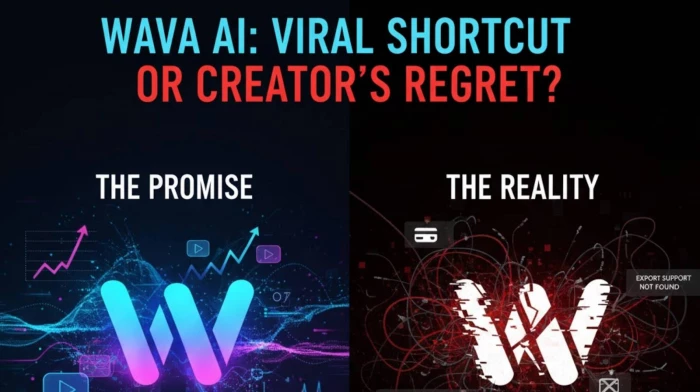
Every few months, a new AI video generator appears promising to “automate virality” for TikTok and YouTube Shorts. Most disappear quickly. Wava AI, however, has stuck around long enough to build a reputation — though not always the kind it hoped for. TikTok creators rave about easy wins, Reddit threads show unexpected overnight views, and reviewers describe a tool that can turn a text prompt into a complete short-form video in under a minute.
Yet beneath these success stories lies a trail of complaints about billing traps, missing support channels, broken exports, and a subscription system some users call “impossible to escape.” Few AI startups experience such polarized feedback so early in their lifecycle. The result is a platform that simultaneously enables beginners to publish videos faster than ever and frustrates them in ways that feel avoidable.
This review examines that contradiction up close: the hype, the results, and the very real risks many creators discover only after their credit card is already on file.

Wava AI’s pitch is easy to understand, and that’s why it spread so fast.
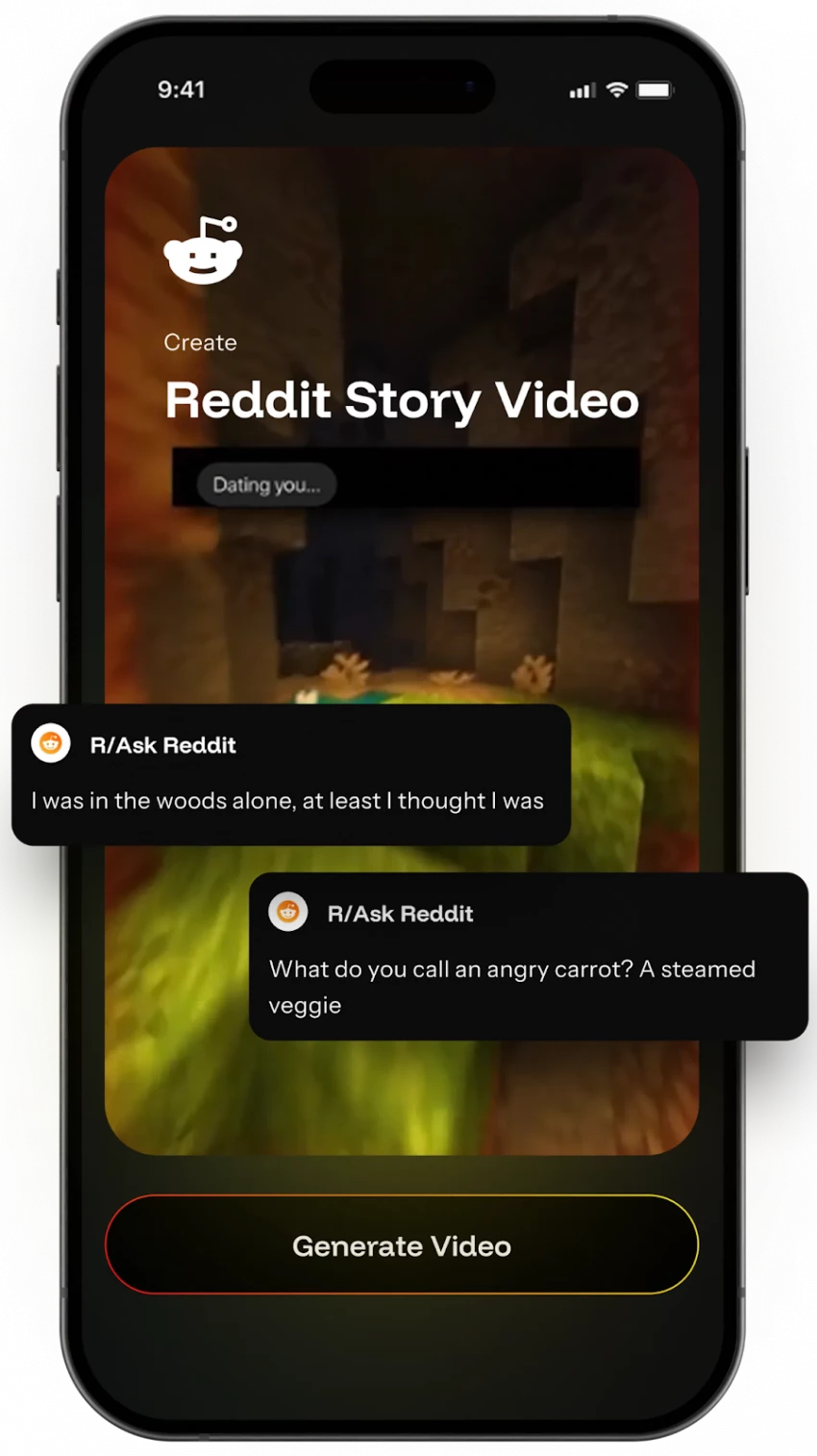
Instead of learning editing software, gathering clips, recording voiceovers, syncing captions, and exporting formats, Wava compresses everything into one pipeline. Users paste a Reddit story or script, select a visual style, and the platform assembles a fully narrated short-form video with captions in under a minute.
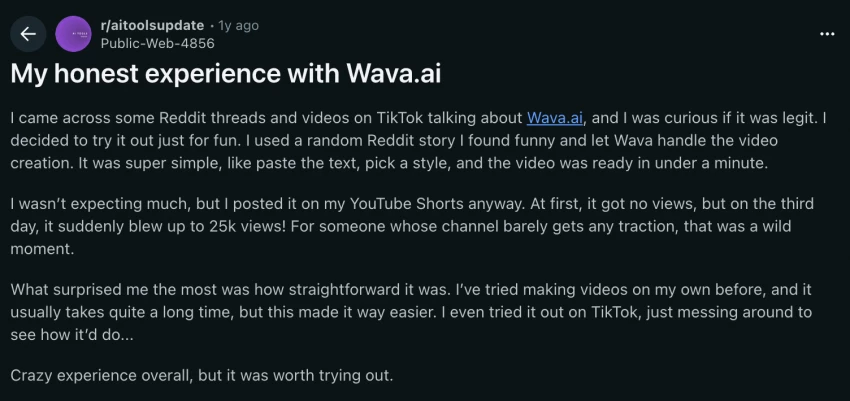
Creators on Reddit describe it as “shockingly fast” and “easier than anything on CapCut.” One user even recounts how a casual test video sat quietly for two days before suddenly jumping to 25,000 views, the kind of miracle result that keeps these tools spreading through Discord servers, TikTok comment sections, and YouTube automation communities.
Speed and simplicity are Wava’s strongest assets. But they also obscure what happens when creators transition from experimentation to long-term use.
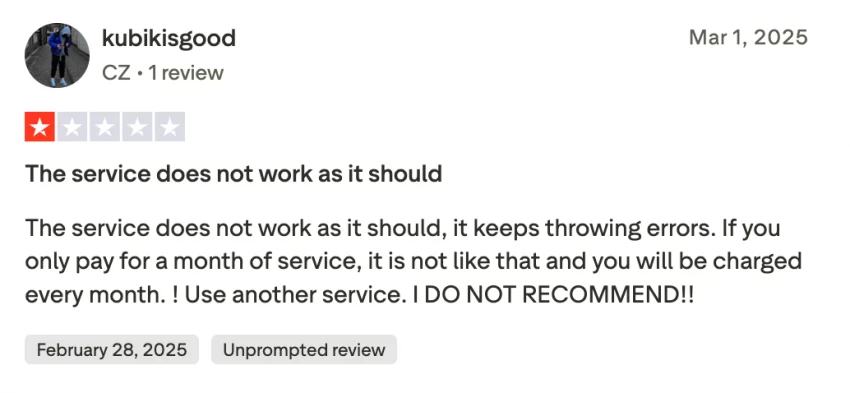
For every short-form creator celebrating a viral post, there is another describing mechanical failures that stop production entirely. Several users report that videos fail mid-generation, throw unexplained errors, or refuse to export. One reviewer described the service bluntly as “not working as it should,” saying errors appeared so consistently that creating multiple videos became nearly impossible.
Another user echoed the same issue on Reddit, asking why their videos “won’t generate at all,” while another said that downloaded videos simply “cannot be found anywhere,” an issue later explained by another member: files auto-delete after three days if not saved manually, which some users learn only after losing work.
In fairness, many young AI platforms suffer early instability. But Wava’s problems are compounded by an issue that runs deeper than bugs.
If there is one topic that overshadows Wava’s technical issues, it is billing. The harshest reviews on Trustpilot — and many on Reddit — describe scenarios where users attempt to cancel but find no clear escape route. One reviewer writes:
“Do NOT subscribe to this site — they make it deliberately impossible to unsubscribe. I had to close a bank account to avoid continuous monthly charges.”
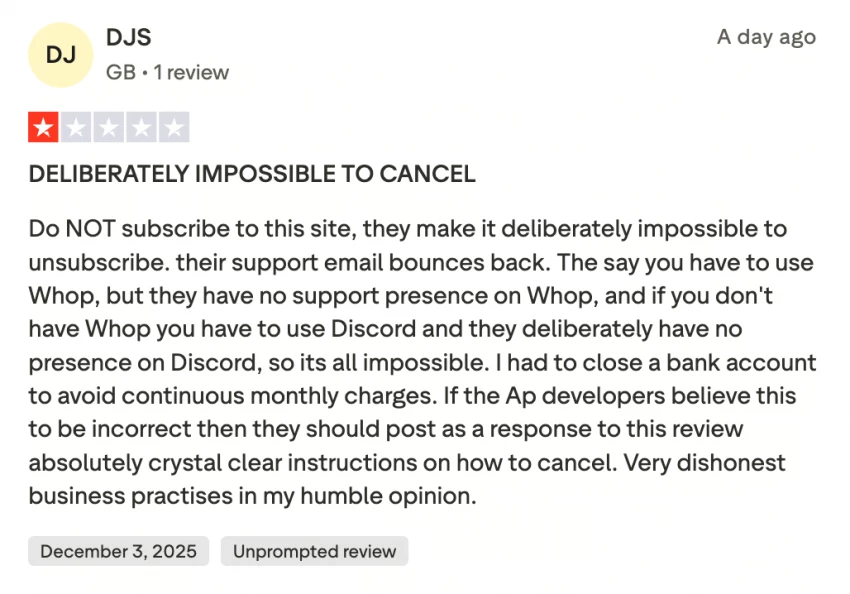
Others describe support emails that bounce back, Discord links with no actual support staff, and unclear instructions requiring third-party platforms (like Whop) that don’t reliably display the user’s subscription.
The accusation, repeated again and again, is not just poor support, but absent support. Some users even go so far as to call Wava “a bunch of scammers,” suggesting the cancellation system is built to exhaust the user into giving up.
Even if this interpretation is not the company’s intent, the pattern in reviews paints a significant trust problem — one no AI tool targeting creators can afford to ignore.
Wava markets itself as a fast-moving startup with premium plans framed around “priority support,” but publicly available reviews describe a starkly different reality. One user on Trustpilot mentioned that the “support email bounces,” while others emphasize that Discord support does not exist despite being listed as a channel.
On Reddit, users seeking help with subscription removal or technical errors often receive advice not from staff — but from other confused creators. The lack of official responses creates a troubling gap: a tool designed for high-volume, high-frequency content creation cannot sustain itself if users feel stranded whenever something breaks.
This is the core weakness that separates Wava from more established tools like OpusClip or InVideo: when things malfunction there, someone answers your message.
Here is the single table included in this article, a concise snapshot of the disconnect defining most public discussions about the platform:
| Wava’s Marketing Promise | User Reality (Based on Reviews) |
| Fast, automated viral video creation | Speed is real, but generation errors are frequent |
| Easy subscription model | Cancelling is described as “nearly impossible” |
| Reliable exports | Videos auto-delete or fail to download |
| Helpful support channels | Email bounces, Discord offers no help |
| Great for creators scaling content | Works only if nothing breaks — and many say it does |
The reason this table matters is not to dramatize isolated complaints, but to illustrate how contrasting the two narratives are. Creators praising the tool usually talk about the videos themselves. Creators criticizing it talk about everything around the videos.
Despite these issues, Wava remains widely discussed in automation communities. Part of this is due to the undeniable fact that the tool can produce an entire short-form video faster than most competitors. Another part comes from the psychological pull of viral content: creators forgive many flaws if they believe the tool can help them break through algorithms that usually ignore them.
Some users even argue that the tool “pays for itself,” framing the subscription cost as an investment rather than an expense. In reality, this logic only holds for a small group of creators who already understand platform trends, posting frequency, and niche selection, in other words, the tool works when the creator would likely succeed anyway.
For beginners, Wava accelerates output, but not necessarily results.
Wava AI is neither a scam nor a miracle machine. It is a tool built for speed, not stability, and understanding that distinction early may prevent some creators from learning it the hard way. Its video generation features are genuinely impressive, especially for users with no editing experience. Its promise of near-instant storytelling is real. Its viral success stories are real.
But its unresolved problems are real, too: the billing confusion, the disappearing support channels, the video-generation failures, the trust concerns raised by early reviewers. These are not side notes, they are part of the product.
Creators should approach Wava the same way they approach going viral: with excitement, but never with blind trust. Enjoy the speed. Test its capabilities. Use it for ideas, experiments, and low-stakes posts.
Just don’t build a business, a channel, or a subscription cycle on a platform where too many users report they couldn’t even find a way out.
If Wava is a shortcut, it is one worth testing, but only if you’re prepared for the sharp edges along the way.
Speed & Automation: 8.8 / 10
Video Output Quality: 7.9 / 10
Ease of Use: 8.5 / 10
Stability & Reliability: 6.2 / 10
Support & Trust: 5.8 / 10
Overall Rating: 7.0 / 10
A powerful accelerator, but not a foundation.
Is Wava AI legit?
Yes, it generates real videos. Legitimacy concerns focus on billing and support, not fake functionality.
Can Wava AI really make videos go viral?
It can speed production, but virality still depends on niche, hook, and timing.
Is cancellation difficult?
Many users report confusion. Read terms carefully and document cancellation steps.
Should beginners use Wava AI?
Yes, but only for experimentation, not as a long-term solution.
Be the first to post comment!

There was a time when every company website proudly displayed glowing customer t...
Suraj Malik1 week ago

Imagine choosing a business partner, a SaaS tool, or a digital agency without ch...
Suraj Malik1 week ago

I didn’t land on Monkeytype because someone told me it was “the best typing site...
Sakshi Dhingra1 week ago

Online gaming in India has changed rapidly. What once meant casual mobile games...
Sakshi Dhingra1 week ago

In today’s data-driven marketing landscape, clarity is often promised but rarely...
Michael Hicklen1 week ago

I didn’t start analyzing Daman Games because of hype. I started because I kept s...
Sakshi Dhingra1 week ago