A few months ago, I found myself doing something I hadn’t done seriously in years—searching for coupon codes before checking out online. Not casually, but deliberately. Inflation has made even small purchases feel heavier, and I realized that the “just click buy” habit I’d developed was quietly costing me money.
Like many people, I’d been burned before. Coupon sites filled with expired codes, aggressive pop-ups, and promises that never delivered. Still, curiosity—and the desire to save—pulled me back in. That’s when I came across Kupon.ai.
What caught my attention wasn’t just the word “AI” in the name, but the claim that it focused on verified, working deals rather than dumping thousands of useless codes on users. I decided to use it consistently for a few weeks before forming an opinion. This article is the result of that experience—what I found useful, what felt limited, and what I genuinely think could be improved.
Online shopping isn’t slowing down. Globally, e-commerce now accounts for over 20% of total retail sales, and that number continues to grow each year. At the same time, consumers are becoming more price-sensitive. Studies consistently show that over 60% of online shoppers actively look for discounts or promo codes before completing a purchase.
The problem isn’t a lack of coupons—it’s trust.
Most coupon platforms fail not because discounts don’t exist, but because users are tired of wasting time on codes that don’t work. That’s the gap Kupon.ai is trying to fill: less noise, more relevance.
At its core, Kupon.ai is an AI-assisted deal and coupon aggregation platform. It scans, organizes, and surfaces online deals—particularly for large marketplaces like Amazon—so users can quickly find active discounts.
What it is:
● A centralized place to browse deals by category
● A platform focused on reducing expired or invalid coupons
● A manual, no-login-required way to find savings
This distinction matters. Kupon.ai doesn’t try to replace tools like browser extensions. Instead, it positions itself as a cleaner, more focused discovery platform.
How Kupon.ai Actually Works in Practice (My Real, Short Experience)
When I used Kupon.ai regularly, I realized it works best when you understand exactly what it does—and what it doesn’t. Here’s the practical, no-fluff breakdown from real use.
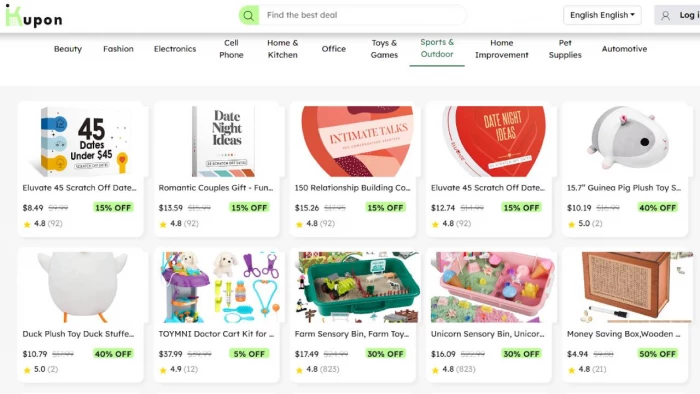
The first thing I noticed was the lack of friction. No forced sign-ups, no pop-ups. You land directly on a page filled with live deals, already categorized (electronics, home, beauty, accessories, etc.). That alone saves time compared to traditional coupon sites.
Why this matters: Most users leave coupon sites within seconds if value isn’t obvious. Kupon.ai shows deals immediately.
You can either scroll through categories or search for a specific product (for example, headphones or kitchen gadgets). The results are product-specific, not generic “SAVE10” coupons.
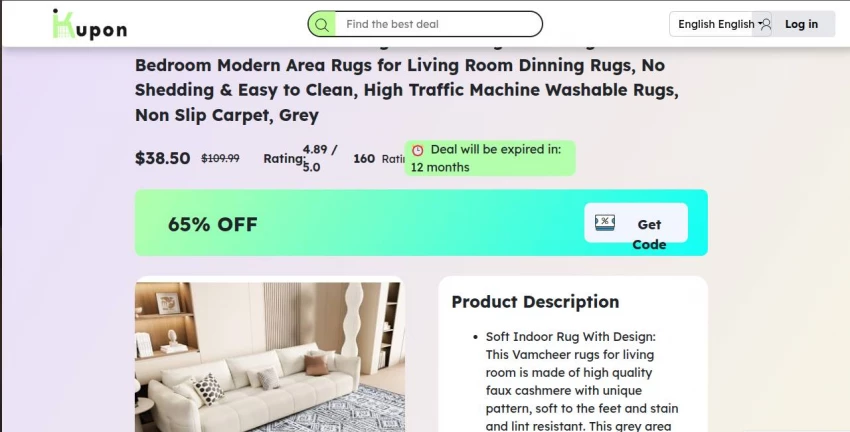
Each listing usually shows:
● Product image
● Discount percentage or price drop
● A visible or revealable promo code
From my experience, this makes it easier to judge relevance quickly instead of clicking blindly.
Kupon.ai doesn’t just list random codes. Behind the scenes, it filters and updates deals automatically, removing many expired or inactive ones.
Is it perfect? No.
Is it noticeably better than old-school coupon directories? Yes.
In my use, most codes worked, and failed codes were the exception—not the norm. That alone made it feel more trustworthy.
Once you click a deal:
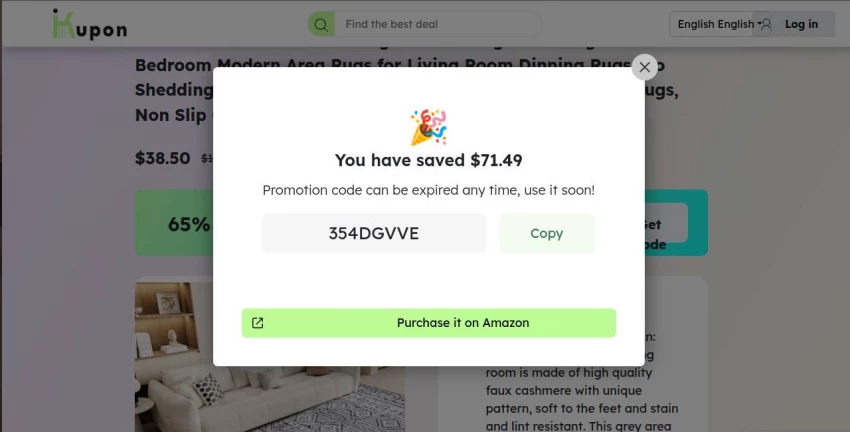
1. You’re redirected to the retailer (usually Amazon)
2. You copy the promo code
3. Paste it at checkout
| Step | Action |
| 1 | Find deal on Kupon → tap "Get Code" |
| 2 | Copy code (auto-copied to clipboard) |
| 3 | Go to Amazon product page |
| 4 | Add item to cart → proceed to checkout |
| 5 | Paste code in "Promotional codes" section → apply |
Kupon.ai never touches your payment, login, or account data. Everything happens on the retailer’s site, which felt safer and more transparent to me than browser extensions running in the background.
The savings I saw were realistic, not exaggerated—often 10–40%, depending on the product. Not every deal was amazing, but enough of them were useful that it became part of my pre-checkout habit.
What I appreciated most was consistency, not dramatic discounts.
Compared to traditional coupon sites, I encountered far fewer dead ends. Not zero—but noticeably fewer. That alone kept me coming back.
Browsing by category helped me find deals I wasn’t actively searching for but could genuinely use. This kind of passive discovery mirrors how people shop in real life.
Kupon.ai doesn’t push sign-ups or extensions aggressively. That builds trust, especially for users wary of data tracking or aggressive monetization tactics.
In practical terms, I saved modest but consistent amounts—nothing dramatic, but meaningful over time.
let's talk about the limitations.
1. The manual code entry. Even though Kupon.ai verifies codes work, you still have to manually copy and paste them at Amazon checkout. Compare this to browser extensions like Honey or Coupert that automatically test and apply codes for you. That extra friction matters. In 2025, when automation is everywhere, asking users to manually enter codes feels like a step backward.
2. The platform is overwhelmingly Amazon-centric. While they've expanded to eBay, Woot!, and have announced plans for Walmart, Best Buy, Newegg, and Macy's, the reality is most deals are still Amazon. If you don't shop primarily on Amazon, Koupon.ai's value proposition drops significantly.
3. It's US-only. The founders have mentioned international expansion plans, but for now, if you're shopping from outside the United States, this platform won't help you. Given that e-commerce is increasingly global, this geographic limitation feels like a missed opportunity.
If I were advising the Kupon.ai team, here's what I'd push for:
1. Browser automation. Build a Chrome/Firefox/Edge extension that automatically applies codes at checkout. The verification engine is already built—layer automation on top of it. Yes, this requires engineering resources, but it's table stakes for competing with established players like Honey.
2. Expand beyond Amazon aggressively. The Amazon-first strategy made sense for launch, but the market won't wait forever. Shoppers want one tool that works everywhere. Accelerate partnerships with Walmart, Target, and major retailers.
3. International markets. The US represents only part of the global e-commerce opportunity. Europe, Canada, and Australia have mature online shopping cultures hungry for verified deals. Localization is complex, but necessary for long-term growth.
4. Cashback integration. Platforms like Rakuten and Honey offer cashback in addition to coupon codes. Users expect multi-layered savings. Partner with cashback networks or build your own affiliate relationships to add this revenue stream while increasing user value.
5. Smarter deal alerts. The platform offers notifications, but they could be more intelligent. Imagine getting alerted not just when a deal drops, but when it hits your personal price threshold based on historical data and purchase intent signals.
Here's what I appreciate most about Kupon.ai: it solves a real problem without creating new ones.
1. Too many coupon platforms bury you in spam, sell your data, or clutter your experience with aggressive ads. Kupon.ai charges nothing, requires no payment information, doesn't ask you to link your Amazon account, and maintains a clean, ad-free interface. In an era when every app wants to monetize your attention through dark patterns, this restraint feels refreshing.
2. The platform also provides context beyond just discounts. It shows deal quality scores, discount history, and product pros and cons. This meta-information helps you make smarter decisions—not just "save 20%," but "save 20% on a product with strong reviews and a genuine price drop, not a manipulated list price."
3. For frequent Amazon shoppers—and according to Koupon.ai's data, that's exactly who uses it most—this tool delivers tangible value. With Amazon conversion rates jumping from 12-15% without coupons to 18-22% with verified codes, even a few successful deals per month justify the few minutes it takes to check the app.
| Platform | Main Use | Auto-Apply | Verified Codes | Cashback | Price History | Best For |
| Kupon.ai | AI-filtered deals | No | Yes | No | No | Quick, manual, reliable discounts |
| Honey | Auto coupons + rewards | Yes | Yes | Yes | Yes | Hands-off savings |
| Rakuten | Cashback shopping | Partial | Yes | Yes | No | Guaranteed cashback |
| Capital One Shopping | Auto coupons + compare | Yes | Yes | Yes | Yes | Price comparison users |
| RetailMeNot | Online + in-store coupons | Partial | Mixed | Limited | No | Broad coupon browsing |
| Slickdeals | Community deals | No | Community | No | No | Deal hunters |
| CamelCamelCamel | Amazon price tracking | No | No | No | Yes | Amazon price watchers |
| Coupons.com | Grocery & printable | No | Yes | Limited | No | Grocery shoppers |
| Ibotta | Grocery cashback | Partial | Yes | Yes | No | Grocery cashback users |
Kupon.ai is not trying to be the most powerful savings tool—and that’s exactly why it works for many users.
It’s best viewed as a reliable checkpoint before checkout, not a complete shopping optimization system. For users who value control, simplicity, and time efficiency, it earns its place. For power users who want automation, cashback stacking, or deep price analysis, it works better as a supplement than a replacement.
In short:
Kupon.ai doesn’t promise perfection—it delivers consistency, and in the crowded world of coupon platforms, that’s a meaningful advantage.
Be the first to post comment!

Choosing the right software used to be straightforward. You compared features, c...
Suraj Malik5 days ago

When I first opened Final Round AI, I wasn’t looking for hype. I’ve seen too man...
Sakshi Dhingra6 days ago

There was a time when every company website proudly displayed glowing customer t...
Suraj Malik2 weeks ago

Imagine choosing a business partner, a SaaS tool, or a digital agency without ch...
Suraj Malik2 weeks ago

I didn’t land on Monkeytype because someone told me it was “the best typing site...
Sakshi Dhingra2 weeks ago

Online gaming in India has changed rapidly. What once meant casual mobile games...
Sakshi Dhingra2 weeks ago