
Over the past few years, I have noticed that job hunting has quietly turned into a second job for many professionals. Whether someone is a software developer, product designer, or analyst, the routine often looks the same. People open LinkedIn, then Naukri, then Indeed, then Glassdoor, and repeat that cycle several times a day, hoping a relevant position appears before hundreds of other applicants apply.
Many candidates spend weeks sending applications only to hear nothing back. Others realize later that their resume never even reached a recruiter because it failed an applicant tracking system filter. Networking, which is often the most effective way to land interviews, is another task that most job seekers struggle to manage consistently.
While researching tools that claim to simplify this process, I came across a platform called Leeco, which describes itself as an AI agent designed to handle job searching tasks automatically. The product is presented on its official site at Leeco AI as a system that continuously scans job platforms, optimizes resumes, and even tries to generate referrals for candidates.
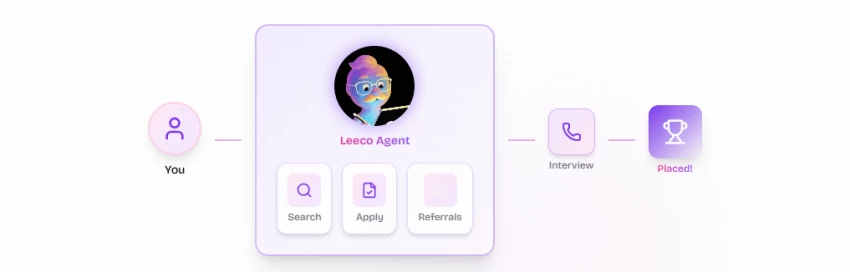
Because the concept sounded ambitious, I decided to look deeper into how the platform works and whether the claims match the reality of how hiring actually happens.
The idea of putting job hunting “on autopilot”
The core idea behind Leeco is that job seekers should not have to manually search dozens of job boards every day. According to the explanation on Leeco AI, the system operates as an automated job search agent that works in the background, scanning platforms like LinkedIn, Naukri, Indeed, and Glassdoor.
Instead of constantly refreshing these sites, the user configures preferences such as role type, salary range, experience level, and location. The system then monitors those platforms and notifies the candidate whenever a relevant opportunity appears.
In theory, this solves a real problem. Job boards update constantly, and many candidates miss new listings simply because they check at the wrong time. An automated scanning system could potentially identify opportunities faster than a manual search.
However, the effectiveness of this feature depends heavily on how accurately the system interprets user preferences and filters irrelevant listings. Many job platforms already offer alerts and recommendations, so the real advantage would depend on whether Leeco’s filtering is significantly better.
Continuous scanning of job platforms
One of the main features the platform promotes is real-time job monitoring. According to the product description on Leeco AI, the AI continuously scans major job marketplaces and verifies whether job listings are still active.
The system then compares those listings with a user’s profile and sends alerts when it finds a match. Notifications are typically delivered through WhatsApp so that users can respond quickly.
Conceptually this makes sense. Many hiring managers review applications in the first few hours after posting a job. Being among the earliest applicants can sometimes increase the chances of being noticed.
But this feature also raises questions. Job boards already provide automated alerts for new listings. The real value of Leeco would depend on whether it aggregates data from multiple platforms more effectively than those built-in tools.
Without extensive user data, it is difficult to determine whether the system actually improves discovery compared with traditional alerts.
How the platform attempts to improve resume performance
Another major feature promoted by the platform is resume optimization. Companies often rely on applicant tracking systems to screen resumes before recruiters review them. These systems analyze keywords, formatting, and relevance to determine which candidates proceed to the next stage.
Leeco claims to analyze resumes and adjust them for specific job roles. The explanation on Leeco AI suggests the system studies resumes from candidates who previously secured interviews and then applies similar patterns to the user’s document.
In the example presented by the platform, a standard resume is shown with an ATS compatibility score around 47 percent. After AI optimization, the example score increases to approximately 95 percent.
While such improvements are theoretically possible, ATS scoring systems vary widely between companies. Because of this variation, no universal optimization can guarantee better results for every application.
Still, the concept of automated resume tailoring is not unreasonable. Many candidates struggle to customize resumes for different roles, and an AI assistant could potentially help streamline that process.
One of the platform’s most unusual features
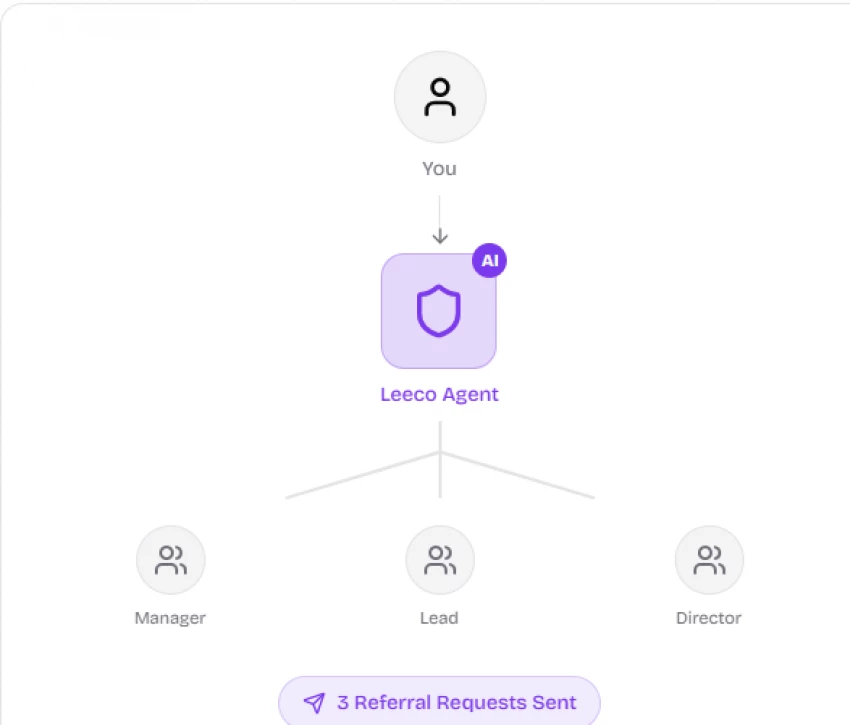
The feature that caught my attention most during my research was the referral automation system.
Hiring data consistently shows that internal referrals dramatically increase the likelihood of receiving an interview. Candidates who apply through referrals often bypass the massive queue of online applicants.
Leeco claims to identify employees working at companies where the user is applying and automatically send referral requests to them. The platform describes this process on Leeco AI as a way of turning a standard application into a recommendation request.
The system suggests that referrals can increase success rates by as much as seventy percent compared with cold applications.
This concept is interesting but also somewhat controversial. Networking typically works best when interactions feel authentic and personalized. If referral requests become automated messages sent to multiple employees, there is a risk that professionals may ignore them.
The success of this feature would likely depend on how personalized and context-aware those messages are.
A centralized way to track applications
Another feature the platform highlights is a centralized dashboard where users can track their job search progress.
Anyone who has applied to dozens of jobs knows how easy it is to lose track of which companies responded or which applications are still pending. According to the platform interface shown on Leeco AI, the dashboard organizes opportunities into categories such as sourced roles, submitted applications, referral requests, and scheduled interviews.
This type of organization could be useful, particularly for candidates applying to many roles simultaneously.
However, similar functionality already exists in several job search management tools. The question is whether integrating that dashboard with automated job scanning and resume optimization provides a meaningful advantage.
What early users are discussing
Because the platform is relatively new, most available insights come from community discussions and early feedback.
In one discussion thread on Reddit, users expressed curiosity about the platform’s automation capabilities. Some users liked the idea of reducing repetitive job search tasks, while others were skeptical about whether automated applications and referral outreach would be effective.
Platforms like AgentsPointee and comparison pages such as G2’s alternatives section place Leeco among a growing category of AI tools focused on career assistance and interview preparation.
This broader trend suggests that companies are increasingly exploring ways to automate parts of the hiring process from the candidate’s perspective.
| Pros | Cons |
|---|---|
| Automates job searches across multiple platforms | Job matching accuracy may vary |
| Helps optimize resumes for ATS screening | ATS improvements are not guaranteed |
| Organizes applications in a single dashboard | Still a relatively new platform |
| Attempts referral and networking outreach | Automated outreach may feel impersonal |
Strengths and limitations I noticed
After spending time analyzing the platform’s concept, documentation, and early user discussions, my overall impression is that Leeco is attempting to solve a genuine problem in the modern job search process. For many candidates, the most exhausting part of job hunting is not preparing for interviews but managing the constant cycle of searching, filtering listings, tailoring resumes, and tracking applications. The idea of automating these repetitive tasks has clear appeal. If a system can monitor multiple job boards continuously, identify relevant openings faster than manual searching, and reduce the need to rewrite the same application materials repeatedly, it could remove a significant amount of friction from the process.
Another aspect that stands out is the platform’s attempt to combine several stages of the job search into one workflow. Instead of treating job discovery, resume optimization, and networking as separate activities, Leeco tries to integrate them into a single automated system. The concept of an AI agent scanning platforms, adjusting resumes for applicant tracking systems, and organizing applications inside a dashboard reflects a broader trend toward automation tools that manage entire workflows rather than single tasks. From a productivity standpoint, this approach could be valuable for candidates who are applying to many roles simultaneously.
That said, several uncertainties make it difficult to evaluate how effective the platform will be in real-world hiring environments. Recruitment processes vary widely across companies, industries, and geographic markets. A strategy that works well for one company’s hiring pipeline might not translate effectively to another organization with a completely different evaluation process. While automation may help candidates reach more opportunities, it does not necessarily increase the likelihood of progressing through interviews if the applications themselves lack context or personalization.
The referral automation feature also raises some practical questions. Referrals are indeed one of the most powerful ways to secure interviews, but they usually rely on authentic relationships and meaningful conversations. If referral requests become automated outreach messages sent to many employees at once, recipients might perceive them as impersonal or even ignore them entirely. The success of this feature would likely depend on how carefully the platform personalizes these interactions and whether it can maintain a sense of authenticity in the networking process.
Another factor worth considering is how companies might respond to large-scale automated applications in the future. Hiring teams are already aware that AI tools are being used to generate resumes, cover letters, and job applications. If automated job agents become widely adopted, organizations may introduce new screening methods to identify mass submissions or automated outreach attempts. In such a scenario, automation might make job searching faster but could also trigger new layers of filtering from recruiters.
For these reasons, the platform currently feels more like an emerging experiment in career automation than a fully validated hiring solution. The concept is forward-looking and addresses real frustrations that many job seekers experience, but its long-term effectiveness will depend on whether it can balance automation with the human elements that still dominate hiring decisions. If the platform continues evolving and proves that its automated search, optimization, and networking features actually lead to more interviews or offers, it could become a meaningful tool for candidates navigating competitive job markets. Until that evidence becomes clearer, it remains an interesting development worth watching rather than a guaranteed shortcut to landing a job.
Based on available information, platform transparency, feature design, and the realism of its claims, my overall evaluation of the platform is:
Overall Rating: 7 / 10
The concept is innovative and addresses real frustrations in job searching. However, the effectiveness of automated referrals, AI resume optimization, and real-time job scanning will ultimately depend on real user outcomes rather than product demonstrations.
For now, Leeco appears to be an interesting experiment in AI-assisted career management rather than a guaranteed shortcut to landing a job.
After exploring Leeco AI and understanding how it works, I see it as an interesting attempt to reduce the repetitive workload involved in job hunting. Features like automated job scanning, resume optimization, and application tracking could make the process more organized and less time-consuming for candidates. However, securing a job still depends heavily on human interaction, networking, and interview performance. For now, Leeco AI seems best viewed as a supportive tool that can streamline parts of the job search rather than a complete solution that can fully automate it.
What is the use of Leeco AI?
Leeco AI is an automated job search agent that scans job platforms, finds relevant openings, and helps optimize resumes for applications. It also organizes applications and can assist with networking or referral outreach.
Why did LeEco fail in India?
The original LeEco smartphone company struggled due to heavy debt and aggressive expansion into multiple industries. Financial problems and operational challenges eventually forced the company to scale back its presence in India.
Who is the founder of Leeco AI?
Leeco AI appears to be a newer AI startup created by developers focused on automating the job search process. Public information about the founding team is still limited.
How can you use Leeco AI for free?
Users can typically sign up and set their job preferences to start receiving job matches and alerts. Some advanced automation features may require paid plans depending on the platform’s pricing model.
Be the first to post comment!

When I first came across Skipit, I approached it with a bit of skepticism. The A...
Sakshi Dhingra2 days ago

I didn’t start exploring Dzine AI because I was chasing the latest AI trend. I d...
Sakshi Dhingra3 days ago

The positioning of Promptchan within the AI ecosystem is often misunderstood. Wh...
Sakshi Dhingra1 week ago
A Personal Moment That Made Me Care About Online Coupons AgainA few months ago,...
Parveen Verma1 week ago

Choosing the right software used to be straightforward. You compared features, c...
Suraj Malik2 weeks ago

When I first opened Final Round AI, I wasn’t looking for hype. I’ve seen too man...
Sakshi Dhingra2 weeks ago