I still remember the first time I installed Remix OS. It didn’t feel like I was testing another operating system. It felt like I was stepping into something that was trying to redefine how we use computers.
At that time, using Android apps on a desktop was either slow through emulators or simply impractical. Remix OS changed that instantly. It didn’t just run Android apps. It made them behave like desktop applications. That distinction is important because most tools before it focused on compatibility, while Remix OS focused on usability.
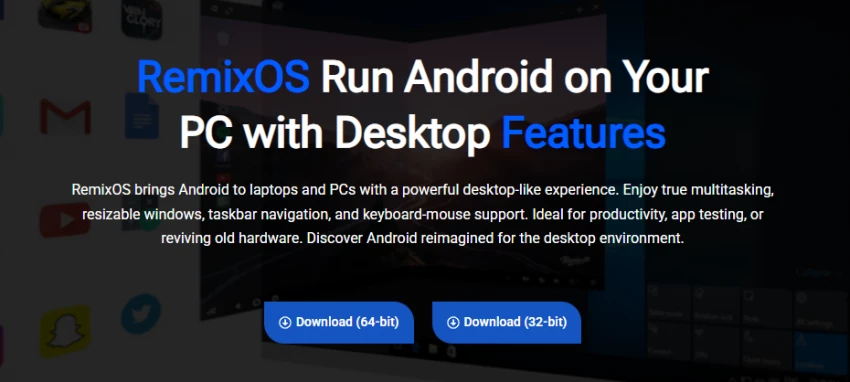
The project, originally developed by Jide Technology, positioned itself as a full desktop operating system built on Android. If you explore its overview on platforms like Remix OS or read its documentation trail across sources, you begin to see that this was not an experimental build. It was a serious attempt to merge mobile and desktop computing into a single environment.
Remix OS was fundamentally Android, but it didn’t behave like Android. It introduced a completely reworked interface that borrowed heavily from desktop operating systems. There was a taskbar at the bottom, a start-menu-like launcher, and most importantly, support for running multiple apps in resizable windows.
This changed everything about how Android apps could be used. Instead of opening one app at a time in full screen, users could multitask. You could run a browser, a file manager, and a messaging app simultaneously, something that felt closer to Windows or Linux than any Android experience at the time.
From a technical standpoint, Remix OS used the Android-x86 project as its base but layered a desktop environment on top of it. Distributions listed on sites confirm that it was treated as a standalone operating system rather than a modification or emulator.
This distinction is what made it powerful. It wasn’t trying to simulate Android. It was Android, reimagined for a different use case.
The real strength of Remix OS wasn’t just in what it did, but when it did it.
Back then, Android itself didn’t have strong multitasking capabilities. Even tablets struggled with productivity use cases. Remix OS solved this by introducing features that only became mainstream years later.
When I used it, what stood out immediately was how natural it felt to switch between tasks. Dragging windows, resizing apps, and working across multiple screens didn’t feel like a workaround. It felt intentional.
Reviews like the hands-on experience highlighted how smooth and intuitive this experience was compared to stock Android. The interface wasn’t just functional, it was practical for real work.
What’s interesting is that many of these concepts later appeared in ChromeOS and even in Windows’ Android integration efforts. Remix OS wasn’t following a trend. It was setting one.
Another reason Remix OS gained traction quickly was how easy it was to try.
Unlike traditional operating systems that required full installation, Remix OS could run directly from a USB drive. This meant users could test it without modifying their existing setup. That single decision made it far more accessible than most experimental operating systems.
Downloads were widely distributed across multiple platforms which ensured that users from different regions could access it easily. Mirrors like https://remix-os.en.uptodown.com/windows and https://www.filehorse.com/download-remix-os-64/ further expanded its reach.
From a usability standpoint, this accessibility mattered more than features. It allowed curiosity to turn into actual usage. People could try it within minutes, and that significantly contributed to its early popularity.
As impressive as Remix OS felt initially, deeper usage revealed its limitations.
Performance was inconsistent across systems. On hardware that supported it well, the experience was smooth and responsive. On less compatible machines, lag and instability became noticeable, especially when multitasking heavily.
App compatibility was another challenge. While Android apps technically worked, not all of them were designed for a desktop interface. Some apps didn’t scale properly, others behaved unpredictably in windowed mode, and a few simply crashed.
Detailed testing documented on sites pointed out these exact issues, especially in early versions where stability was still evolving.
User discussions on forums like https://www.reddit.com/r/chromeos/comments/5pw783/has_anyone_tried_remix_os/ also reflected a similar pattern. People appreciated the concept and innovation, but frequently mentioned inconsistencies in real-world usage.
This gap between idea and execution is where Remix OS started facing challenges.
Beyond technical limitations, the larger issue was positioning.
Remix OS existed in a space that was rapidly changing. Google was improving ChromeOS, making it capable of running Android apps natively. Microsoft was exploring Android integration within Windows. The need for a separate Android-based desktop OS started becoming less obvious.
Community discussions, including threads, reflect this confusion. Users liked Remix OS, but many questioned where it fit in the long term.
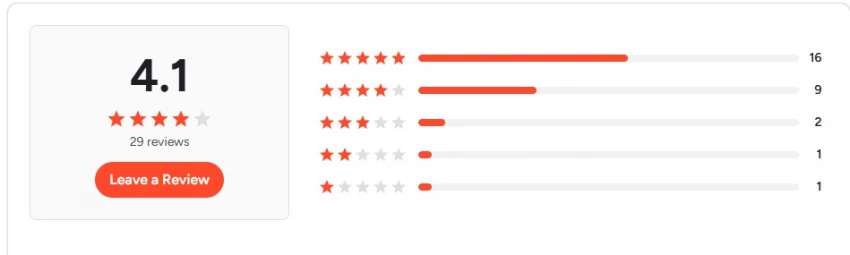
Even review platforms such as https://www.g2.com/products/remix-os/reviews and opinion-based platforms show a consistent pattern. The product was appreciated for innovation, but concerns around sustainability and future support kept appearing.
This wasn’t just a product issue. It was an ecosystem problem.
Eventually, Jide Technology decided to shift its focus away from Remix OS.
The product didn’t fail in terms of concept. It struggled in terms of timing and competition. Larger companies with stronger ecosystems began integrating similar features into their own platforms, making Remix OS less necessary.
The official presence of the project across sources and mirrors reflects this slowdown. Updates became less frequent, and development eventually stopped.
What Remix OS tried to build as a standalone system was eventually absorbed into broader ecosystems that had more resources and reach.
Even though Remix OS is no longer actively developed, the core idea behind it hasn’t disappeared. What has changed is how that idea is executed. Instead of a standalone Android desktop OS, the concept has been absorbed into larger ecosystems that provide better stability, updates, and long-term support.
From my experience, the difference becomes clear when you compare what Remix OS tried to do versus what current systems are actually delivering today.
| Platform | Core Approach | What It Does Better Than Remix OS | Limitation Compared to Remix OS |
| ChromeOS | Native Android + web hybrid | Stable updates, smooth app integration, strong ecosystem | Less flexible outside Google ecosystem |
| Windows (WSA) | Android apps inside Windows | Better performance, full desktop power, continuous updates | Limited app availability in some regions |
| Android-x86 | Open-source Android for PC | Lightweight, customizable, community-driven | Lacks refined desktop UI like Remix OS |
| Bliss OS | Modified Android-x86 | More updates, better hardware compatibility | Still inconsistent UI experience |
| PrimeOS | Gaming-focused Android OS | Optimized for performance and gaming | Less focus on productivity workflows |
What becomes obvious when using these alternatives is that the vision behind Remix OS didn’t disappear. It evolved. ChromeOS took the idea and integrated it deeply into a cloud-first ecosystem.
Windows approached it differently by embedding Android within an existing desktop environment. Projects like Android-x86 and Bliss OS continued exploring the concept from a more experimental angle.
Even though Remix OS is no longer actively developed, its influence is still visible in modern systems.
When you use Android apps on ChromeOS or interact with Android integration inside Windows, you’re seeing ideas that Remix OS explored years earlier.
Watching early demos like https://www.youtube.com/watch?v=f-9FD7csckI still shows how advanced the concept was for its time. It wasn’t just about running apps. It was about redefining how those apps behave in a desktop environment.
That vision continues to exist, even if the original product does not.
Remix OS didn’t disappear because it lacked value. It disappeared because the environment around it changed faster than it could evolve.
From my experience, it remains one of the most forward-thinking operating systems I’ve used. It proved that Android could function beyond mobile devices and introduced ideas that are now becoming standard.
It wasn’t perfect, but it was important.
And sometimes, that matters more.
Be the first to post comment!

Managing remote employees is very different from managing people in an office. W...
Sakshi Dhingra2 weeks ago

A school gradebook sounds like a simple thing until you watch what happens when...
Sakshi Dhingra3 weeks ago
The Growing Buzz Around EditPro in the AI Editing SpaceIn 2026, the name “EditPr...
Sakshi Dhingra3 weeks ago
When I first started deploying large language models, I assumed that choosing th...
Sakshi Dhingra3 weeks ago
Few software websites have survived as many internet eras as Softonic. Launched...
Suraj Malik1 month ago
PDF files are everywhere, from business contracts and academic papers to invoice...
Suraj Malik1 month ago