Looking for an intelligent voice-bot platform to automate conversations, or a creative AI-character chat tool for roleplay and engagement? Talkie.ai steps into that space with bold claims and real value but also some noteworthy limitations. In this in-depth review, we’ll explore what it does, highlight its strengths and weaknesses, break down pricing, examine verified user feedback, and help you decide whether it’s a match for your specific needs.
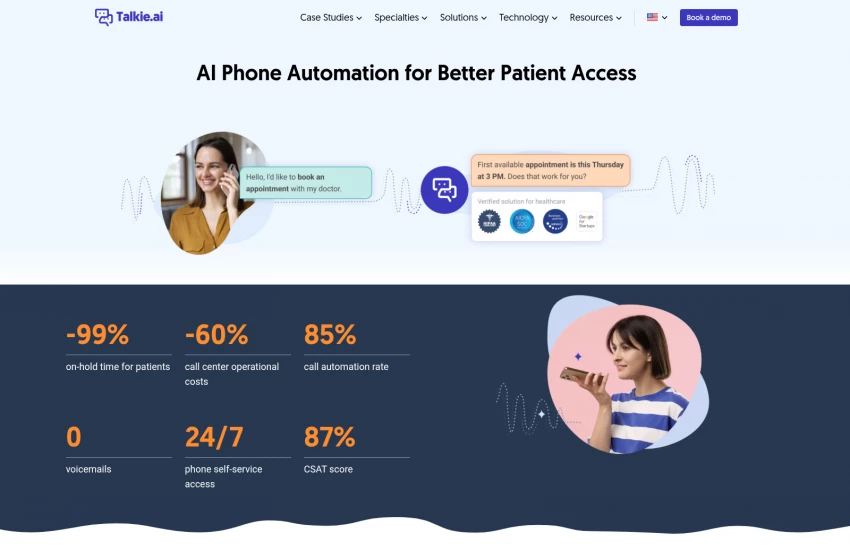
According to the official website, Talkie.ai is an AI-powered voice-agent platform built for medical practices and other service organisations to automate patient access, intake, scheduling, and routing of calls.
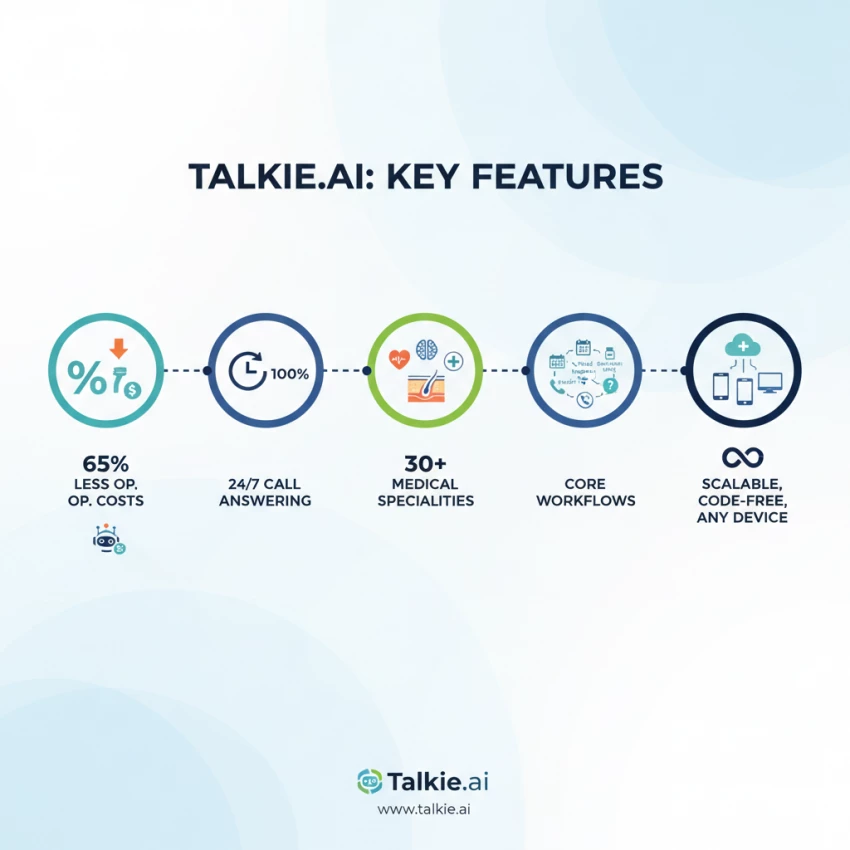
Its stated purpose: to relieve front-desk load, pick up every call 24/7, route queries, perform refills, new patient intake, FAQs and integrate with EHR workflows.
Note: There is also a different “Talkie” product focused on AI-character chat & roleplay (via talkie-ai.com) which caters to entertainment/creative users, so keep in mind the business vs consumer split.
What users like more about this tool and what users dislike in the tool:
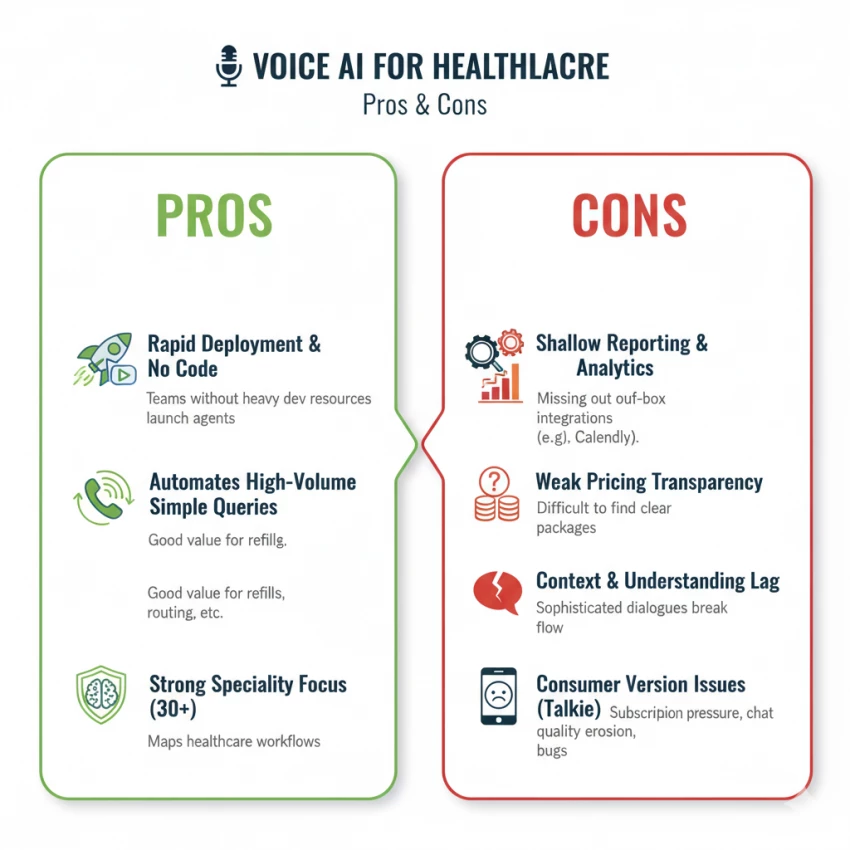
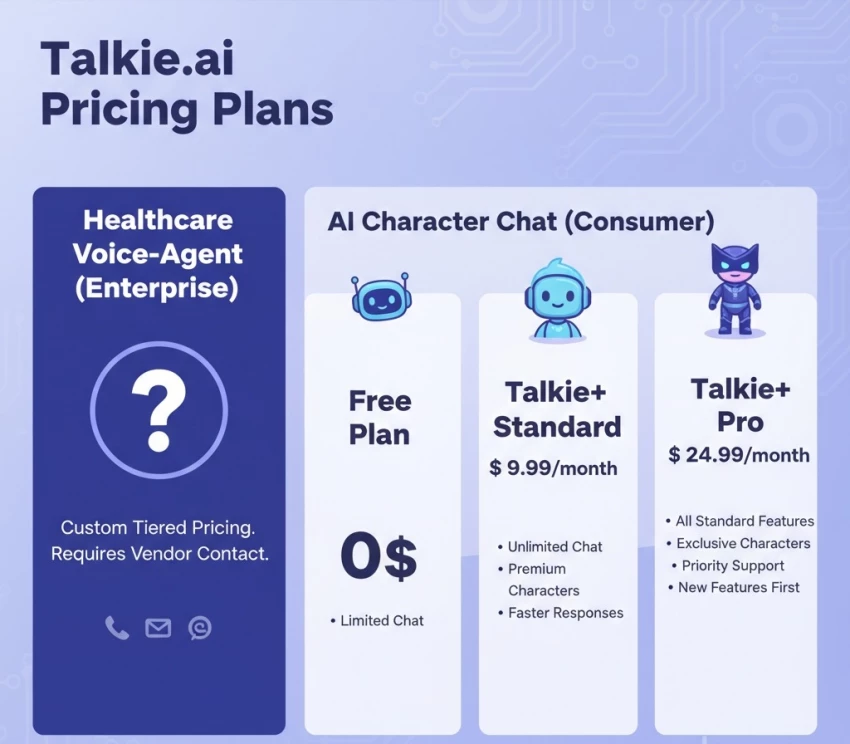
The official site for Talkie.ai (voice-agent healthcare version) does not show publicly detailed tier pricing, requiring contacting vendors.
For the consumer Talkie (AI character chat) version: sources list a Free Plan plus a Talkie+ Standard at approx US $9.99/month and Talkie+ Pro at approx US $24.99/month.
Important: whichever version you consider, request a clear cost breakdown: setup fees, per-minute/voice-session charges, and integrations cost.
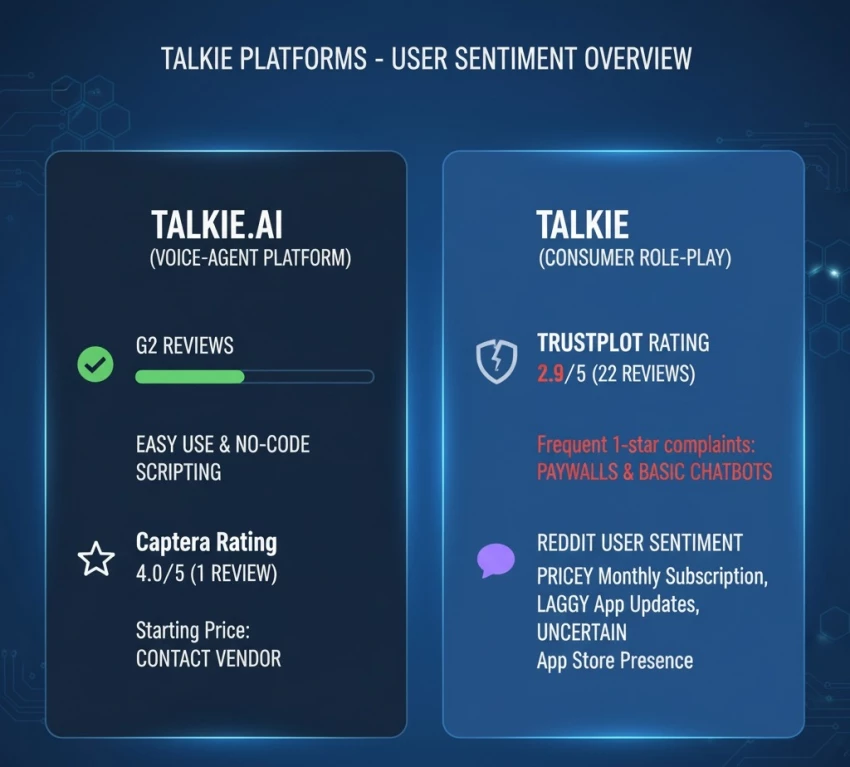
For Talkie.ai (voice-agent): On G2, Talkie.ai has user reviews with comments like “The platform is easy to use. Editing voicebot scripts is intuitive and requires no coding skills.”
On Capterra, Talkie.ai has a rating of 4.0/5 based on limited reviews (1 review at time of reporting) and starting price “contact vendor”.
For Talkie (consumer role-play version): On Trustpilot, it is rated 2.9/5 (22 reviews) with many 1-star complaints about paywalls and basic chatbot performance.
On Reddit: Users of the chat/character version note issues like the monthly subscription is pricey, the app updates lag behind, and app store presence is uncertain.
| Product Version | Key Features | Pros | Pricing |
|---|---|---|---|
| Talkie.ai (voice-agent) | 24/7 voice bot, call routing, intake workflows | No code needed, specialty-ready, scalable | Quote required (“Contact vendor”) |
| Talkie (consumer chat) | AI character chat, role-play, avatar generation | Fun, creative, many unique characters | Free tier, $9.99/mo, $24.99/mo approx |
Talkie.ai delivers a compelling value proposition for organisations seeking voice-based automation with minimal technical overhead. Its strength lies in simplicity, specialty readiness (for medical practices), and quick deployment. However, the platform is not without limits: analytics, integrations, and pricing transparency warrant careful review before commitment. If you’re a creative end-user looking for character-chat fun, the consumer Talkie product offers imaginative options, but expect trade-offs in support, depth, and cost.
Next step: Arrange a demo, prepare a pilot call-flow, and secure pricing and integration details in writing before purchase. Testing performance in your context will determine if it lives up to its promise.
Be the first to post comment!
I’ll admit it, SpicyChat AI is one of those tools you don’t exactly open with “s...
Vivek Gupta4 days ago
For months, the global AI industry has lived in a state of suspended animation w...
Vivek Gupta1 week ago

In today’s fast-moving digital landscape, intelligent software that can act inde...
Mighva Verma3 weeks ago

In today’s business world, customer expectations have shifted dramatically. Peop...
Mighva Verma3 weeks ago

Top AI Transcription Tools Designed for TeamsRemote and hybrid teams are drownin...
Mighva Verma1 month ago
In today’s content-saturated world, merely producing more isn’t enough. Smart cr...
Mighva Verma1 month ago