Technology
6 min read
Try Hard Guides Wordle Solver and Crossword Tools: A Practical Overview
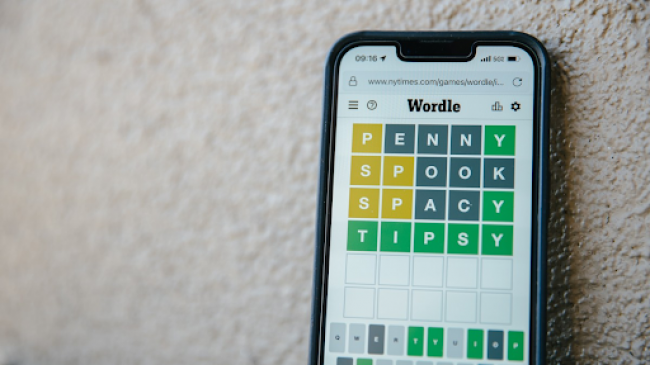
Word puzzles have always lived in that interesting space between entertainment and mental exercise. From newspaper crosswords to the now-ubiquitous Wordle, they reward pattern recognition, vocabulary depth, and strategic thinking.
But in the last few years, a new layer has entered the ecosystem: solver tools.
Platforms like Try Hard Guides provide Wordle solvers and crossword assistance utilities designed to narrow down answers using structured letter filtering. The question isn’t just what these tools do. It’s whether they enhance puzzle play, or quietly replace it.
Let’s take a closer look.
Wordle, originally created by Josh Wardle and later acquired by The New York Times, is deceptively simple. You have six attempts to guess a five-letter word. After each guess, letter feedback appears in green, yellow, or gray, indicating placement accuracy.
At a glance, it’s straightforward.
In practice, it becomes a probability puzzle.
A solver exists because the human brain struggles to simultaneously:
Crossword solvers operate similarly, but instead of narrowing unknown word lists based on feedback colors, they match clue patterns, letter positions, and dictionary datasets to generate viable answers.
The tool does not “know” the answer in advance. It reduces possibilities.
That distinction matters.
The Wordle Solver on Try Hard Guides uses rule-based filtering, not AI guessing.
You input:
The system cross-references this against a predefined word database, often the official Wordle word list or a comprehensive English dictionary subset.
Each round eliminates invalid combinations until only a handful remain.
Some advanced solvers incorporate frequency scoring. They prioritize words that statistically contain common remaining letters to increase probability of success in fewer attempts.
That’s not cheating, that’s computational efficiency.
This question appears in many top-ranking blogs, and user opinion is consistent.
Try Hard Guides’ Wordle Solver is best described as:
Players who want a full spoiler can still find the daily answer elsewhere on the site, but the solver itself doesn’t force it.
This is where the debate becomes philosophical.
Wordle was designed as a shared daily experience. Everyone solves the same word. The satisfaction comes from deduction.
Using a solver removes the friction of that deduction.
But context matters.
Many players use solvers:
Used this way, a solver becomes a training tool.
Used from guess one, it becomes autopilot.
The difference is intention.
The Wordle Hub is one of the most visited sections.
It includes:
Top-ranking blogs emphasize this feature because it helps users:
Try Hard Guides also ranks well for crossword searches because it covers:
New York Times Crossword
LA Times Crossword
Mini and daily variants
Each page is structured simply:
This format prioritizes speed, which is exactly what crossword solvers search for.
Compared to other crossword sites:
Answers are published quickly after puzzles go live
Outdated clues are archived cleanly
Pages avoid unnecessary filler
That’s why Try Hard Guides often outranks larger sites for specific clue searches.
The platform offers searchable lists of words sorted by:
These lists are not tied to one specific game and can be used for Wordle alternatives, word jumbles, or any other vocabulary-based activity.
For scrambled word games, the Jumble Solver lets users input mixed letters. The tool provides a list of valid English words that can be formed from those characters. Results are based on standard dictionary word lists.
_1745578055.png)
The website does not require registration or login. Tools are categorized under clear sections such as:
Users can search directly using the search bar or select categories from the menu. The structure is designed to help users find tools or answers based on puzzle type or game.
Compared to similar platforms:
This reliability is a key reason it continues to rank well.
Yes, Try Hard Guides is considered a highly legitimate and safe platform.
The site is widely referenced and operates on a secure model:
It’s also widely referenced in productivity communities and browser-assistant tools like Sider AI, which highlights websites providing clean puzzle utilities.
While Try Hard Guides offers a range of word tools, here are three other popular options with different approaches:
| Tool | Best For |
|---|---|
| The Word Finder | Variable word lengths beyond Wordle |
| WordTips Solver | Letter-frequency and probability analysis |
| YourDictionary Solver | Educational context and definitions |
Each serves a narrower purpose than Try Hard Guides but may appeal to specific solving styles.
Based on hands-on usage patterns, accuracy of updates, and overall usability, here’s a numeric breakdown of how Try Hard Guides performs across key areas:
| Feature Area | Score (Out of 10) | Reasoning |
|---|---|---|
| Wordle Solver | 8.5 / 10 | Logical filtering is accurate and helpful without fully spoiling gameplay |
| Crossword Clue Explanations | 9.2 / 10 | Timely updates and reliable answers for NYT and LA Times puzzles |
| Word Lists & Jumble Tools | 8.3 / 10 | Flexible and broadly useful, though mostly dictionary-driven |
| Game Code Pages | 9.5 / 10 | Frequently updated, well-organized, and dependable for active codes |
| Ease of Navigation | 9.0 / 10 | No login barriers, clear categories, fast access |
| Safety & Legitimacy | 9.7 / 10 | No data collection, no downloads, low-risk browsing experience |
Verdict:
Try Hard Guides functions best as a support and reference platform, not a shortcut engine. It adds value for users who want structured assistance, confirmation, or code tracking without sacrificing control over gameplay or personal data. For puzzle solvers and gamers alike, it remains a dependable, low-friction utility hub.
Try Hard Guides provides a set of tools for people who play word and puzzle-based games. Whether the need is solving a daily Wordle, decoding crossword clues, or using a letter solver, the platform offers multiple utilities. The tools do not replace gameplay but provide structured ways to explore possibilities, learn patterns, or double-check answers.
The site also includes sections for game codes and cosmetic tracking, which may be useful for players of titles like Roblox or Fortnite. Users who prefer a more traditional or independent solving experience may not require these tools, but they remain available for those who seek external support or reference.
I use Try Hard Guides mainly for crossword clues, and it saves a lot of time. Instead of searching randomly, you just type the clue and get the answer quickly. It’s especially useful when you’re stuck on one last word.

Managing remote employees is very different from managing people in an office. W...
Sakshi Dhingra2 weeks ago

A school gradebook sounds like a simple thing until you watch what happens when...
Sakshi Dhingra3 weeks ago
The Growing Buzz Around EditPro in the AI Editing SpaceIn 2026, the name “EditPr...
Sakshi Dhingra3 weeks ago
When I first started deploying large language models, I assumed that choosing th...
Sakshi Dhingra3 weeks ago
Few software websites have survived as many internet eras as Softonic. Launched...
Suraj Malik1 month ago
PDF files are everywhere, from business contracts and academic papers to invoice...
Suraj Malik1 month ago
Trevor Daniels
Mar 23, 2026I noticed that after using the solver a few times, I started depending on it. Instead of thinking through the puzzle, I just checked the tool, which kind of defeats the purpose of playing.