AI Took the Blame for Thousands of Layoffs, but the Real Story Is More Complicated
by Vivek Gupta - 1 month ago - 5 min read

In the past year, artificial intelligence has become the most convenient explanation in corporate America.
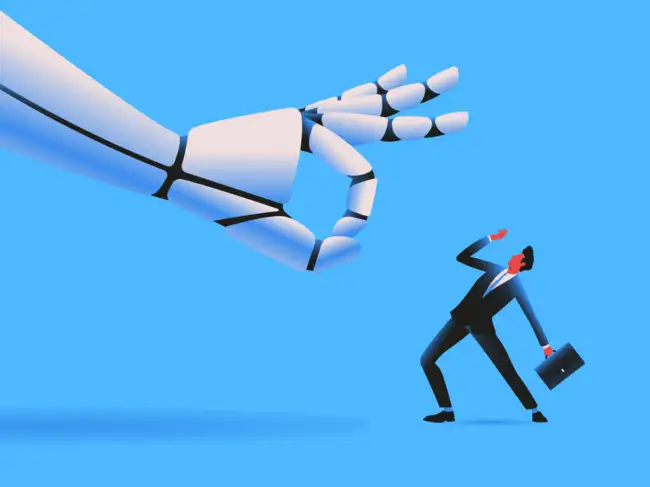
When companies announce layoffs, AI is often mentioned alongside words like efficiency, automation, or future readiness. To many workers, the message sounds simple and unsettling: the machines are here, and the jobs are disappearing.
The reality, based on recent data and expert analysis, is far more complicated.
The numbers suggest something big is happening
By the end of 2025, companies had publicly linked more than 55,000 U.S. job cuts to AI or automation. Globally, close to 70,000 tech jobs, about 28 percent of all tech layoffs, were described as AI-related.
The scale is real. Major employers cut deeply. Amazon eliminated around 30,000 roles since late 2025. Microsoft cut roughly 15,000 jobs. Salesforce removed about 4,000 positions. Accenture and TCS together cut more than 20,000 roles.
At first glance, this looks like the opening chapter of AI-driven job destruction.
But once analysts started digging, the story became much less clear.
What companies say versus what they do
A January 2026 survey by Goldman Sachs reveals a striking disconnect. After reviewing more than 100 companies across industries, Goldman found that only 11 percent explicitly linked layoffs to AI adoption.
Even in technology, media, and communications, where AI is most visible, just 31 percent said automation was the primary reason for cutting staff.
If AI were directly replacing workers at scale, these numbers would look very different. Instead, many companies appear to be using AI language to describe layoffs driven by other pressures.
The rise of “AI-washing”
Analysts now have a term for this behavior.
A January 2026 report from Forrester described widespread “AI-washing,” where companies attribute job cuts to AI even though they do not have deployed systems capable of replacing those workers.
Forrester’s assessment was blunt. Many organizations announcing AI-related layoffs lack mature, production-ready AI tools to fill the roles being eliminated. The firm went further, predicting that more than half of AI-attributed layoffs will eventually be reversed through rehiring, outsourcing, or role redesign once automation proves insufficient.
Amazon’s mixed messages
No company illustrates this confusion better than Amazon.
In mid-2025, CEO Andy Jassy publicly said generative AI would reduce Amazon’s corporate workforce. When the company announced 14,000 job cuts in October, AI was described as the most transformative technology since the internet.
Then the framing changed.
In January 2026, Amazon announced another 16,000 layoffs. This time, AI was barely mentioned. The internal memo focused instead on reducing bureaucracy and management layers.
What changed was not the technology. Analysts point instead to cost pressure. Amazon is spending aggressively on AI infrastructure, including data centers and cloud capacity. Cutting elsewhere helps fund that investment. AI did not eliminate those jobs so much as justify reallocating capital.
Where AI really is replacing people
None of this means AI has zero impact on jobs.
There are clear cases of direct replacement. Salesforce openly acknowledged that AI now handles about 50 percent of customer support work, coinciding with the elimination of roughly 4,000 support roles. Pinterest said it cut staff to redirect resources toward an AI-first strategy.
These examples stand out because they are specific. The roles were defined, the tasks automated, and the outcomes measurable.
They are also still the minority.
Productivity is not the same as fewer workers
One reason attribution remains murky is that most AI research measures productivity, not headcount.
Studies consistently show AI tools can increase output per worker by 14 to 34 percent in tasks like writing, coding, and customer support. What they do not show is that companies can permanently operate with fewer employees across entire organizations.
Historically, productivity gains tend to reshape jobs rather than erase them outright.
The pandemic hangover
Another explanation keeps resurfacing: over-hiring.
During the pandemic, companies expanded rapidly to meet digital demand. When growth slowed, headcount did not adjust as quickly. Layoffs in 2025 and 2026 often look like delayed corrections rather than sudden AI displacement.
Several labor economists argue that AI provides a more convenient narrative than admitting hiring mistakes. Saying “AI changed our needs” sounds more strategic than “we hired too many people.”
The real shock may still be ahead
If today’s layoffs are not primarily driven by AI, that does not mean workers are in the clear.
At the World Economic Forum in Davos, International Monetary Fund Managing Director Kristalina Georgieva warned that 60 percent of jobs in advanced economies are exposed to AI-driven disruption, with about 40 percent globally affected.
Goldman Sachs analysts agree that the biggest impact is still ahead. They project average headcount reductions of 11 percent over the next three years as AI tools mature and become more deeply embedded in business operations.
Entry-level roles are expected to be the most vulnerable, potentially raising new barriers for young workers entering the labor market.
Why the distinction matters
Whether layoffs are driven by AI, cost cutting, or strategic repositioning is not a semantic debate.
If AI is genuinely replacing workers, policy responses focus on retraining, safety nets, and education. If companies are cutting for financial reasons while blaming AI, transparency becomes the central issue.
Workers, regulators, and governments need clarity on which roles are truly disappearing and which are casualties of short-term financial decisions.
Right now, the signals are mixed, and trust is wearing thin.
A convenient villain
AI has become the most visible symbol of workplace change, which makes it an easy villain when companies need to justify painful decisions.
The evidence so far suggests AI is more often an accelerant than a root cause. It speeds up strategic shifts, reallocates resources, and exposes inefficiencies, but it has not yet replaced workers at the scale headlines suggest.
That moment may come. Many experts believe it will.
But in early 2026, the data points to a simpler conclusion: AI did not cause most layoffs. It just made them easier to explain.