Amazon Launches Health AI Assistant on Website and App, Expanding Access Beyond One Medical
by Suraj Malik - 3 days ago - 5 min read
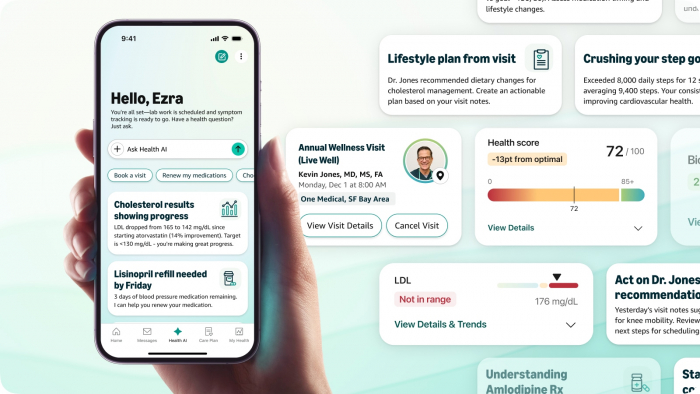
Amazon is expanding its push into digital healthcare with the rollout of a new Health AI assistant on its website and mobile app. Previously limited to members of its healthcare service One Medical, the assistant is now available to a broader audience without requiring a Amazon Prime subscription or paid membership.
The move reflects Amazon’s broader strategy to integrate artificial intelligence into healthcare services, allowing users to ask medical questions, interpret lab results, manage prescriptions, and connect with providers directly from the company’s digital ecosystem. According to reporting by TechCrunch, the tool is powered by large language models that can analyze health data in a secure environment and generate personalized responses.
Amazon says the assistant operates within a HIPAA-compliant framework and can access relevant medical information through Health Information Exchange systems when users grant permission.
What Amazon’s Health AI Assistant Can Do
The Health AI assistant is designed to help users understand and manage everyday health questions without immediately scheduling an appointment. Instead of offering generic responses, the system can combine user health records with medical knowledge to generate tailored insights.
For example, a user might upload or connect their health profile and ask questions about lab results. The assistant could explain cholesterol levels, highlight abnormal markers, and suggest follow-up steps.
Other common tasks include:
- Explaining diagnoses or lab test results
- Answering symptom-related questions
- Providing medication information and interactions
- Managing prescription refills
- Scheduling appointments with healthcare providers
Amazon also integrated the assistant with One Medical’s clinical network so users can quickly transition from an AI conversation to professional care when necessary.
The system supports more than 30 conditions that can be handled through online consultations, including allergies, urinary tract infections, acid reflux, hair loss, and erectile dysfunction.
Access for Prime and Non-Prime Users
One notable aspect of the launch is Amazon’s decision to make the assistant available without requiring a Prime subscription or One Medical membership.
However, the level of service differs depending on the user.
| Feature | Access Requirement | Example Use Case |
|---|---|---|
| General health questions | None | “What should I do for a sore throat?” |
| Personalized health insights | User permission + health profile | Lab result explanations |
| Provider consultations | Prime (free direct messages) or pay-per-visit | Cold, allergies, UTIs |
| Prescription management | Account access required | Renew prescriptions |
Prime members can receive up to five free direct-message consultations with clinicians, while non-Prime users can access providers through a pay-per-visit system.
This hybrid model allows Amazon to introduce the assistant to a wider audience while maintaining monetization through its healthcare network.
Privacy and HIPAA-Compliant Data Handling
Health data privacy remains one of the most sensitive aspects of AI healthcare tools. Amazon states that interactions with the assistant occur in a secure environment that meets HIPAA compliance requirements.
According to the company:
- Health data access requires explicit user permission
- Conversations are processed in encrypted environments
- Personal identifiers are removed when data is used for training models
Instead of storing raw medical conversations, Amazon says its systems learn from abstracted patterns such as medication interactions or symptom-diagnosis relationships.
Even with these safeguards, researchers have raised concerns about how AI companies might use medical conversations to train future models.
The debate mirrors broader industry questions about how AI systems should balance personalization with privacy.
Amazon’s Larger Healthcare Strategy
Amazon’s healthcare ambitions have grown rapidly over the past few years. The company acquired One Medical for $3.9 billion in 2023, gaining access to a nationwide primary care network and a large patient base.
That acquisition gave Amazon a foundation for building digital health services that combine:
- telehealth consultations
- prescription delivery
- AI-powered health guidance
- patient data integration
Instead of launching a standalone medical chatbot, Amazon chose to embed the assistant directly into its consumer platform.
This integration allows users to move seamlessly from asking a health question to booking a real medical appointment.
Competition in the AI Healthcare Race
Amazon’s rollout comes as major AI developers move aggressively into healthcare applications.
Companies including OpenAI and Anthropic have introduced healthcare-focused AI tools aimed at clinical analysis, patient triage, and medical research.
Healthcare AI assistants are increasingly being positioned as digital “front doors” to medical systems, helping patients interpret information before consulting professionals.
Amazon’s advantage lies in its ecosystem. By combining AI with One Medical’s provider network and its own logistics infrastructure, the company can potentially connect medical advice with real-world services such as prescriptions and doctor visits.
The Future of AI in Healthcare
AI healthcare assistants are still evolving, but they are quickly becoming one of the most competitive areas in the artificial intelligence industry. The promise is significant: tools that help patients understand medical information faster, reduce administrative work for doctors, and improve access to care.
At the same time, regulators and healthcare experts continue to stress that AI should support clinicians rather than replace them, especially in areas involving diagnosis and treatment decisions. Amazon’s latest rollout suggests the company sees AI as a bridge between consumer technology and traditional healthcare systems.
If adoption grows, tools like its Health AI assistant could become a routine part of how patients interact with medical services in the coming years.