Anthropic Pushes AI Deeper Into Legal Work With Claude Cowork Plugin, While Regulators Draw Firm Lines
by Suraj Malik - 7 months ago - 5 min read
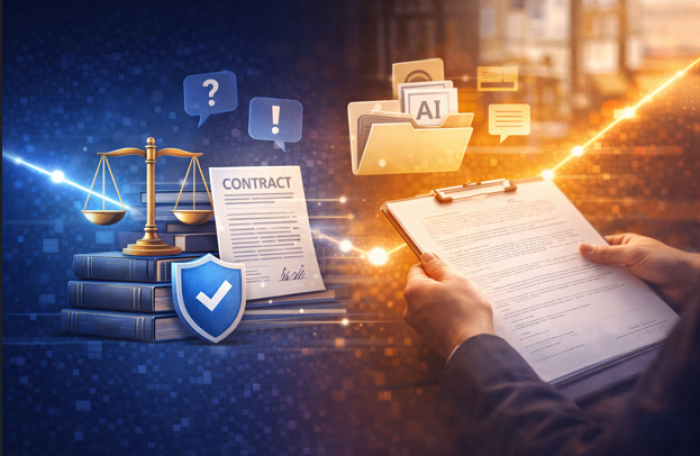
Anthropic has taken another step toward embedding AI agents into real professional workflows with the launch of a new Claude Cowork legal plugin, a tool designed to automate high-volume legal tasks such as contract review, NDA triage, and compliance checks.
The move signals how quickly AI is advancing from general chat assistants to domain-specific operators inside regulated industries. At the same time, Anthropic and legal regulators are being careful to stress one thing clearly: these tools assist lawyers, they do not replace them.
A Shift From Chatbot to Legal Workflow Agent
The new legal plugin expands Anthropic’s Cowork enterprise offering, turning Claude into a task-oriented legal assistant that works directly inside law firm and in-house legal workflows.
Unlike generic document summarization tools, the plugin is built around structured legal processes. It applies predefined playbooks, compliance frameworks, and internal standards to real legal documents rather than offering free-form interpretations.
Anthropic positions the plugin as part of a growing set of Cowork tools aimed at specific professions. Legal teams are among the first targets because of their heavy reliance on document review, repetitive analysis, and standardized workflows.
What the Legal Plugin Can Actually Do
The Claude Cowork legal plugin focuses on repeatable, document-driven tasks that often consume junior lawyer and paralegal time.
Key capabilities include:
- Playbook-based contract review
The system scans contracts and NDAs against firm-approved positions, highlighting risk areas, missing clauses, and deviations from standard language. - NDA intake and triage
Incoming agreements are automatically categorized as standard or non-standard, allowing lawyers to prioritize which documents require deeper review. - Compliance checks
Contract language can be evaluated against internal policies or regulatory requirements related to data protection, intellectual property, or liability. - Structured summaries and comparisons
The tool generates issue lists, clause comparisons, and internal briefing notes that lawyers can review and refine. - Workflow integration
Claude connects with document repositories and matter-management systems, allowing analysis to happen inside existing legal infrastructure.
The goal is not speed alone. Anthropic frames the plugin as a way to reduce cognitive load and bottlenecks so lawyers can focus on judgment, strategy, and negotiation.
Clear Limits on Legal Authority
Anthropic has been explicit about what the plugin is not.
The company states that the tool does not provide legal advice and cannot act as a licensed attorney. All output must be reviewed by qualified lawyers before being relied upon in any legal context.
This position aligns closely with how courts and regulators are responding to AI adoption in law. Across multiple jurisdictions, new guidance and proposed legislation emphasize attorney responsibility when AI tools are involved.
Recent developments include:
- US state bills clarifying that AI systems cannot practice law or be treated as legal persons.
- Disclosure requirements for AI-assisted legal filings and evidence.
- Professional rules placing responsibility for accuracy, confidentiality, and ethics squarely on human attorneys.
In Canada, Legal Aid Ontario now requires lawyers to formally acknowledge compliance with generative AI guidelines each year, including obligations to verify AI-generated work and protect sensitive client data.
The message is consistent: AI can assist, but accountability remains human.
How Legal Work Is Likely to Change
Legal analysts say the plugin highlights a broader reallocation of work inside legal teams rather than an outright replacement of roles.
AI agents are strongest in areas such as:
- High-volume contract review
- Standardized agreements and vendor NDAs
- First-pass risk identification
- Knowledge management and precedent surfacing
Human lawyers remain essential where judgment, negotiation, and responsibility are required. Strategy, novel legal interpretation, client counseling, and courtroom advocacy continue to sit firmly outside AI’s authority.
In practice, this could compress timelines, reduce costs for routine work, and shift junior legal roles toward oversight and higher-value analysis rather than manual review.
Why Legal Tech Investors Are Paying Attention
Anthropic’s move has implications beyond law firms.
Many legal-tech companies built contract analysis and compliance tools using Claude’s API. By releasing a first-party legal workflow plugin, Anthropic is moving up the value stack and potentially competing with its own ecosystem partners.
This shift contributed to broader investor anxiety about vertical SaaS businesses, particularly in data-heavy sectors like legal research, compliance, and analytics. Markets have already reacted to similar fears around AI agents flattening traditional software interfaces.
Legal technology appears to be one of the first major test cases for how far agentic AI can go before hitting regulatory and professional boundaries.
A Line That Is Advancing, Not Disappearing
Anthropic’s Claude Cowork legal plugin does not turn AI into a lawyer. What it does do is push AI closer to the daily operational core of legal work than ever before.
The line between assistance and authority is becoming more visible, not less. Regulators are reinforcing it. Anthropic is publicly acknowledging it. Law firms are adapting to it.
What is changing is the expectation of how much routine legal work can be automated, standardized, and accelerated. In that sense, AI agents are not replacing lawyers, but they are reshaping the economics and structure of legal practice in ways that will be difficult to reverse.