Apple Launches iPhone 17e with 256GB Base and New M4 iPad Air
by Sakshi Dhingra - 17 hours ago - 5 min read
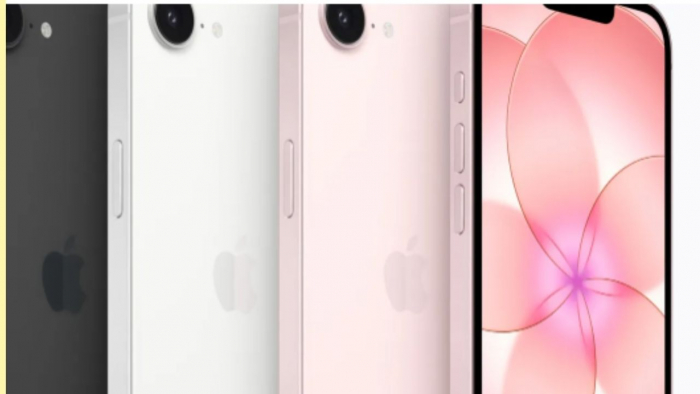
Apple’s newest March 2026 launch is a very “Apple 2026” move: it pulls genuinely modern pieces of its stack—new silicon, better wireless standards, stronger accessory support, down into devices meant for the widest possible audience. The two products doing the heavy lifting are the iPhone 17e, which Apple is positioning as the most affordable on-ramp to the iPhone 17 generation, and the iPad Air with M4, which now looks less like a “nice iPad” and more like the default iPad for people who actually use an iPad hard.
The iPhone 17e is “lower-cost,” but it isn’t a throwback iPhone anymore
The biggest headline is pricing and storage. In the U.S., Apple starts the iPhone 17e at $599 and—crucially—that price now includes 256GB as the base storage. That is not a small footnote; it’s Apple acknowledging that entry storage has become a pain point for mainstream buyers who keep phones for years, shoot a lot of video, and live inside apps that grow endlessly.
In India, early reporting puts the starting price at ₹64,900, with the same “256GB base storage” positioning.
From there, the iPhone 17e’s story is simple: Apple is giving the “e” model fewer reasons to feel like you’re settling. It runs on Apple’s A19 chip, which matters because performance and longevity on iOS are heavily tied to the chip generation, not just raw specs.
Just as important for everyday ownership is the return of the accessory ecosystem. The iPhone 17e supports MagSafe and Qi2 wireless charging, which restores the kind of frictionless “snap-on” convenience that a lot of people now treat as a core part of the iPhone experience—car mounts, bedside stands, wallets, battery packs, and docking accessories.
Camera is another area where Apple is collapsing the gap between “budget” and “mainstream.” The 17e gets a 48MP Fusion camera, and Apple markets a 2x option that aims to deliver “optical-quality” results through sensor cropping and computational processing. For typical users, this is the difference between always having to step closer and actually being able to frame naturally without turning the shot into mush.
Apple is also leaning on durability and modern ports. The iPhone 17e uses Ceramic Shield 2 on the front and includes USB-C. Apple’s product page claims Ceramic Shield 2 offers significantly improved scratch resistance versus the prior “e” model generation.
Availability is straightforward: pre-orders open March 4, 2026, and it goes on sale March 11, 2026, in black, white, and soft pink.
What makes the iPhone 17e strategically interesting is not one spec—it’s the overall posture. Apple is essentially saying that the “entry iPhone” should still feel like a current-generation iPhone. The A19, 256GB base storage, MagSafe/Qi2, and a modern 48MP camera combine into a phone that is lower-cost, yes, but much harder to dismiss as “the cheap one.”
The iPad Air with M4 just got dangerously close to “Pro for most people”
On the iPad side, Apple updated the iPad Air to the M4 chip, and kept the lineup in the familiar two-size structure: 11-inch and 13-inch. Apple’s own newsroom announcement puts U.S. starting pricing at $599 for 11-inch and $799 for 13-inch, with pre-orders beginning March 4 and availability March 11.
The performance angle is not just “it’s faster.” Wired reports Apple framing the move as roughly a 30% boost over the previous iPad Air generation (and the kind of leap that becomes more noticeable the more you multitask, edit, or create).
But the more important change is that the iPad Air is being rebuilt around a more modern connectivity and memory baseline. Apple confirms the Air now includes N1, an Apple-designed wireless networking chip that enables Wi-Fi 7, Bluetooth 6, and Thread. Apple also describes practical benefits like improved performance and reliability for features such as Personal Hotspot and AirDrop.
Wired adds that unified memory rises from 8GB to 12GB, which is the sort of upgrade that rarely looks exciting on a spec sheet but absolutely changes how an iPad behaves when you keep many apps alive, run heavier creative tools, or expect multitasking to feel stable over long sessions.
For cellular models, Apple positions the Air with a C1X modem for sub-6 5G, again showing Apple’s push to bring more of the underlying connectivity stack in-house and standardize it beyond the Pro tier.
Storage options run from 128GB up to 1TB (128GB, 256GB, 512GB, 1TB), and Apple lists colors as blue, purple, starlight, and space gray.
The iPad Air’s “human” story is that Apple is trying to reduce decision fatigue. Historically, people who wanted a serious iPad often ended up staring at the Pro because “Air” sounded like a compromise. With M4, Wi-Fi 7 (via N1), a higher RAM baseline, and the same two-size approach, the Air now reads like the iPad Apple expects most power users to buy—unless they truly need the most specialized Pro-only display or camera hardware.
The shared theme: Apple is pulling flagship foundations downward
Seen together, the iPhone 17e and M4 iPad Air aren’t random updates; they’re a clear pricing-and-platform tactic. Apple is defending the middle: give more storage by default, keep prices stable where possible, modernize wireless standards, and make the “non-Pro” devices feel current-generation in the ways that actually affect daily life, charging ecosystems, multitasking stability, and longevity.
If you want, paste your Tech site’s preferred tone reference (or one of your recent articles), and I’ll rewrite this into your exact newsroom-style voice while keeping every number and claim source-backed and consistent.