Apple’s Record Quarter Raises a Bigger Question: Is India Becoming the Company’s Next Growth Engine?
by Vivek Gupta - 1 month ago - 5 min read
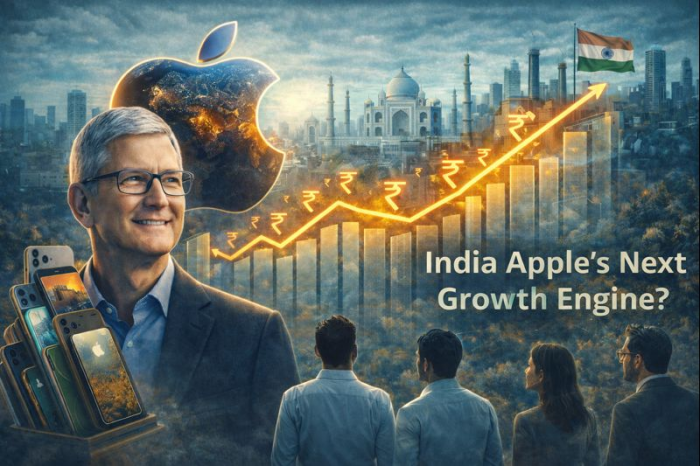
A blockbuster earnings quarter is not unusual for Apple. What is unusual is where much of the new growth is now coming from. After announcing record quarterly revenue powered by the iPhone 17 lineup, the company’s leadership repeatedly pointed toward one market during its earnings call: India. And the signal was clear. India is no longer just a promising opportunity. It is becoming central to Apple’s next phase of expansion.
Speaking after the results, CEO Tim Cook described India as showing “strong double-digit revenue growth,” adding that despite years of progress, Apple still holds only modest market share in the country. That combination, rapid growth and low existing penetration, is exactly what global tech companies look for when planning long-term expansion. The quarter’s headline numbers underline the scale of momentum. Apple posted revenue of $143.8 billion for the December quarter, the highest in its history, alongside record profits of $42.1 billion. Earnings per share comfortably beat expectations, while iPhone revenue alone crossed $85 billion, driven by strong demand for the iPhone 17 series.
iPhone 17 Leads the Charge, But the India Story Stands Out
Globally, the quarter reflected powerful demand across regions, with Apple setting revenue records in multiple markets. Yet analysts and investors focused closely on India because the story there is evolving faster than expected. Industry data suggests roughly 14 million iPhones were shipped in India in 2025, up from around 12 million the previous year. That shift has helped push Apple’s market share in the country toward 9 percent, compared with about 7 percent previously, even though the overall smartphone market has grown only modestly.
The difference is that Apple is gaining ground in the premium segment, where consumers are increasingly willing to spend more on devices. Executives note that many Indian customers buying iPhones today are first-time buyers rather than repeat upgraders, meaning the installed base is still in an early expansion phase. As those users later subscribe to services, upgrade devices, and buy into the wider ecosystem, recurring revenue opportunities grow.
Apple’s Services division illustrates that transition well. The company generated $30 billion from Services in the quarter, another all-time record, supported by its massive global device base. For India, this suggests that the long-term opportunity is not just hardware sales but an expanding ecosystem of subscriptions and digital services.
Retail Expansion Signals Long-Term Commitment
Another sign of Apple’s confidence in India is its retail footprint. After opening flagship stores in Mumbai and Delhi in recent years, the company is planning further expansion, including a second store in Mumbai. That would bring the country’s total Apple-owned retail outlets to six by early 2026.
Retail presence plays a bigger role than just sales numbers. Physical stores act as brand showcases, service centers, and ecosystem entry points for customers who may be buying premium devices for the first time. Combined with financing options and trade-in programs, they lower barriers for customers moving up from mid-range smartphones.
For a country where offline buying still matters in major cities, these stores are more than symbolic investments. They are long-term bets on consumer behavior shifting upward.

Manufacturing Shift Adds Another Layer to the Story
India’s role in Apple’s supply chain has also grown rapidly. For the first time, all variants of the iPhone 17 lineup are being produced in India right from launch, rather than months later as in earlier cycles. Manufacturing partners, including facilities operated by Foxconn and Tata-linked entities, now run multiple plants capable of serving both domestic and export demand.
A significant share of India-made iPhones is now shipped to overseas markets, including the United States. Internal production targets suggest tens of millions of devices destined for global markets could originate from India within the next year. Beyond exports, these plants create large employment clusters and support supplier ecosystems, further embedding Apple into India’s manufacturing landscape.
This shift also reduces risk for Apple, giving it alternatives to production centers concentrated in one geography.
Demand Is Strong, Supply Is Catching Up
Cook acknowledged during the earnings call that demand for the iPhone 17 exceeded expectations, putting the company into what he called “supply chase mode.” In simple terms, Apple is still working to meet demand in some markets. That demand strength, however, comes alongside potential challenges ahead, including rising component costs such as memory chips, which could put pressure on margins in coming quarters.
Still, Apple guided for continued revenue growth in the next quarter, signaling confidence that momentum remains intact despite cost pressures.
Why India Matters More Than Ever
India’s importance for Apple today goes beyond sales numbers. It represents three things at once: a growing consumer market, a manufacturing hub, and a strategic diversification play. As geopolitical risks and supply chain disruptions remain global concerns, expanding production across multiple regions gives companies greater resilience.
At the same time, India’s premium smartphone segment continues expanding even when overall device shipments remain flat. That allows Apple to gain share in value terms even if total market volumes grow slowly.
The opportunity remains large precisely because Apple’s presence is still relatively small compared with overall smartphone usage in the country. Growth potential remains ahead rather than behind.
The Bigger Picture Behind the Numbers
This quarter’s results show how Apple’s strategy is evolving. The company is no longer relying solely on mature markets or incremental upgrades. Instead, it is expanding its ecosystem through services while building momentum in emerging regions where smartphone ownership patterns are still developing.
India fits that strategy perfectly. Strong demand, growing local production, rising middle-class spending, and expanding digital infrastructure together create conditions for sustained growth.
The immediate takeaway from Apple’s record quarter is clear: the iPhone 17 cycle worked. But the deeper question now is whether India becomes the company’s most important growth market over the next decade.
Judging by recent momentum, that possibility no longer feels speculative. It feels increasingly likely.