China’s EV Boom Hits a Speed Bump as BYD Sales Sink to Near Two-Year Low
by Vivek Gupta - 1 month ago - 5 min read
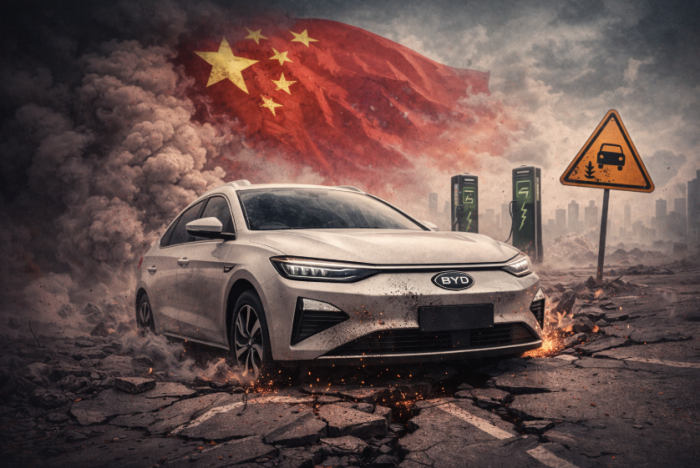
China’s electric vehicle market, long one of the country’s few bright economic spots, is showing clear signs of strain. New data from January suggest the slowdown is not confined to smaller players but is now weighing on even the industry’s biggest name: BYD.
According to figures analyzed by CNBC, BYD’s domestic battery-electric passenger car sales in January fell to their weakest monthly level since February 2024. Total new energy vehicle sales, including battery-electric vehicles and plug-in hybrids, came in at roughly 210,000 units, a drop of about 30 percent compared with the same month a year earlier. Overseas shipments also slipped, with exports falling to around 100,000 vehicles, down sharply from more than 133,000 in December.
The numbers underline a broader cooling in China’s EV sector at a moment when policymakers and investors had hoped it would continue to offset weakness elsewhere in the economy.
A sector-wide slowdown
BYD’s decline did not happen in isolation. Several major Chinese EV brands reported weaker deliveries in January compared with December, reinforcing the view that demand softened across the industry at the start of the year.
Xpeng delivered around 20,000 vehicles in January, well below its 2025 monthly average of more than 35,000. Li Auto’s deliveries dropped to about 27,700 units. Xiaomi, a relative newcomer to the EV market, shipped just over 39,000 vehicles, down from more than 50,000 in December, even though its year-on-year growth remained positive ahead of a planned model upgrade later this year.
CNBC’s compilation of company disclosures shows at least six major EV brands experienced month-on-month declines, pointing to a market-wide pullback rather than company-specific missteps.
Policy changes bite
One of the clearest drivers behind the slowdown is a shift in government policy. From January 1, China reinstated a 5 percent vehicle purchase tax on new energy vehicles, ending more than a decade of full exemption from the standard 10 percent levy.
Analysts say the change likely pulled demand forward into late 2025, as buyers rushed to lock in tax-free purchases, leaving a hangover at the start of 2026. Some consumers are also delaying purchases while they reassess prices, incentives, and upcoming model launches.
Helen Liu, a partner at Bain & Company, told CNBC that mounting pressure in China’s auto market reflects a combination of policy shifts and fierce competition, with frequent price cuts and promotions encouraging buyers to wait for better deals.
Seasonality and caution
January and February are traditionally volatile months for China’s auto sales due to the Lunar New Year, which moves around the calendar each year. This seasonality makes early-year data harder to interpret, as pre-holiday buying patterns and post-holiday slowdowns blur the picture.
Still, the latest figures build on an already weakening trend. Data from the China Passenger Car Association showed new energy vehicle sales growth slowed to just 2.6 percent year-on-year in December 2025, marking the third straight month of deceleration. BYD’s own December sales were already down more than 18 percent from a year earlier, setting the stage for January’s sharper drop.
BYD adjusts, but remains dominant
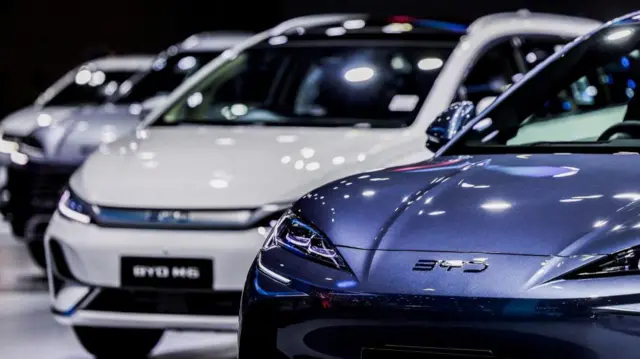
Despite the downturn, BYD remains the world’s largest seller of new energy vehicles. The company sold about 4.56 million NEVs in 2025, maintaining its lead over Tesla in global volumes.
However, the January figures mark BYD’s fifth consecutive month of year-on-year sales declines, and production has also been cut. Output in January fell by nearly 29 percent compared with a year earlier, extending a run of reduced production since mid-2025.
BYD has yet to release detailed domestic sales targets for 2026, but it has made clear that overseas markets will play a bigger role. The company aims to boost exports to around 1.3 million vehicles this year, a significant increase from 2025 levels. Even with January’s softer export numbers, international sales are increasingly seen as a buffer against cooling demand at home.
Industry analyst Tu Le of Sino Auto Insights remains cautiously optimistic, arguing that BYD’s scale, brand strength, and investments in charging, battery technology, and intelligent driving systems should help it navigate short-term headwinds.
Wider economic implications
The EV sector has been one of the few consistent growth engines in a Chinese economy weighed down by a prolonged property slump and fragile consumer confidence. A sustained slowdown in electric vehicle sales could therefore have broader implications.
Some analysts believe Beijing may eventually be forced to step back in with targeted support if demand continues to weaken, especially if the property market fails to stabilize. China’s leadership is expected to outline its 2026 economic priorities at the annual parliamentary session in March, where the future of EV incentives and industrial policy is likely to draw close attention.
For now, January’s data sends a clear signal. Even the world’s biggest electric vehicle maker is not immune to changing policies, intense competition, and a more cautious consumer. The question investors are now asking is whether this is a temporary pause or the start of a more durable reset for China’s EV boom.