From AI Dreams to Market Doubt: How Tech, Crypto, and Risk Assets Slid Together
by Vivek Gupta - 1 month ago - 4 min read
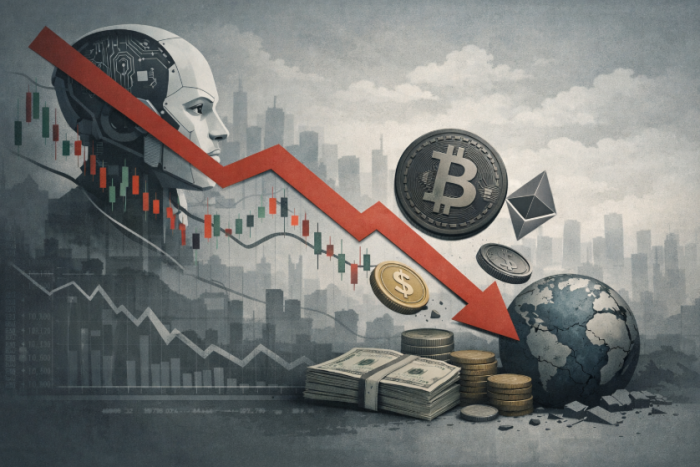
A sharp and unsettling selloff rippled through global markets this week, deepening across multiple sessions and spreading well beyond a single asset class. What began as a pullback in technology shares escalated into a broader reassessment of some of the most powerful narratives that carried markets over the past year: artificial intelligence, cryptocurrencies, and even traditional safe havens.
By late Thursday in New York and into Friday’s Asian trading hours, the mood had clearly shifted from cautious to defensive.
A multi-day slide gathers force
Wall Street extended its losses for a third straight session as selling pressure intensified across technology stocks. Major US indices weakened enough to erase earlier gains for the year, while the tech-heavy benchmark slid to levels last seen months ago.
The software sector stood out as the epicenter of the decline. Traders, some of whom began calling the rout “software-mageddon,” pointed to growing anxiety that rapid advances in artificial intelligence could undermine the long-term pricing power of traditional software companies.
Key developments that weighed on sentiment included:
- Continued fallout from new enterprise-focused AI tools that appear capable of handling complex professional workflows
- Investor unease over whether aggressive AI spending by tech giants will deliver meaningful returns
- Broader concerns about slowing economic momentum
Crypto joins the downturn
Digital assets, often pitched as an alternative hedge during periods of uncertainty, failed to play that role this time. Instead, cryptocurrencies suffered one of their steepest declines in years.
Bitcoin endured a dramatic drop during Thursday’s session, with losses extending into Asian trading. Other major tokens followed, reinforcing fears that the sector may be entering another prolonged downturn, sometimes described by market watchers as a new and particularly harsh crypto winter.
Crypto-linked stocks also came under heavy pressure as investors rushed to reduce exposure across the ecosystem. Exchanges, trading platforms, and companies holding large amounts of digital assets all slid sharply, mirroring the collapse in token prices.

AI optimism turns into AI anxiety
At the heart of the selloff lies a changing perception of artificial intelligence. Only months ago, AI was widely seen as a near-universal tailwind for technology companies. This week, that optimism began to fracture.
The immediate catalyst was the rollout of new AI models designed to act as autonomous digital coworkers, capable of performing tasks traditionally sold through enterprise software subscriptions. For investors, the implications were unsettling.
The debate now dividing markets can be summarized in a few core questions:
- Will AI tools enhance existing software platforms, or replace them?
- Can software companies defend margins if customers build more solutions in-house using AI?
- Are massive investments in AI infrastructure justified by future revenue, or are they front-loading risk?
Weak data and crowded trades add pressure
The market stress was amplified by signs of softness in recent US labor data, which added to concerns that economic conditions may be cooling faster than expected. As growth expectations dimmed, heavily crowded trades began to unwind.
Analysts noted that positions built around AI leadership, software resilience, and crypto strength were reduced aggressively, creating large and rapid capital flows. That kind of forced repositioning often exacerbates price swings, regardless of fundamentals.
Even safe havens falter
Adding to the unease, precious metals also declined during the turmoil. The selloff in silver, in particular, underscored how broad the reassessment had become. Assets traditionally viewed as stores of value offered little shelter as investors scrambled for liquidity.
One market strategist summed up the moment by noting that investors are now questioning the foundations that supported markets in recent months, from AI-driven growth stories to digital currencies and defensive commodities.
Global markets feel the spillover
The impact was not confined to US trading hours. Asian equity markets extended losses into Friday, reflecting the global reach of the selloff. European stocks tied to data analytics, professional services, and technology also weakened, as the narrative of AI-driven disruption continued to ripple outward.
Meanwhile, interest rate expectations began to shift. Futures markets showed a rising probability that central banks could be forced to consider easing if financial conditions tighten further, even as policymakers publicly signal patience.
What investors are watching now
As markets search for direction, attention is turning to several unresolved issues:
- Whether selling pressure in cryptocurrencies stabilizes or accelerates
- How software companies address AI-related risks in upcoming guidance
- Signs of forced liquidations or credit stress beyond equity markets
- Central bank messaging as volatility feeds into broader financial conditions
For now, the selloff represents more than a routine correction. It reflects a rare moment when multiple pillars of market confidence are being tested at once, leaving investors to reassess not just valuations, but the stories they believed about where growth and safety would come from next.