Beyond the Giga-Factory: China Accelerates the Dawn of Elon Musk’s Robotic Era
by Parveen Verma - 3 months ago - 3 min read
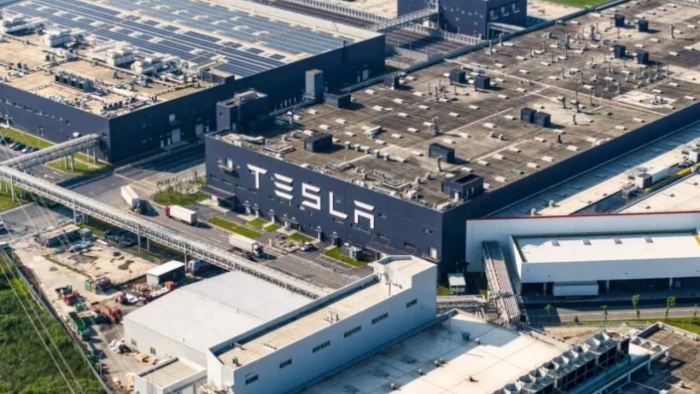
As 2025 draws to a close, the global technology race has shifted its focus from the digital screens of the past to the silicon and steel of humanoid machines. While Elon Musk has long championed a future where robots are as ubiquitous as smartphones, it is the industrial heartland of China that is rapidly turning this prophecy into a tangible, mass-produced reality. On the final Tuesday of the year, the synergy between Silicon Valley’s visionary rhetoric and Beijing’s manufacturing momentum has created a global inflection point, signaling the true beginning of the “Humanoid Age.”
Elon Musk’s vision for Tesla’s Optimus a machine he claims will eventually account for the vast majority of Tesla’s long-term value has transitioned this year from a research-heavy showcase to a pilot-ready workforce. With Tesla aiming to hit a deployment milestone of 5,000 internal units by the end of December, the company recently demonstrated its "Gen 3" prototypes. These machines have displayed a remarkable evolution in dexterity, moving beyond simple walking to performing intricate pick-and-place routines and autonomous navigation within the chaotic environments of Tesla’s Gigafactories. Musk’s long-term goal remains a price point between $20,000 and $30,000, a figure he believes will make personal robotic assistants accessible to the average household. However, while Tesla focuses on refining its proprietary AI and high-end hardware, China has spent 2025 cementing its status as the world’s primary robotics assembly line.
Following strategic guidelines from the Ministry of Industry and Information Technology, the country has officially entered what analysts call the "First Year of Mass Production." Data indicates that domestic orders for humanoid robots in China have surged past 30,000 units this year alone, representing a tenfold increase compared to 2024. This rapid scaling is driven by a cluster of agile startups such as Unitree, UBTECH, and Agibot, which have moved aggressively from laboratory testing to large-scale delivery. The competitive landscape is being reshaped by a brutal price war that favors China’s existing manufacturing infrastructure. Models like the Unitree G1 have entered the market with starting prices as low as $16,000, effectively commoditizing a technology that was once the exclusive domain of elite research institutions. This aggressive pricing is supported by China’s dominance in the supply chain for critical components, including high-torque actuators, specialized sensors, and aircraft-grade materials. Currently, the Asia-Pacific region accounts for nearly half of the global revenue in the humanoid component market, providing a structural advantage that even the most advanced Western AI firms find difficult to bypass.
Beyond the factory floor, the drive for automation in China is fueled by a demographic necessity. As the nation grapples with a shrinking workforce and an aging population, the deployment of humanoids in elderly care, healthcare, and logistics has become a national priority. While Western critics point to a potential "investment bubble" in the sector, the sheer volume of capital estimated at over 1 trillion yuan in long-term tech investment suggests that the momentum is unlikely to stall. As 2026 approaches, the global economy faces a paradigm shift where the metric of national power may no longer be the size of the human workforce, but the sophistication and scale of its robotic counterpart.