Inside the Epstein Files, What Newly Released Emails Reveal About Elon Musk
by Vivek Gupta - 1 month ago - 6 min read
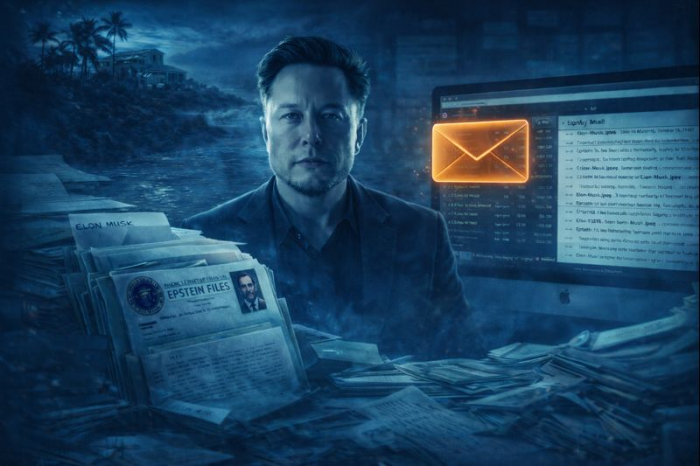
Newly unsealed court documents tied to the Jeffrey Epstein investigation have added fresh context to a relationship that Elon Musk has long described as minimal. The emails, dated between 2012 and 2013, show Musk and Jeffrey Epstein corresponded directly, discussing potential meetings at Epstein’s private island and at Musk’s aerospace company, SpaceX.
The records do not confirm that Musk ever visited Epstein’s Island. Musk has repeatedly denied doing so. But the newly released messages complicate years of public distancing and raise questions about how closely the two men interacted during that period.
What the Newly Released Files Show
The documents were made public as part of a large release ordered under a federal transparency law requiring disclosure of Epstein-related records. According to the emails, Musk and Epstein exchanged messages about travel plans, social events, and possible visits while Musk was traveling in the Caribbean with his then partner, actress Talulah Riley.
In one exchange from late 2013, Epstein offered to arrange helicopter transport to his island and asked how many people would be traveling. Musk responded that it would be just himself and Riley, and asked which day would be “the wildest party.”
What is notable is not just the tone of the messages, but how directly logistical details were discussed, including dates, transportation, and timing.
Why This Matters Now
For years, Musk has publicly minimized his connection to Epstein, emphasizing that he rejected invitations to visit the island. In a 2024 post on X, Musk wrote that Epstein “tried to get me to go to his island and I refused,” adding that media coverage overstated their association.
The newly released emails do not directly contradict Musk’s claim that he never went. However, they do show that discussions about visiting were active and detailed over an extended period, rather than casual or one-off.
That distinction matters because public scrutiny around Epstein has increasingly focused not just on who visited the island, but on who engaged with him socially or professionally after concerns about his conduct were already circulating.
A Second Thread, Business Interest
Beyond social planning, the emails also suggest Epstein sought business services connected to Musk’s ventures. In messages from 2012, Epstein asked about electrifying properties, including his New Mexico ranch and private island, using SolarCity.
At the time, Musk was a major investor and board member at SolarCity, the solar company founded by his cousin, Peter Rive. Musk forwarded Epstein’s inquiry to Rive, asking whether SolarCity operated in New Mexico.
SolarCity was later acquired by Tesla in 2016, folding the business into Tesla’s energy division. There is no public evidence that SolarCity ultimately provided services to Epstein.
Still, the exchange underscores that Epstein was attempting to leverage relationships for both social access and commercial benefit.
What the Emails Do Not Prove
It is important to separate what the documents show from what they do not.
The emails do not establish that Musk ever traveled to Epstein’s Island. They also do not suggest Musk participated in or had knowledge of Epstein’s criminal activities. Epstein died by suicide in federal custody in 2019 while awaiting trial on sex trafficking charges.
However, the correspondence does demonstrate a level of engagement that goes beyond the “brief acquaintance” framing Musk has sometimes used when addressing questions about Epstein.
Government Scrutiny in the Background
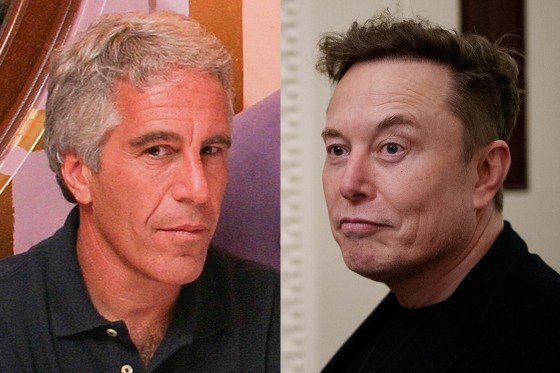
Musk’s name has previously surfaced in legal actions connected to Epstein. In 2023, the U.S. Virgin Islands issued a subpoena to Musk as part of litigation involving JPMorgan Chase, citing concerns that Epstein may have attempted to refer Musk as a client.
The subpoena did not accuse Musk of wrongdoing. Instead, it reflected the broad scope of investigators’ efforts to map Epstein’s network of contacts and potential financial relationships.
On Friday, the Department of Justice released millions of additional Epstein-related pages, along with thousands of videos and images, after facing criticism for delays in complying with disclosure requirements passed by Congress in late 2025.
Musk’s Public Position
Musk has not commented directly on the newly released emails. CNBC reported that he did not respond to requests for comment following the document release.
In the past, Musk has been vocal about Epstein-related transparency, at one point accusing political figures of withholding files for reputational reasons. He later walked back some of those statements, saying they went too far.
That history adds another layer of irony, Musk has positioned himself as an advocate for disclosure, yet now finds his own past communications subject to renewed scrutiny.
Why These Revelations Are Resonating
Public reaction to Epstein-related disclosures has shifted over time. Early coverage focused on criminal acts and immediate enablers. More recent attention has expanded to include social proximity, influence networks, and how powerful figures navigated relationships with Epstein after allegations were already known in elite circles.
In that context, even emails that stop short of proving physical presence can feel significant.
• They show how access to Epstein’s world was normalized among influential figures
• They reveal how business, social life, and power often overlapped
For a figure as prominent as Musk, that overlap invites closer examination.
The Bigger Picture
The Epstein files are less about any single individual and more about documenting how one man embedded himself in elite networks for decades. The Musk emails are one small part of that broader record.
Still, they serve as a reminder that reputational distance is not always as clean as public statements suggest, especially when viewed through the lens of contemporaneous communications rather than retrospective explanations.
The Significance of the Disclosure
The newly released Epstein emails do not show Elon Musk committed any crime or visited Epstein’s Island. But they do reveal a fuller, more detailed picture of past correspondence that Musk has largely downplayed in public.
As more documents are released and examined, the Epstein files continue to do what they were always destined to do, reopen uncomfortable questions about proximity, judgment, and accountability among some of the world’s most powerful people.
And in that process, even carefully managed narratives can start to fray under the weight of the written record.