Intel Tries Again in GPUs as NVIDIA Tightens Its Grip on a Nearly One-Company Market
by Suraj Malik - 1 month ago - 5 min read
Intel is preparing to re-enter the discrete graphics card market again at a time when that market is more concentrated than almost any other segment in modern computing.
According to recent industry data highlighted this week, NVIDIA now controls roughly 94% of the global discrete GPU market, leaving competitors with little room to breathe. AMD holds around 6%, while Intel effectively sits at zero.
Intel’s renewed push is centered on two upcoming GPU families Battlemage and Celestial but the effort is less about beating NVIDIA in gaming and more about proving something much bigger: that Intel can manufacture cutting-edge chips at scale inside the United States.
A GPU Market Unlike Any Before It
Discrete GPUs were once a competitive duopoly. That era is over.
Over the past two years, NVIDIA’s market share has grown from already-dominant levels to near-total control. This isn’t just about better products, it’s about ecosystems, supply chains, and developer behavior reinforcing a single winner.
NVIDIA ships millions of GPUs every quarter, while AMD ships a fraction of that volume. Intel’s previous Arc GPUs barely registered in shipment data, largely due to software instability and inconsistent performance.
The result is a market where pricing power, developer optimization, and hardware availability overwhelmingly favor one company.
Why Intel Is Trying Again After Failing Before
Intel’s earlier attempt to break into discrete GPUs with the Arc A-series (2022–2024) ended badly. Reviews were harsh, drivers were unreliable, and real-world performance lagged far behind expectations. Trust among gamers and developers evaporated quickly.
This time, Intel says it has learned from those mistakes.
Its short-term plan, Battlemage, focuses on budget and mid-range GPUs designed to compete on price rather than raw performance. The more ambitious effort comes later with Celestial, a next-generation architecture intended to finally challenge NVIDIA’s higher-end offerings.
But even Intel insiders acknowledge the odds are steep.
The Real Wall Intel Keeps Hitting: Software, Not Silicon
The biggest obstacle Intel faces isn’t hardware, it’s CUDA.
CUDA is NVIDIA’s proprietary programming platform, refined over more than two decades. It is deeply embedded across gaming engines, AI frameworks, scientific tools, and developer workflows. Most GPU-accelerated software is written for CUDA first and often only.
Intel’s alternative, OneAPI, exists but lacks the maturity, tooling, and adoption needed to shift industry behavior. For developers and studios, rewriting software for a GPU that holds only a few percent of the market simply doesn’t make financial sense.
This creates a self-reinforcing loop:
developers optimize for NVIDIA → performance is best on NVIDIA → consumers buy NVIDIA → developers double down on NVIDIA.
Breaking that cycle could take a decade or more, even if Intel’s hardware improves dramatically.
So Why Is Intel Doing This at All?
Because GPUs are not the real prize.
Intel’s larger bet is on chip manufacturing, not graphics cards. The company is investing billions into its 18A manufacturing process, a next-generation node built entirely in the U.S. If successful, it would be the most advanced domestic chip production capability in the world.
Making its own GPUs serves as proof that Intel’s factories can produce complex, high-performance chips not just CPUs. Success here strengthens Intel’s pitch to external customers looking for an alternative to overseas manufacturing.
In other words, GPUs are the demonstration project, not the end goal.
Even NVIDIA Is Paying Attention
In a notable twist, NVIDIA itself has partnered with Intel on advanced chip packaging and invested billions into the company. This does not mean NVIDIA feels threatened but it does suggest Intel’s manufacturing capabilities are improving enough to be taken seriously.
For NVIDIA, diversifying parts of its supply chain reduces dependence on a single overseas foundry. For Intel, the partnership acts as external validation at a time when credibility is everything.
What Happens Next
Over the next two years, Intel’s strategy will be tested on several fronts:
- Can Battlemage rebuild basic trust at the low end?
- Can Celestial deliver real performance gains without pricing itself out of relevance?
- Can Intel’s manufacturing roadmap stay on schedule something it has struggled with in the past?
Most analysts expect Intel to gain a small but meaningful niche, possibly reaching mid-single-digit market share by 2028. That would not threaten NVIDIA’s dominance, but it could justify Intel’s broader manufacturing ambitions.
The more likely outcome is not disruption, but modest diversification in a market that has become unusually concentrated.
The Bottom Line
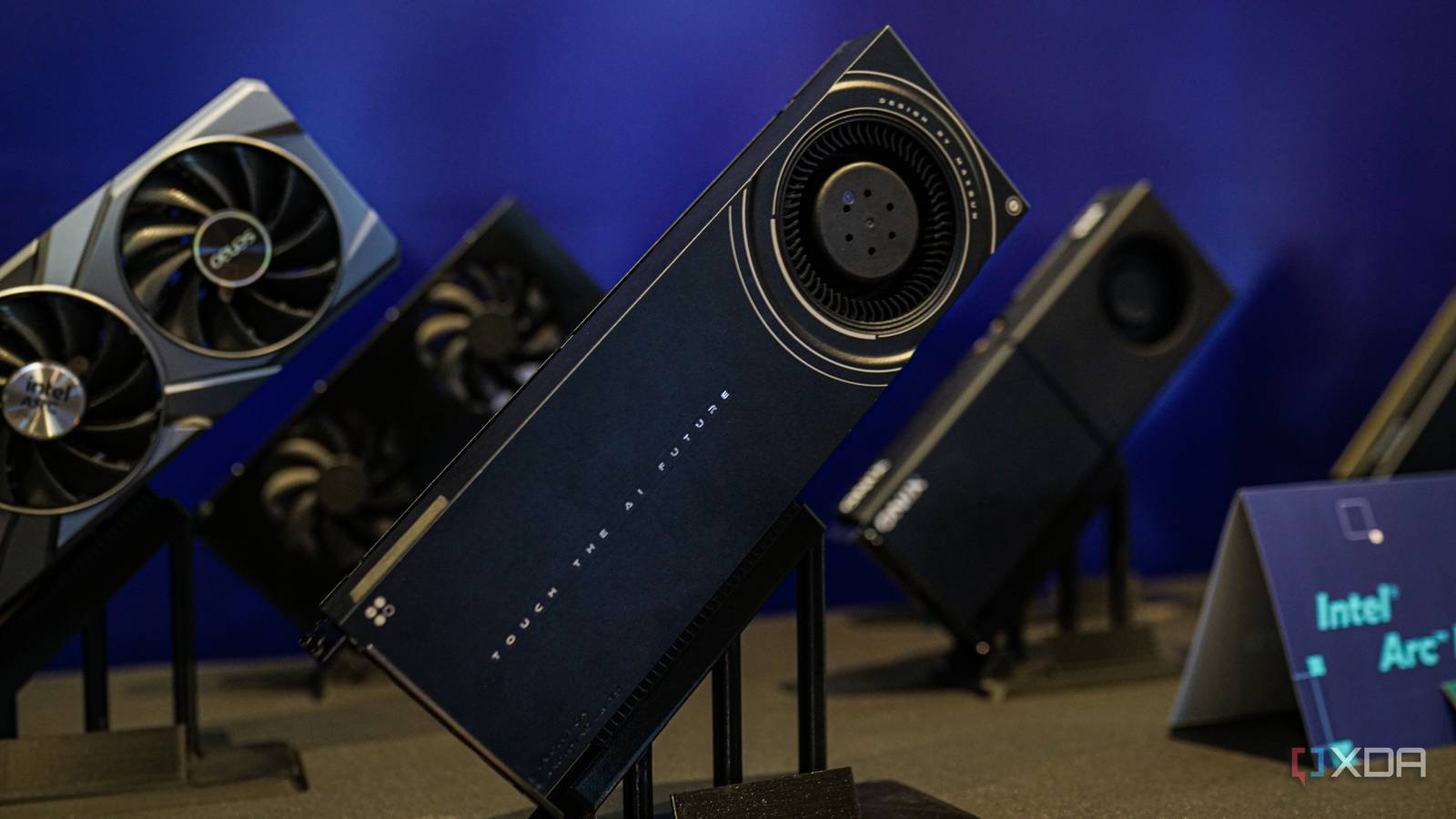
Intel’s GPU comeback is not a head-on attack on NVIDIA’s throne. NVIDIA’s software ecosystem and market momentum remain overwhelming, and that is unlikely to change this decade.
Instead, Intel’s GPU effort is a long, expensive credibility play, designed to prove that its factories, not its graphics cards, are ready for the future.
For NVIDIA, the monopoly holds.
For Intel, the real battle is manufacturing trust.
And for the GPU market, meaningful competition remains a distant goal rather than an imminent shift.