KKR’s $11 Billion Asia Data Center Bet Signals How Far the AI Infrastructure Boom Has Gone
by Vivek Gupta - 1 month ago - 4 min read
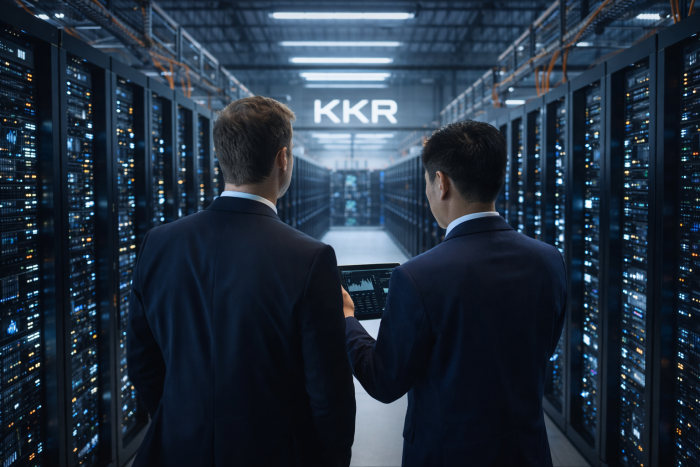
KKR has agreed to acquire a controlling stake in ST Telemedia Global Data Centres (STT GDC) in a deal that values the business at about $10.9 billion, marking one of the largest data center transactions ever seen in Asia-Pacific. Announced on February 3, 2026, the deal underlines how aggressively global investors are positioning for the next phase of the artificial intelligence boom, where access to power, land, and compliant infrastructure matters as much as software.
Under the agreement, a KKR-led consortium will buy an 82 percent stake in STT GDC from ST Telemedia, a unit of Singapore’s state investor Temasek. KKR will hold roughly 75 percent of the business, with Singapore Telecommunications taking the remaining 25 percent. The transaction is expected to close in the first half of the second half of 2026, subject to regulatory approvals across multiple countries.
A Deal Built for the AI Era
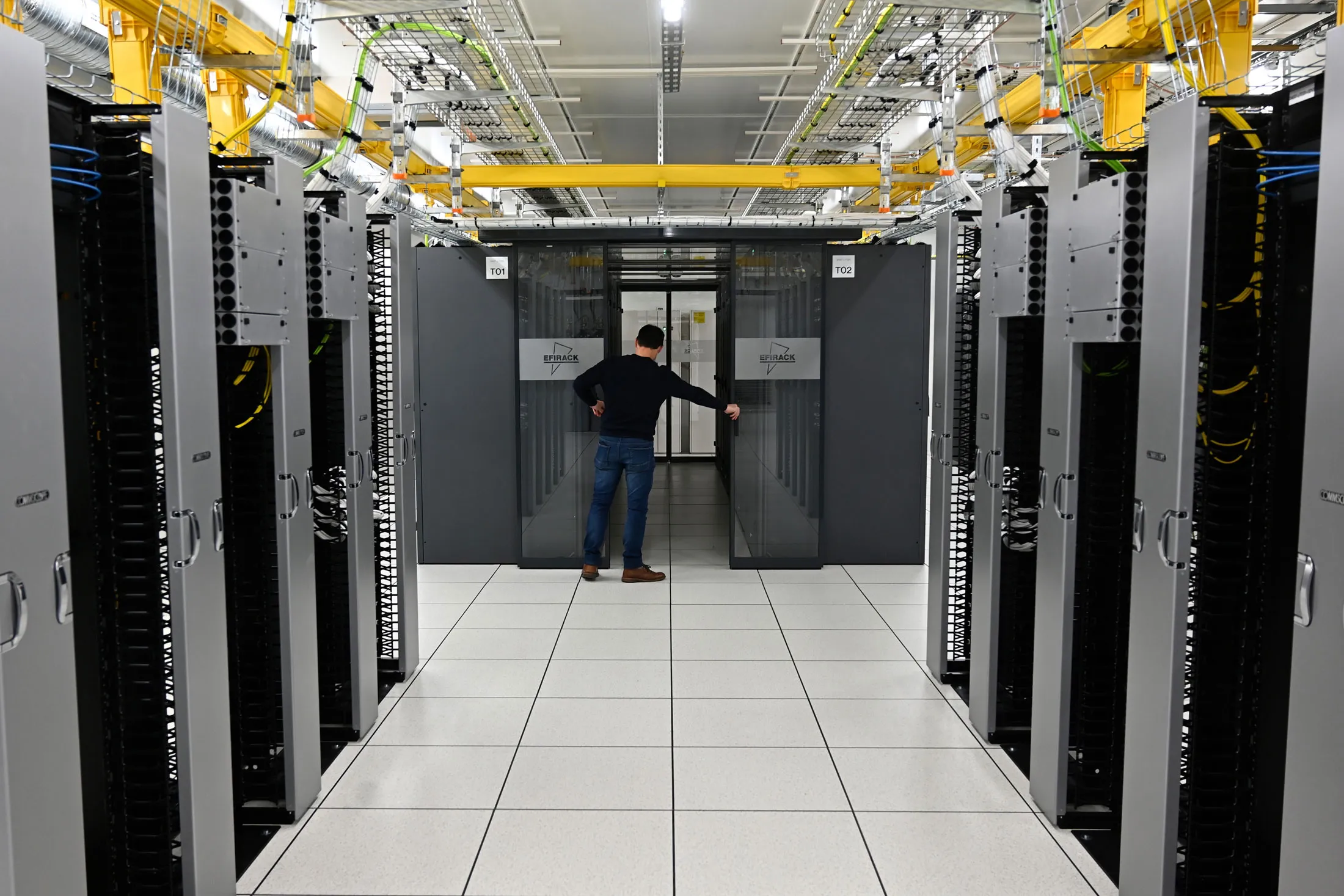
STT GDC is not a niche operator. The company runs more than 100 data centers across 11 geographies, including Singapore, India, Japan, South Korea, Malaysia, Indonesia, Thailand, Hong Kong, and Australia, as well as a European footprint through its VIRTUS acquisition. Its current IT load stands at around 2 gigawatts, with plans to expand to between 3 and 4 gigawatts in the coming years.
That scale is precisely what makes the asset attractive. AI workloads require far more power and advanced cooling than traditional enterprise computing. Hyperscalers such as Amazon Web Services, Microsoft Azure, Google Cloud, and Alibaba are racing to secure capacity that can support dense GPU clusters while complying with increasingly strict data residency rules across Asia.
Key reasons this deal stands out:
- It is KKR’s largest infrastructure investment in Asia-Pacific to date.
- The valuation has more than doubled in just seven months, reflecting intense competition for AI-ready assets.
- The platform already serves more than 1,000 enterprise customers, including the world’s biggest cloud providers.
Why KKR and Singtel Want In
For KKR, the acquisition fits neatly into a broader global strategy. The firm has been steadily building a data center empire through assets such as CyrusOne and Compass Datacenters, betting that digital infrastructure will deliver long-term, inflation-resistant returns. Asia, with its rapid cloud adoption and AI-driven compute demand, represents the next growth frontier.
Singtel’s involvement reflects a different, but complementary, ambition. As traditional telecom revenues mature, the company has been repositioning itself as a digital infrastructure player. By pairing its existing data center arm, Nxera, with a stake in STT GDC, Singtel gains a pan-Asian footprint that it can leverage alongside connectivity, cloud, and enterprise services.
Analysts have noted that the deal effectively accelerates Singtel’s transition from a telco to an infrastructure platform, without requiring it to shoulder full ownership risk.
Temasek’s Timely Exit
From Temasek’s perspective, the timing looks deliberate. STT GDC was valued at roughly $5 billion in mid-2025. Selling at nearly $11 billion less than a year later allows the sovereign investor to monetize at what many see as peak AI-driven valuations, while still retaining indirect exposure through its majority stake in Singtel.
The structure of the deal also spreads risk. The cash payment of about S$6.6 billion will be made in two equal installments, with additional debt financing arranged to support both the acquisition and future expansion.
Asia’s Data Center Crunch
The backdrop to the transaction is a widening gap between supply and demand. Industry estimates suggest that Asia-Pacific could face a shortfall of 15 to 25 gigawatts of AI-ready data center capacity by 2028, even as total capacity doubles toward the end of the decade.
Several forces are converging:
- AI models require two to three times the power density of traditional workloads.
- Governments are enforcing data localization rules that limit cross-border compute.
- Grid constraints in hubs like Singapore, Tokyo, and Hong Kong are slowing new builds.
STT GDC’s geographic diversification offers a partial solution, allowing capacity to be added in markets such as India and Southeast Asia, where power availability and land are less constrained.
What Comes Next
Post-acquisition, the focus will shift to execution. Plans include a $3.2 billion expansion in India to add roughly 550 megawatts of capacity, upgrades to support higher-density AI workloads, and deeper partnerships with hyperscalers through pre-leasing and co-location agreements.
At the same time, risks remain. Power access, construction delays, and regulatory approvals across multiple jurisdictions could all affect timelines. The ability to maintain performance and sustainability standards as facilities scale will also be closely watched.
Still, the message from the market is clear. Capital is flowing toward platforms that can meet the physical demands of AI, not just the software ambitions. In that context, KKR’s nearly $11 billion bet on STT GDC is less about a single company and more about a belief that AI’s next bottleneck will be infrastructure.
If that belief holds, Asia’s data centers may prove to be some of the most valuable real estate of the AI age.