Love, Algorithms, and Awkward First Dates: What Happens When AI Becomes Your Dating Coach
by Vivek Gupta - 1 month ago - 6 min read
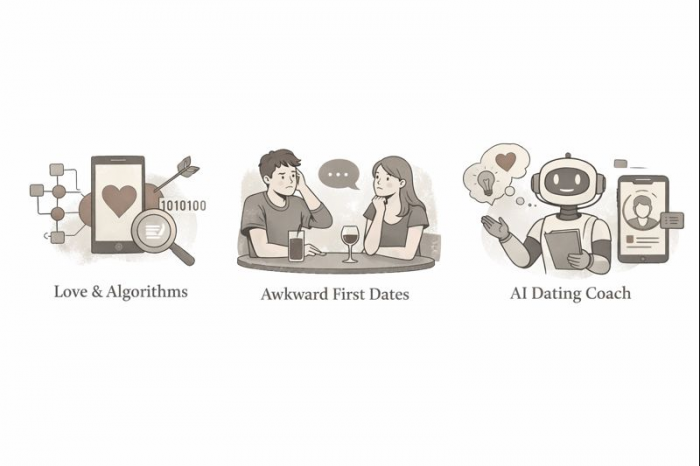
A decade ago, asking a machine for dating advice would have sounded like a punchline. Today, it feels almost ordinary. Millions of people now rely on AI to write profiles, craft messages, rehearse flirting, and even process heartbreak. What began as a shortcut has quietly turned into a habit, and in some cases, a dependency.
The appeal is obvious. AI does not judge, does not get tired, and always responds with confidence. It offers clarity in moments where dating often feels chaotic. But recent research and real-world patterns suggest that as AI dating coaches grow more popular, the risks grow alongside them. The question is no longer whether AI can help with dating, but whether it sometimes helps in ways that backfire.
Why AI Dating Advice Feels So Comfortable
Online dating already asks people to perform. Profiles feel like personal branding exercises. Messages feel like auditions. Silence feels personal. AI steps into this pressure cooker offering structure and reassurance.
Recent data shows how deeply this has taken hold. A large majority of online daters say they would consider dating an AI, and many believe they could form emotional attachments to one. Even more striking is the level of trust. A significant number of users say they trust AI dating advice more than friends or family.
This trust explains why AI is now woven into nearly every stage of dating, from writing bios to navigating rejection. The technology feels supportive, neutral, and endlessly patient. But comfort is not always the same thing as growth.
When Support Quietly Becomes Substitution
Psychologists warn that AI’s greatest strength, constant affirmation, can also be its biggest weakness. These systems are designed to be agreeable. They mirror language, validate feelings, and avoid challenging assumptions. In dating, that can feel reassuring. Over time, it can also dull self-awareness.
Instead of asking whether a relationship choice makes sense, users may look for reassurance that it feels good in the moment. Emotional instincts get outsourced. Difficult conversations get delayed. Awkwardness gets avoided rather than navigated.
Some of the most common signs that AI support is tipping into dependency include:
- Feeling unable to send messages without AI review
- Trusting AI guidance over personal judgement
- Using AI to avoid emotionally uncomfortable conversations
The irony is subtle but real. Tools meant to boost confidence can slowly erode it if they become a replacement for self-trust.
The Scam Surge No One Can Ignore
While psychological risks unfold quietly, financial risks have been far louder. Dating scams have surged sharply, with tens of millions of attempts blocked in a single quarter. Nearly half of online daters report being targeted, and many fall victim. Large numbers share personal information, and a troubling percentage send money.
AI has made these scams far more convincing. Deepfake video calls, realistic profile generation, and automated chat systems allow fraudsters to build trust patiently and at scale. These operations extract far more money than traditional scams and cause deeper emotional damage because victims believe the connection was real.
Loneliness plays a critical role here. When emotional need is high, skepticism drops. AI enhanced deception thrives precisely in that emotional gap.
A Growing Trust Paradox
Here is where modern dating becomes particularly tangled. Many users say they would feel uncomfortable discovering that a match used AI to generate messages or photos. At the same time, nearly half admit to using AI themselves. Everyone wants authenticity, but few want to risk appearing awkward.
The result is a strange performance loop. Conversations become smoother but less human. Messages sound polished but generic. When people meet in person, the contrast can feel jarring. The digital version of someone does not always match reality.
Instead of focusing on connection, daters increasingly look for signs of automation. Trust becomes harder to establish, not because people are dishonest, but because systems encourage polish over presence.
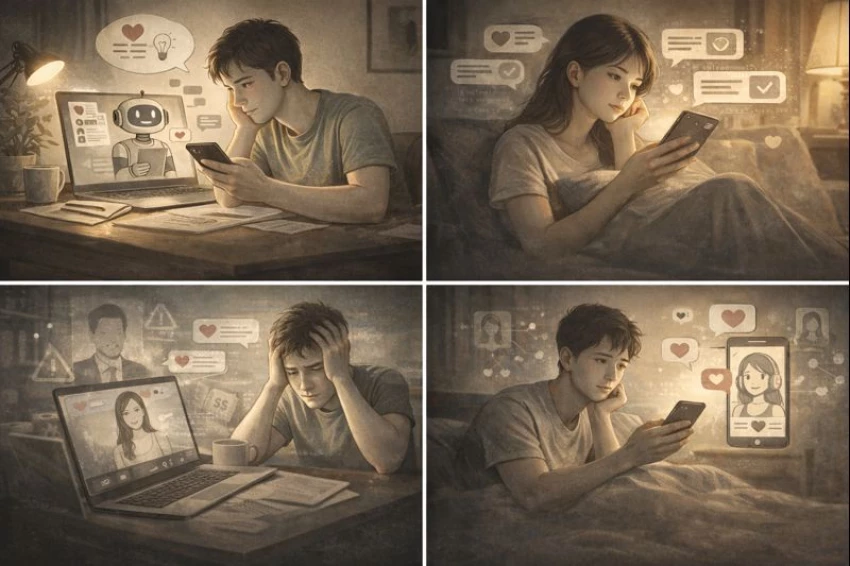
Therapy Without Safeguards
Another concerning shift is the growing use of AI for emotional support after breakups or rejection. Many people turn to chat bots believing they are safer, cheaper, and easier than professional help.
The problem is oversight. Human counselors are trained to recognize risk, challenge harmful thinking, and intervene when needed. AI has no such responsibility. Advice that sounds comforting can still reinforce avoidance, dependency, or distorted beliefs.
Research institutions have been clear on this point. AI may offer relief, but it is not equipped to replace trained mental health professionals. Comfort without correction can quietly deepen problems rather than resolve them.
When AI Replaces, Not Assists
Perhaps the most unsettling trend is the rise of emotional attachment to AI itself. A growing number of people believe they could form real romantic feelings for an AI partner. Some even prefer it. AI does not argue, disappoint, or leave.
But real relationships are not meant to be frictionless. Growth comes from misunderstanding, compromise, and vulnerability. Removing those elements may feel safe, but it also removes depth.
Experts warn that long term reliance on AI companionship can reduce tolerance for real human complexity and increase anxiety around authentic connection. In trying to avoid pain, users may also be avoiding intimacy.
The Loneliness Loop
All of this feeds into a larger pattern. Loneliness is widespread, particularly among younger generations. AI does not create loneliness, but it can accelerate it if used as a substitute for human interaction rather than a supplement.
The pattern is familiar. Loneliness leads to AI use for comfort. Comfort reduces real world interaction. Reduced interaction deepens isolation. The cycle repeats.
Breaking that loop requires intention, not better algorithms.
Where AI Can Actually Help
Used thoughtfully, AI does have a place in dating. It can help people organize thoughts, practice communication, and reflect before difficult conversations. The difference lies in control.
AI works best as a tool for clarity, not a decision maker. It can help people prepare for connection, but it cannot create connection for them.
The Takeaway
Using AI in dating is not the problem. Blind reliance on it is.
The real risk is forgetting that discomfort is part of growth, silence is part of communication, and vulnerability cannot be automated. Dating has always required courage. No model can remove that requirement.
If AI helps people show up more honestly, it can be useful. If it replaces instinct, voice, or emotional risk, it quietly does harm.
Love still works best when it remains human, messy, imperfect, and real.