Mark Zuckerberg says Meta is launching its own AI infrastructure initiative
by Sakshi Dhingra - 2 months ago - 4 min read
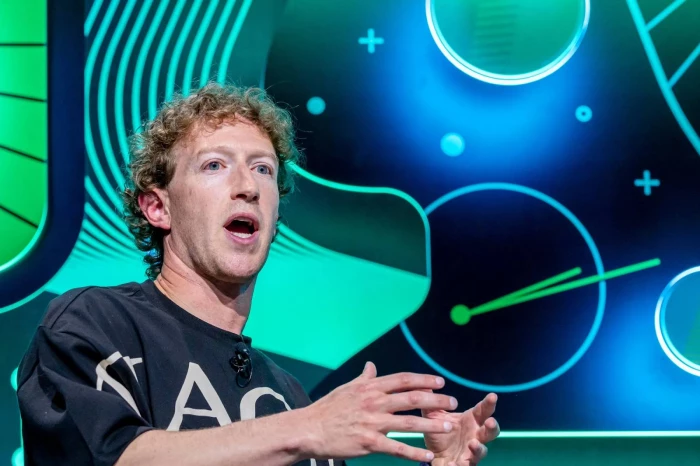
Meta CEO Mark Zuckerberg has announced the launch of a new top-level initiative, Meta Compute, positioning it as the backbone of the company’s next decade of artificial intelligence growth. The move signals a decisive shift: Meta no longer wants to merely rent AI infrastructure from others, but to build a vast, dedicated computing and energy empire of its own.
Speaking in posts shared across Meta’s platforms earlier this week, Zuckerberg framed AI infrastructure as a strategic lever that will define which companies lead the next wave of technology. Meta Compute will sit at the very top of the company’s structure and report directly to him, underscoring how central data centers, custom hardware, and energy capacity have become to Meta’s long-term plans. In simple terms, Meta is turning its infrastructure team into something closer to a national utility scaled for AI, rather than a back-office IT function.
At the heart of the announcement is an aggressive build-out plan that would have sounded unthinkable just a few years ago. Zuckerberg says Meta intends to construct “tens of gigawatts” of computing-related power capacity this decade, with an ambition to ultimately reach “hundreds of gigawatts or more” over time. That figure would place Meta’s infrastructure footprint in the same conversation as major national grids, highlighting how energy-hungry large AI models and future “superintelligence” systems are expected to be.
The new initiative also formalizes investment trends Meta had already begun signaling in earlier financial updates. Last year, Chief Financial Officer Susan Li told investors that building leading AI infrastructure would be a “core advantage” in delivering competitive AI models and products, foreshadowing today’s announcement. External reports now suggest Meta is prepared to commit hundreds of billions of dollars to AI-focused data centers, energy projects, and high-performance compute clusters over the coming years, including a broader pledge to invest about 600 billion dollars in US infrastructure and jobs by 2028.
Meta Compute is designed to unify several previously separate pieces of the company’s infrastructure operation. Data centers, networking, power planning, land acquisition, and hardware supply chains will now be coordinated under a single umbrella so that compute, energy, and physical capacity scale in lockstep. Industry analysts note that hyperscale AI facilities increasingly treat networking as a primary constraint, pushing Meta and its suppliers to deliver faster optical interconnects, denser switches, and more sophisticated layouts to handle massive internal data flows with ultra-low latency.
Leadership for the initiative will be shared among senior infrastructure veterans and AI-focused strategists. Executives such as Santosh Janardhan and Daniel Gross are expected to steer both the near-term rollout of new data centers and the long-range planning for multi-gigawatt “titan” clusters that can host ever-larger models and services. Beyond internal appointments, Meta has also brought in high-profile figures like Dina Powell McCormick to work with governments on permitting, financing, and regulatory coordination for these infrastructure projects.
Energy sourcing sits at the center of the story. Meta has already begun to lock in firm electricity supply for its AI build-out, including nuclear power deals targeting up to 6.6 gigawatts of capacity for data centers across the US Mid-Atlantic and Midwest regions through the mid-2030s. Separate plans for a dedicated nuclear campus in Ohio, built around advanced reactor technology, are being positioned as a second major wave of clean, always-on power aligned with the steepest part of the AI compute ramp. The company is openly acknowledging that securing long-term, low-carbon power at unprecedented scale is now inseparable from winning in AI.
For Meta’s rivals—and for the broader tech and energy sectors—the launch of Meta Compute will likely be read as an escalation in an already intense arms race around AI infrastructure. Cloud giants like Microsoft and Alphabet are also spending heavily on AI-ready data centers and have struck their own partnerships and acquisitions to secure capacity, but Meta’s explicit gigawatt targets and power deals raise the bar for what “serious” AI investment looks like. For users and developers, the immediate impact may be less visible, yet the message is clear: Meta is betting that controlling the full stack—from power plants to GPUs to networks—will shape the AI products and experiences people see on their screens over the next decade.