Nintendo Stock Slides as AI Memory Crunch Collides with Switch 2 Momentum
by Vivek Gupta - 1 month ago - 5 min read
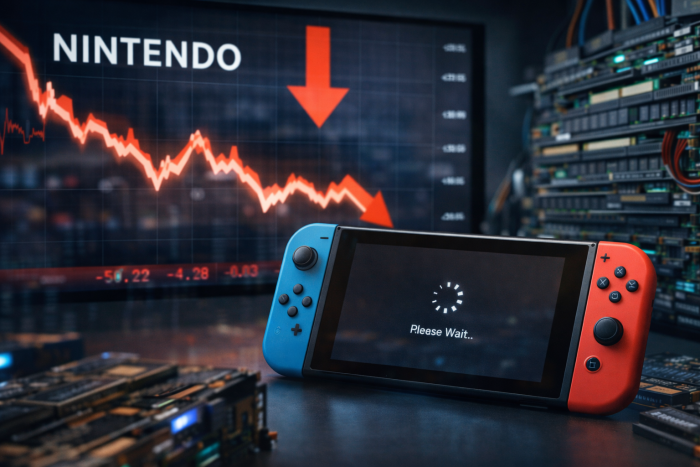
Shares of Nintendo fell sharply this week after investors zeroed in on an uncomfortable reality behind the company’s strong console cycle: the same AI boom fueling tech markets is also driving a memory shortage that can squeeze hardware profits for years.
The selloff followed a mixed earnings picture. Switch 2 is still tracking as a blockbuster launch by unit sales, and profit beat expectations. But revenue came in under forecasts, and margins took a visible hit, reigniting a question that tends to haunt every console maker eventually: what happens when component costs rise faster than you can raise prices?
A Great Launch, Then the Bill Arrives
Nintendo’s latest results showed the classic “good news, bad news” split. Demand has been solid, and the business is still expanding. The market’s focus, however, snapped to the profit mechanics underneath: gross margin compression that suggests every additional console sold is not carrying the same cushion it used to.
That margin anxiety got worse as investors digested management’s warning that prolonged high component costs could weigh on profitability going forward. The fear is not about one quarter. It is about a supply chain environment that looks structurally different, with memory allocation increasingly dominated by data centers training and serving AI models.
Why Memory Is Suddenly the Villain
The core worry is memory pricing. Industry trackers such as TrendForce have described a surge in DRAM and NAND pricing tied to AI infrastructure demand, with high-bandwidth memory pulling manufacturing capacity toward data-center customers. The downstream effect is simple: consumer devices compete for the leftovers, and the leftovers are not cheap.
For Nintendo, that matters more than it would for a phone maker that can quietly add $50 to a flagship and call it “premium.” Consoles live and die by perceived value. Push price too far and momentum slows. Keep price steady and the margin absorbs the shock. Neither option is fun.
Nintendo’s situation is especially delicate because the console is still early in its lifecycle. Rivals with older, larger installed bases can adjust pricing on accessories, bundles, or services more easily. Nintendo is still in the “keep the party loud” phase of a launch, when raising prices feels like turning the music down mid-chorus.

A Supply Problem With a Long Calendar
The timeline is what spooked the market. Memory shortages tied to AI buildouts are not expected to vanish next quarter. New fabrication capacity takes time to arrive, and much of the forward supply is being contracted far in advance by hyperscalers and AI-focused buyers.
That dynamic has started showing up across tech. PC makers, smartphone brands, and even automakers are warning about higher component costs. But Nintendo draws sharper scrutiny because its business model depends on selling hardware at a sustainable profit while building a software ecosystem on top. When hardware margin thins, investors start asking whether the “software later” payoff still arrives on schedule.
Investors Also Watched the Calendar, Not Just the Chips
The selloff did not happen in a vacuum. Some analysts pointed to a second layer of unease: what the software roadmap looks like through the rest of 2026, and whether the release schedule can keep demand strong without heavy discounting.
Historically, Nintendo’s stock has been sensitive to console-cycle confidence. When a platform feels unstoppable, the market prices in years of high-margin software and accessories. When uncertainty creeps in, the market punishes first and asks questions later.
Commentators including Kantan Games have previously noted how quickly sentiment can swing around major launches, especially when pricing pressure and title cadence are both in the conversation.
What Nintendo Can Do, and What It Cannot
Nintendo has a few levers, but none are magic:
- It can lean on inventory buffers and longer-term supply arrangements to delay the worst of the cost shock. That buys time, not immunity.
- It can adjust bundles, accessories, storage options, or regional pricing carefully, trying to avoid a headline “price hike” while still protecting margin.
- It can slow production if selling below cost becomes a risk, though that would collide with demand and frustrate customers.
What it cannot do is control the global memory market. Not when AI demand is absorbing capacity that used to serve consumer electronics.
The Next Test Comes Soon
Investors will be watching for two signals in the next earnings window: whether Nintendo can stabilize margins even as memory prices remain elevated, and whether its content pipeline keeps the platform’s momentum strong enough to preserve pricing discipline.
If the company shows it can protect profitability without sacrificing growth, the selloff may look like an overreaction. If margins keep sliding, the market will treat the memory crunch less like a temporary headwind and more like a rule change.
Two things to watch next
- Pricing signals without saying “price hike.” Bundle changes, storage strategy, accessory pricing, and regional adjustments will matter.
- Proof that demands stays strong without discounts. A steady software cadence can do what pricing cannot: keep the console feeling worth it.