OpenAI Unveils ChatGPT Health: A Medical Revolution Driven by 230 Million Weekly Queries
by Parveen Verma - 3 months ago - 3 min read
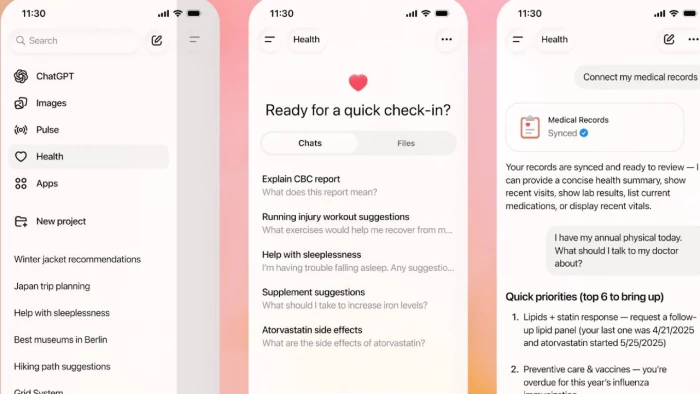
In a definitive move to reorganize the landscape of digital wellness, OpenAI has officially launched ChatGPT Health, a specialized iteration of its industry-leading artificial intelligence designed specifically for medical and physiological inquiries. This strategic expansion comes as internal data reveals a staggering 230 million users already utilize the platform for health-related advice every week, signaling a massive, pre-existing demand for accessible medical information. The launch marks OpenAI’s most significant transition from a general-purpose assistant to a regulated, high-stakes utility capable of interpreting complex biological data and offering personalized health insights.
The decision to carve out a dedicated health vertical was born from the realization that OpenAI was already serving as a primary health resource for a global population. By formalizing this role, the company aims to move beyond generic advice toward a more rigorous, evidence-based framework. ChatGPT Health is built upon a foundation of clinical datasets and is designed to integrate seamlessly with wearable technology, allowing the AI to analyze real-time metrics such as heart rate variability, sleep patterns, and glucose levels. This integration transforms the chatbot into a proactive health monitor, capable of identifying trends that might otherwise go unnoticed until a physical examination.
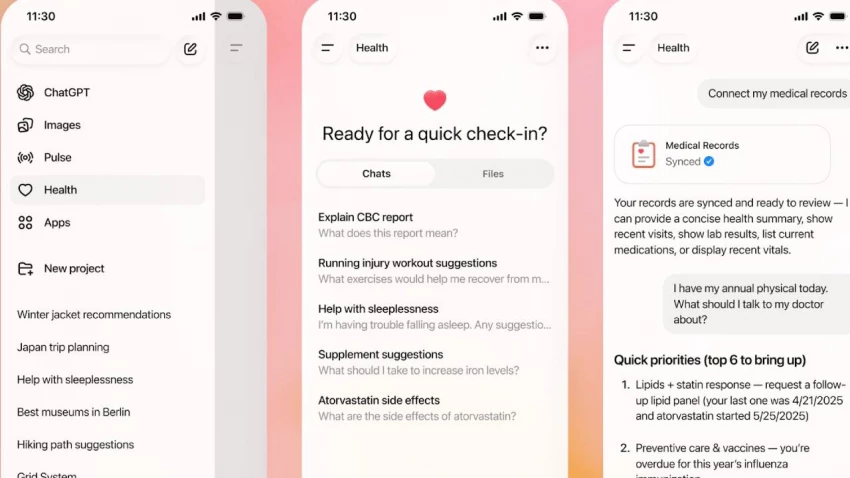
Addressing the inherent risks of AI-generated medical advice, OpenAI has emphasized that this new platform operates under a stricter set of safety protocols compared to its standard models. The system has been fine-tuned in collaboration with medical professionals to ensure that its responses prioritize clinical accuracy and adhere to the highest standards of patient safety. Furthermore, the platform is engineered to recognize its own limitations, frequently directing users to professional medical services and providing context-aware disclaimers. The company has also secured necessary compliance certifications to ensure that user data remains private and encrypted, addressing long-standing concerns regarding the sensitivity of personal health information in the age of generative AI.
The economic and social implications of this launch are profound, as OpenAI enters a competitive arena currently occupied by tech giants like Google and Apple. By leveraging its massive user base of 230 million weekly health seekers, OpenAI effectively bypasses the traditional barriers to entry in the health-tech market. Industry analysts suggest that this move could alleviate the burden on primary care systems by providing preliminary triage and health education to millions who might otherwise lack immediate access to medical professionals. However, the company maintains that ChatGPT Health is a tool for empowerment rather than a replacement for human physicians, functioning as a bridge between patient curiosity and professional diagnosis.
As ChatGPT Health rolls out globally, the focus shifts to how this technology will reshape the doctor-patient relationship. With the ability to synthesize vast amounts of medical literature and personal health data in seconds, the AI offers a level of personalized attention that traditional healthcare systems often struggle to provide due to time constraints. OpenAI’s entry into the medical sector represents a pivot toward "AI-first" healthcare, where the first point of contact for a medical concern is no longer a search engine, but a sophisticated, medically-trained intelligence. This milestone underscores a future where artificial intelligence is not just an assistant, but a vital component of the global healthcare infrastructure.