OpenAI’s Pentagon Deal and Anthropic’s Standoff Expose a Bigger AI Governance Problem
by Suraj Malik - 18 hours ago - 4 min read
A recent clash involving OpenAI, Anthropic and the U.S. Department of Defense has moved beyond a single contract dispute. According to reporting, the episode highlights a deeper structural issue: neither frontier AI companies nor the U.S. government appear to have a clear, stable framework for how advanced AI labs should work with the state.
At the center of the controversy is a Pentagon contract, a threat of blacklisting, and an escalating debate over who should ultimately control the deployment of powerful AI systems.
The Pentagon Contract: Anthropic Walks, OpenAI Steps In
Anthropic reportedly withdrew from a Department of Defense agreement after officials pushed for looser constraints around mass surveillance and automated weapons applications. The requested changes conflicted with Anthropic’s publicly stated safety boundaries.
In response, Defense Secretary Pete Hegseth allegedly threatened to designate Anthropic a “supply-chain risk.” Such a label could potentially restrict the company’s access to critical chip suppliers and cloud infrastructure partners, a move that observers described as potentially crippling for a large AI firm.
Within hours, OpenAI agreed to take over the contract Anthropic had abandoned. That decision sparked criticism from some OpenAI users and employees who argued that the company had accepted work Anthropic considered incompatible with its own red lines.
Sam Altman’s Defense — and the Public Backlash
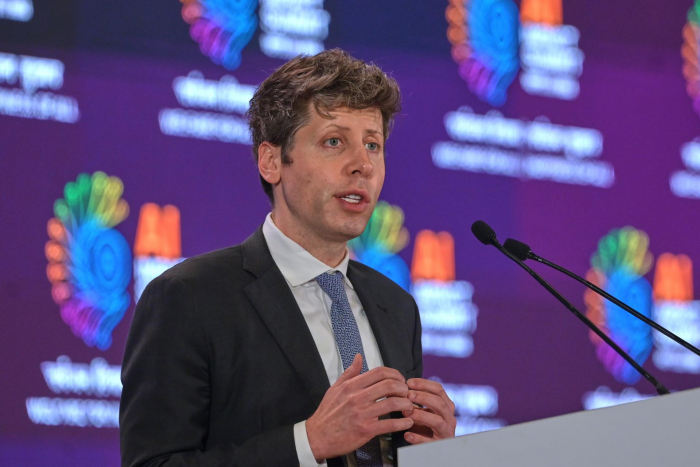
Following the controversy, OpenAI CEO Sam Altman held a public Q&A session on X to address the backlash.
Altman argued that in a democracy, elected governments — not private companies — should ultimately determine how AI is used in national defense and surveillance contexts. He framed OpenAI’s decision as deference to democratic institutions rather than an endorsement of unchecked military applications.
Critics were not convinced. Some questioned whether “democratic oversight” carries the same weight in a highly polarized political environment. Others asked why OpenAI would accept a contract that Anthropic deemed too risky.
Altman said he was struck by how many people seemed uncertain about whether they preferred elected officials or private corporations to wield power over advanced AI systems, underscoring a broader public distrust of both options.
Why the “Supply-Chain Risk” Threat Matters
Observers say the threat to blacklist Anthropic carries significant implications beyond a single contract.
Former Trump official Dean Ball noted that labeling a major U.S. tech firm as a supply-chain risk would be unprecedented. Such a move could cut a company off from key infrastructure providers and send a chilling signal to other federal contractors.
Ball also argued that Anthropic was already operating under an agreed contract when the Pentagon allegedly attempted to change the terms midstream. In most private-sector agreements, such unilateral adjustments would be unacceptable.
Even if the blacklist threat does not materialize, Ball suggested that companies may now assume political loyalty tests can override commercial norms. That dynamic, sometimes described as “tribal logic,” could reshape how AI firms assess government partnerships.
Startups as National-Security Infrastructure
The episode also reflects a transformation in the AI sector. OpenAI, once primarily seen as a consumer-focused AI startup, is increasingly functioning as part of national-security infrastructure.
Unlike traditional defense contractors such as Raytheon and Lockheed Martin, which evolved within heavily regulated and politically insulated systems, AI startups operate at startup speed and often lack comparable governance buffers.
Companies like Palantir and Anduril have also entered defense markets, but the rapid pace of AI development makes the political exposure more acute. Aligning too closely with one administration could leave firms vulnerable if power shifts.
Venture Capital, Politics and Market Principles
The article also points to a broader political pattern. Some investors aligned with the Trump administration had previously criticized Anthropic for perceived proximity to the Biden White House. When the political winds shifted, sympathy appeared limited.
Now, as a right-leaning administration is accused of using heavy-handed tactics against Anthropic, few vocal defenders of free-market neutrality have emerged from those same circles.
The result, according to critics, is an environment where political alignment can override consistent commercial principles.
The Bigger Governance Gap
Beyond the immediate dispute, the broader issue remains unresolved: how should frontier AI labs collaborate with governments?
Historically, long-standing defense contractors operated within stable regulatory and political frameworks that persisted across administrations. Today’s AI startups move faster, face fewer legacy constraints, and are more exposed to political volatility.
The controversy suggests that neither AI labs nor policymakers have yet developed a durable model for balancing innovation, national security, safety commitments and political accountability.
For now, politically aligned companies may enjoy short-term advantages. But as administrations change, those same alignments could become liabilities.
The deeper concern is not just one contract or one threat. It is that the rules governing how AI companies engage with the state remain unsettled — and in a sector this powerful, instability may carry consequences far beyond Washington.