Siberian Snows Witness Rare Dissent as Russians Rally Against Roblox Ban
by Parveen Verma - 3 months ago - 3 min read

In a striking display of public defiance amidst the harsh Siberian winter, a rare protest erupted this Sunday in the city of Tomsk, challenging the Kremlin’s recent decision to block the popular American gaming platform, Roblox. The demonstration marks a significant moment of unrest in Russia’s increasingly isolated digital landscape, highlighting a generational clash between state-enforced morality and the globally connected youth.
Approximately two dozen protesters gathered in Vladimir Vysotsky Park, forming a circle in the freezing snow to voice their opposition to the ban, which came into effect earlier this month. The sight of citizens braving sub-zero temperatures to defend a video game underscores the platform’s immense cultural footprint in the country. Participants held hand-drawn placards with slogans such as "Hands off Roblox" and "Roblox is the victim of the digital Iron Curtain," directly critiquing the government’s tightening grip on internet freedoms.
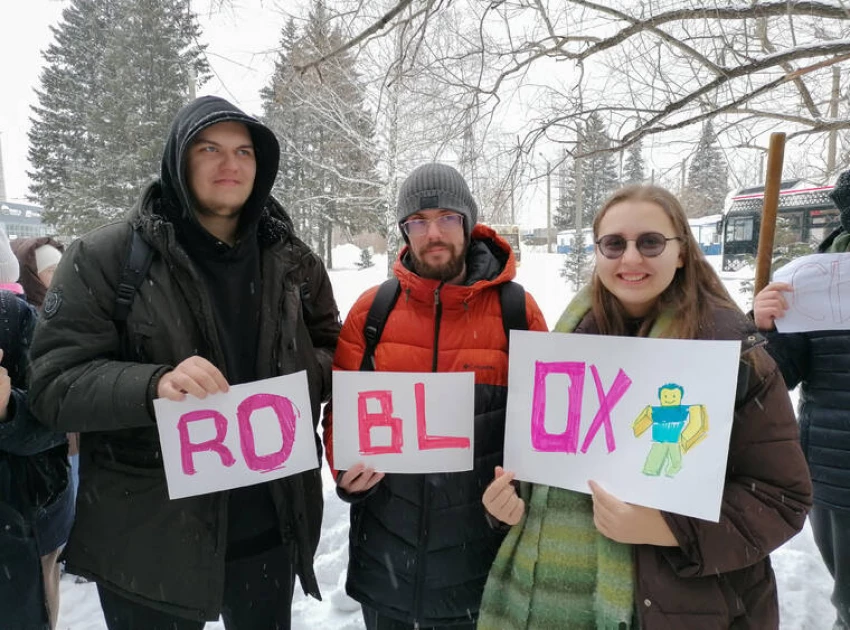
The catalyst for this unrest was a directive issued by Roskomnadzor, Russia’s communications regulator, which officially blocked access to Roblox on December 3, 2025. The state agency justified the move by alleging the platform was rife with "inappropriate content" capable of negatively impacting the "spiritual and moral development" of children. Authorities have further accused the platform of hosting extremist materials and what they term "LGBT propaganda," framing the ban as a necessary measure to protect Russian values from Western influence.
However, the ban has triggered a wave of backlash that extends far beyond the snowy park in Tomsk. Reports indicate that the Kremlin has been inundated with complaints from young Russian citizens. Yekaterina Mizulina, a prominent pro-Kremlin censorship advocate, revealed that thousands of letters from children aged 8 to 16 have flooded in, with many expressing deep frustration and some even claiming a desire to leave the country due to the loss of their digital community. This "revolt of the schoolchildren" presents a unique challenge to authorities who are accustomed to suppressing political dissent but now face an outcry from a demographic simply seeking entertainment.
The prohibition of Roblox joins a growing list of Western digital services now inaccessible in Russia, including Facebook, Instagram, and YouTube, contributing to what critics call a "digital Iron Curtain." While many tech-savvy users continue to circumvent these restrictions using Virtual Private Networks (VPNs), the outright ban on Roblox a platform with millions of daily active users in Russia has sparked a debate about the effectiveness of such censorship in a globalized world. Critics argue that without viable domestic alternatives, the state is merely alienating its younger generation.
Roblox Corporation, headquartered in California, responded to the situation by reiterating its commitment to user safety and compliance with local laws, though it firmly denies that its platform is unsafe. As the digital walls close in, the small but symbolic gathering in Tomsk serves as a reminder that the battle for the Russian internet is not just about data and servers, but about the cultural connection of a generation to the outside world.