SpaceX Absorbs xAI, Pulling Elon Musk’s AI Ambitions into His Space Empire
by Vivek Gupta - 1 month ago - 4 min read
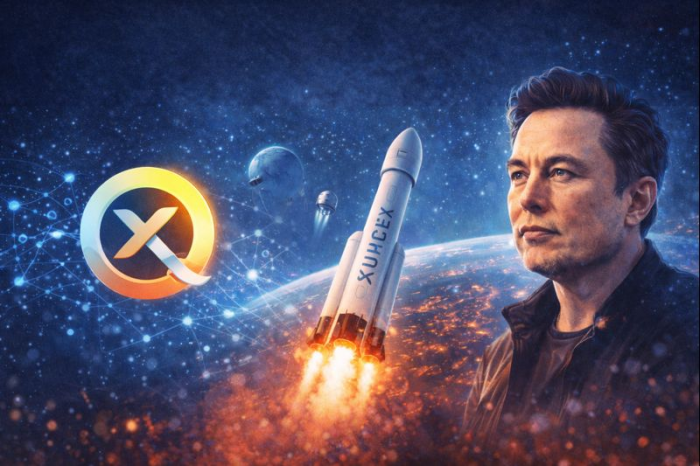
SpaceX has formally moved to take over xAI, Elon Musk’s artificial intelligence startup behind the Grok chatbot, marking one of the most consequential reorganizations of his business portfolio to date. The move, confirmed on February 2 through an internal memo published on SpaceX’s website, folds xAI directly into the rocket and satellite company and tightens the links between Musk’s work in space, AI, and digital platforms.
Multiple major outlets have reported that this is a full combination rather than a loose partnership. xAI’s assets, including Grok and its close relationship with the social platform X, are being absorbed into SpaceX, further centralizing Musk’s technology ambitions under a single corporate structure.
A private company valued above $1 trillion
According to reporting from Bloomberg, The New York Times, and others, the merged SpaceX–xAI entity is being valued between $1 trillion and $1.25 trillion. That valuation would make it the most valuable private company in the world.
The scale reflects recent internal and external funding moves:
- SpaceX has allowed employee share sales at valuations close to $800 billion.
- xAI’s most recent funding round valued the AI startup at more than $230 billion.
Sources familiar with the discussions says Musk and his advisers are targeting a potential initial public offering around mid-2026, with a capital raise that could approach $50 billion.
Why Musk says the merger makes sense
In the memo shared internally, Musk described the acquisition as a way to build what he calls a vertically integrated innovation engine. The idea is to combine AI research and products, launch and satellite infrastructure, and a large real-time data platform into one tightly connected system.
Musk has argued for years that future AI systems will require far more energy and computing capacity than traditional data centers can provide. In his view, space-based infrastructure powered by solar energy offers the only long-term path to scale, free from land, cooling, and regulatory constraints on Earth.
The capital pressure behind frontier AI
The timing of the deal highlights how expensive leading-edge AI has become. In late January, xAI disclosed that it had raised $20 billion in an expanded funding round, up from an earlier $15 billion target. Tesla separately announced plans to invest around $2 billion into xAI, matching a similar commitment already made by SpaceX.
Analysts note that xAI’s appetite for computing power makes it difficult to operate as a standalone startup. Folding it into SpaceX gives the AI unit access to stronger cash flows, a larger balance sheet, and eventually public-market financing once SpaceX lists its shares.
Orbital data centers move closer to reality
A central strategic goal of the merger is Musk’s push to move large parts of AI computing into orbit. xAI is already building a massive ground-based supercomputer in Memphis, known internally as Colossus, to train and run its models.
Musk has said publicly that within two to three years; space could become the most cost-effective location for AI workloads. Just days before the acquisition was confirmed, SpaceX submitted filings related to managing up to one million satellites, a move widely seen as laying groundwork for orbital data centers linked to Starlink.

X, defense work, and an integrated stack
Although X remains legally separate, the merger further connects Musk’s social media platform with his AI and space businesses. Grok already relies heavily on data from X, and the combined structure effectively ties together content, models, connectivity, and launch capability.
On the government side, xAI has secured a contract worth up to $200 million to provide AI tools to the U.S. Department of Defense. Housing xAI inside SpaceX, which already works closely with government and defense agencies, could make it easier to expand those relationships and integrate AI into space-based and military systems.
How the deal is being put together
Earlier reporting indicates that xAI shareholders are being offered SpaceX equity in exchange for their stakes, effectively rolling xAI into SpaceX rather than creating a new parent company. Some investors may opt to take cash instead.
Corporate records show that new merger entities were registered in Nevada in January, which analysts interpret as vehicles to execute this transaction and potentially future combinations across Musk’s companies.
What analysts are watching next
Commentary over the past two days has focused on a few key issues:
- Whether SpaceX’s financial strength is enough to support the escalating costs of frontier AI.
- How regulators and future public-market investors will assess a company spanning rockets, satellites, AI, social media, and defense work.
- Whether deeper integration across Musk’s companies will intensify governance and conflict-of-interest scrutiny.
What is clear is the direction Musk is taking. By absorbing xAI into SpaceX, he is reorganizing his empire around the belief that the future of artificial intelligence will extend beyond Earth itself, and that controlling the full stack from orbit to software is the way to get there.