Supabase’s $5B Rise: How Saying No to Million‑Dollar Deals Fueled Its Open‑Source Bet
by Mighva Verma - 3 months ago - 3 min read
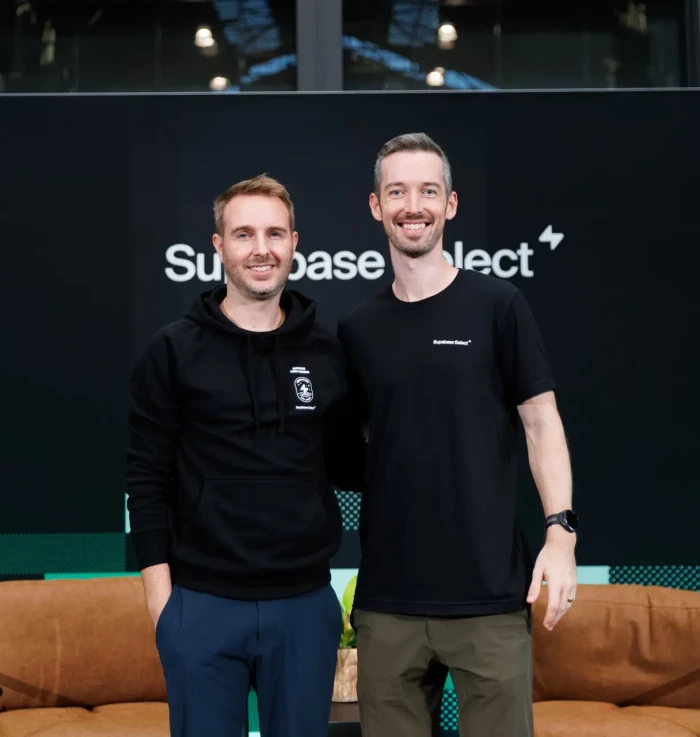
Supabase’s climb to a $5 billion valuation is a story of discipline more than hype. CEO and co‑founder Paul Copplestone has repeatedly walked away from million‑dollar enterprise contracts to protect a simple idea: build the best open‑source Postgres platform for developers, not a custom toolkit for a handful of big clients.
A $5B bet on Postgres and open source
Supabase is an open‑source Postgres development platform that gives developers a Firebase‑like experience: database, auth, storage, and real‑time APIs without vendor lock‑in. The company has become deeply embedded in the “vibe coding” and AI‑app boom, powering tools that let developers spin up production‑ready backends in minutes.
In just a few months, Supabase jumped from a $2 billion valuation to $5 billion, capped by a $100 million raise that followed a $200 million round earlier in the year. That acceleration came not from chasing custom enterprise work, but from doubling down on a scalable, product‑led model that appeals to tens of thousands of teams at once.
The “painful” contracts Supabase turned down
The central tension in Copplestone’s story is straightforward: large corporations kept offering big, complex contracts, exactly the kind of deals most infrastructure startups dream about. Supabase often said no, especially when those customers wanted bespoke features, heavy support, or roadmap influence that would drag the team away from its broader developer base.
Copplestone has described those choices as “painful” because they meant giving up immediate, visible revenue in exchange for a less tangible win: long‑term product focus. In some cases, Supabase even helped customers migrate away when the fit wasn’t right, reinforcing its commitment to data portability and an honest, developer‑first relationship.
Behind those decisions is a bigger philosophy: don’t “play startup,” do strategy. For Supabase, that has meant three non‑negotiables, stick with Postgres instead of inventing a proprietary engine, embrace open source, and optimize for a broad developer audience, even if that slows near‑term enterprise revenue.
The team is fully remote and intentionally “egoless,” with a strong written culture and a bias toward hiring ex‑founders who understand ownership and trade‑offs. That structure makes it easier to evaluate big opportunities through a single lens: will this make the core platform better for most developers, or just for one logo?
Technical moonshots and the Oracle provocation
Supabase is pouring capital into what Copplestone calls technical “moonshots” around Postgres scalability and performance. The goal is to turn Postgres into a backbone for the next wave of data‑intensive and AI‑driven applications, rather than a traditional relational database that companies eventually grow out of.
That ambition underpins one of his boldest claims: the “death of Oracle” as a default choice for new workloads will come much faster than a generation. Supabase is betting that modern developers will increasingly prefer open, cloud‑native stacks over heavyweight, legacy database contracts and that aligning every decision with that future is worth the short‑term pain.
What founders can learn from Supabase’s “no.”
Supabase’s journey offers a sharp counter‑narrative to the usual growth playbook. Instead of treating every big enterprise logo as validation, the company uses misaligned deals as a signal that it needs to protect its roadmap, not bend it.
For other founders, the lesson is uncomfortable but clear: real strategy sometimes looks like turning down money that everyone around you wants you to take. Supabase shows how saying “no” to the wrong revenue can be exactly what allows a focused, open‑source product to grow into a $5 billion platform.