The Great Orbital Migration: Tech Giants Launch a New Space Race for Unlimited AI Power
by Parveen Verma - 3 months ago - 3 min read
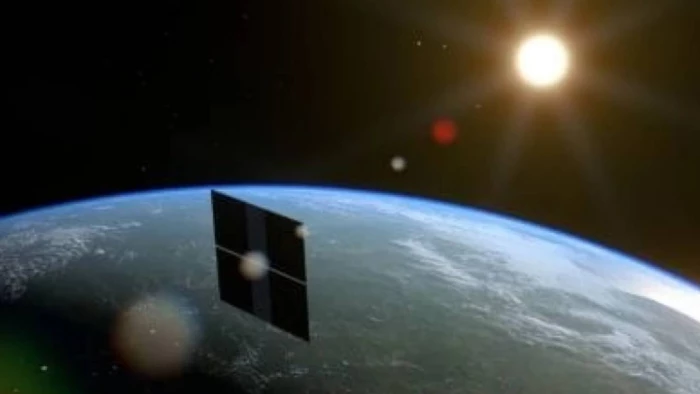
The next frontier for artificial intelligence is no longer just about smarter algorithms or faster chips, but rather where those chips reside. A high-stakes competition is currently unfolding miles above our heads as the world’s most powerful technology leaders including Jeff Bezos, Elon Musk, and Sundar Pichai race to establish data centers in outer space. This strategic pivot marks a significant departure from terrestrial infrastructure, driven by the insatiable energy demands of the AI boom that are quickly outpacing what Earth’s aging power grids can sustainably provide. At the heart of this orbital ambition is a simple physics equation regarding energy and heat.
Artificial intelligence models, particularly the massive large language models currently under development, require gigawatts of electricity to train and operate. On Earth, building facilities of this magnitude faces hurdles ranging from land permits to strained local utility grids and environmental concerns over water usage for cooling. In contrast, space offers a pristine environment with distinct advantages. Orbiting data centers can access 24-hour solar power that is approximately 40% more intense than what reaches the ground, free from atmospheric interference or weather disruptions. Furthermore, the vacuum of space provides a near-infinite heat sink and naturally frigid temperatures, potentially solving the cooling challenges that plague terrestrial server farms without wasting millions of gallons of fresh water.
Major industry players are already moving from theoretical whitepapers to active development. Jeff Bezos’s Blue Origin has reportedly spent over a year developing the core technologies necessary to operate these orbital facilities, aligning with his long-term vision of shifting heavy industrial infrastructure off the planet to preserve Earth. Simultaneously, Elon Musk’s SpaceX is exploring the integration of AI computing payloads into upgraded generations of Starlink satellites, a move that could turn the massive constellation into a distributed orbital supercomputer. Not to be left behind, Google’s CEO Sundar Pichai has described space-based data centers as a "moonshot" project, with the company’s "Project Suncatcher" aiming to launch prototype satellites equipped with radiation-tolerant Tensor Processing Units by 2027.
Beyond the established titans, a wave of agile startups is accelerating this transition. Lumen Orbit, a Washington-based company that recently secured over $10 million in funding, is partnering with chipmaker Nvidia to launch demonstration satellites as early as 2025. Their goal is to deploy gigawatt-scale clusters that can process data directly in orbit. This on-orbit processing capability addresses another critical bottleneck: bandwidth. By processing raw data such as satellite imagery or scientific readings directly in space and beaming down only the actionable insights, these flying data centers can drastically reduce the amount of information that needs to be transmitted back to Earth, lowering latency and bandwidth costs.
However, the path to an orbital cloud is paved with immense engineering challenges. While space offers abundant energy, the environment is hostile to delicate electronics.
Hardware must be hardened against cosmic radiation, which can scramble data and destroy processors. Additionally, while the vacuum of space is cold, dissipating the heat generated by servers without air for convection requires advanced radiator systems. Maintenance also poses a logistical nightmare; unlike a server farm in Virginia, a technician cannot simply walk down the aisle to replace a failed hard drive in Low Earth Orbit. Despite these hurdles, the plummeting cost of rocket launches driven by vehicles like Starship and New Glenn is making the economics of space-based compute increasingly viable. The race is effectively on to see who can build the first sustainable, scalable backbone for the AI economy among the stars.