The Model You Got Used to Is Leaving: What OpenAI’s GPT-4o Retirement Says About the Future of AI Tools
by Vivek Gupta - 1 month ago - 5 min read
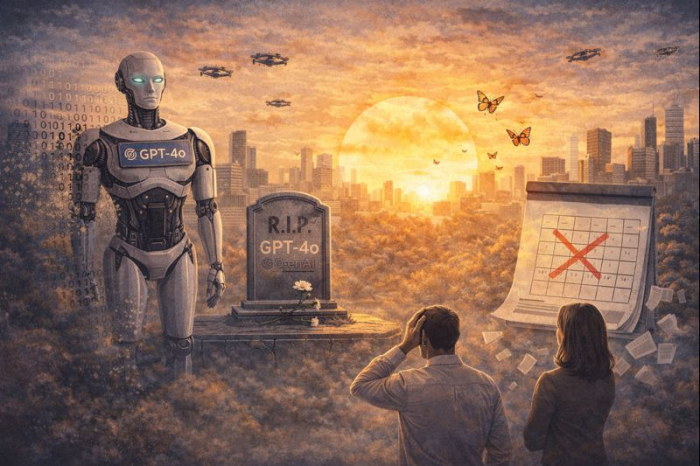
Not long ago, most people didn’t think about which AI model powered their chats. You opened ChatGPT, asked a question, got an answer, and moved on. But over the past year, many users began noticing differences between models, especially with GPT-4o, which developed a reputation for feeling warmer and more conversational. Now, that familiar presence is about to disappear.
OpenAI has confirmed that GPT-4o, along with GPT-4.1, GPT-4.1 mini, and o4-mini, will be retired from ChatGPT starting February 13, 2026. Developers get a few extra days of API access, but everyday users will simply see conversations switch to newer models. The move is technically routine, but emotionally, it feels more personal than anyone expected.
Why Retire Models People Still Like?
From OpenAI’s perspective, the decision is straightforward. Usage data shows that almost all users have already moved on. Only about 0.1 percent of daily users still choose GPT-4o manually, while the rest use newer GPT-5 family models that run faster and handle more complex tasks.
Running older models still requires infrastructure, engineering support, and computing power. Maintaining systems for a tiny share of users slows progress elsewhere. Retiring them allows engineers to focus resources on improving the models most people actually use.
But logic and attachment don’t always align. Plenty of users still prefer older tools simply because they feel familiar.
When Tools Become Part of Routine
Many people didn’t realize how attached they were to GPT-4o until retirement news surfaced. Writers, students, and casual users often describe it as more natural or patient in conversation. For creative tasks, brainstorming, or casual chats, its tone mattered as much as its answers.
Online communities quickly filled with posts saying things like, “Why retire the model people actually like?” Some users even revived last year’s #Keep4o campaign, which temporarily reversed an earlier retirement plan. Humor followed too, especially since the shutdown lands one day before Valentine’s Day. Jokes about AI “breaking up” with users spread quickly.
Technology rarely triggers emotional reactions, but when tools become daily companions, losing them can feel surprisingly personal.
What Actually Changes for Users?
Despite the noise, practical impact remains small. Old conversations stay accessible, but replies in those chats will simply run on newer models. Most users already interact with newer versions without noticing.
For developers and companies using APIs, support continues until February 16, giving teams a short window to migrate applications. Most businesses moved months ago, so disruption should be minimal. For everyday users, the transition will mostly happen automatically in the background.
The change feels bigger emotionally than it is technically.

The Bigger Pattern in AI Development
This retirement reflects how fast AI evolves compared to traditional software. Older versions no longer remain supported for years. Once newer systems outperform them, older ones fade quickly.
Companies also want to simplify choices. Too many model options confuse casual users who don’t want to study technical differences before asking a simple question. Fewer options ideally create smoother experiences, even if longtime users miss their preferred versions.
Progress often involves cleanup, and cleanup rarely feels pleasant.
Why Users Reacted So Strongly
The reaction also reveals something new about how people interact with AI. Many users don’t just use chat systems for work or study. They brainstorm ideas, process frustrations, and sometimes talk through personal challenges.
When an assistant responds in a tone users find comforting, they start to prefer it, even if newer models perform better technically. Losing that tone feels like losing familiarity rather than losing software.
It is a reminder that AI tools are no longer just utilities. They are becoming part of daily routines.
What Users Can Do Now
For most people, there is little to prepare for. Conversations will continue, just with updated models. Still, users who strongly preferred GPT-4o’s style may want to save important chats or experiment with personalization settings in newer models.
Newer systems increasingly allow users to adjust tone and response style, aiming to recreate conversational warmth without maintaining separate model versions. Over time, differences between models matter less as personalization improves.
And as history shows, users eventually get used to new defaults.
A Familiar Cycle in Technology
Every major technology shift follows a similar pattern. First comes resistance. Then adjustment. Eventually, nostalgia. And finally, acceptance of whatever replaces the old system.
GPT-4o now joins a growing list of retired digital tools people remember fondly. In a few months, newer models will likely earn the same loyalty, until they too are replaced.
The story is less about losing one model and more about understanding how quickly AI tools change.
The Takeaway
OpenAI’s retirement decision may be logical from an engineering perspective, but user reactions show something deeper. AI assistants are no longer just software tools. They are becoming familiar digital companions in everyday life.
And when familiar tools disappear, even quietly, people notice. The next generation of models will almost certainly be faster, smarter, and more capable. But as this episode shows, progress sometimes comes with unexpected goodbyes.
In the fast-moving world of AI, the only constant seems to be change. And if recent reactions are any clue, people will probably get attached to whatever comes next just as quickly.