The Moment ChatGPT Changed, Ads Are Coming to the World’s Most Trusted AI
by Vivek Gupta - 1 month ago - 7 min read
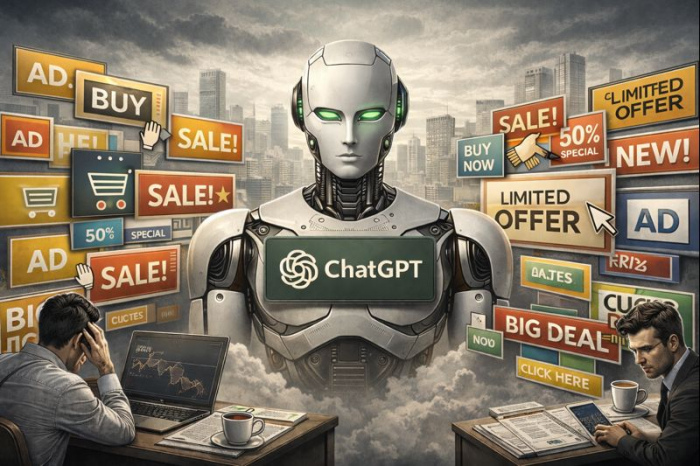
For most of its short but world changing life, ChatGPT felt like a small miracle. You could ask if anything, get thoughtful answers in seconds, and walk away without seeing a single ad. No banners. No pop ups. No sponsored links quietly steering your attention. Just answers.
That era is coming to an end.
In January 2026, OpenAI confirmed that advertising will begin appearing inside ChatGPT, marking one of the most significant shifts in the product’s history. The decision signals a turning point not just for OpenAI, but for how artificial intelligence services are paid for, scaled, and sustained.
The announcement landed softly in tone but loudly in implication. ChatGPT is no longer just a research driven product or a subscription experiment. It is becoming a full-fledged platform, complete with the economic realities that come with serving hundreds of millions of users every week.
Why Ads, and Why Now
OpenAI’s move into advertising did not come out of nowhere, even if it feels abrupt to users. Running ChatGPT at global scale is extraordinarily expensive. Each conversation requires real time computing power, and as models become more advanced, the cost per interaction rises rather than falls.
Subscriptions helped, but not enough. Even with paid tiers growing, the vast majority of ChatGPT’s massive user base still relies on free access. That imbalance created a simple math problem: demand kept exploding while revenue lagged behind the cost of keeping the lights on.
Advertising offers a familiar solution. It is the same playbook that turned search engines, social networks, and streaming platforms into sustainable businesses. The difference here is context. ChatGPT is not a feed you scroll. It is a conversation you trust.
That distinction is exactly why the ad rollout is being handled cautiously.
Who Will See Ads and Who Will Not
OpenAI is not applying ads universally. Instead, it is using a tiered approach that mirrors other freemium platforms.
Users on the free tier will see ads. So will users on the newly introduced lower cost paid plan, which offers more usage but still includes sponsored content. Higher priced subscriptions, including professional and enterprise plans, will remain ad free.
The message is clear: ads subsidize access. If you want uninterrupted conversations, you pay more. If you want free or low-cost access, advertising becomes part of the deal.
This structure does two things at once. It keeps ChatGPT accessible in regions and communities where a higher subscription price would be a barrier, and it nudges heavy users toward premium tiers without forcing them.
How Advertising Will Actually Appear
One of the biggest fears among users is that ads will creep directly into answers, blurring the line between information and promotion. OpenAI says that will not happen.
Ads will appear after responses, not inside them. They will be clearly labeled as sponsored content and visually separated from the AI’s actual reply. No disguised recommendations. No subtle rewriting of answers to favor advertisers.
The format is closer to a suggestion than an interruption. For example, you might ask for travel tips and see a sponsored hotel offer after the advice is complete. The conversation ends, then the ad appears.
OpenAI is betting that relevance will make ads feel useful rather than annoying. Whether users agree remains to be seen.
Why These Ads Are Different from Everything Else
What makes ChatGPT advertising unusual is not the placement but the timing. Ads appear when users are actively seeking solutions, not passively scrolling for entertainment.
That creates a new category of advertising entirely. Instead of guessing intent from browsing history or demographic profiles, ads are triggered by what users are literally asking in that moment.
From an advertiser’s perspective, that is incredibly attractive. From a user’s perspective, it raises understandable questions about influence and trust.
OpenAI has tried to address this tension head on by setting strict boundaries.
Guardrails Around Trust and Privacy
OpenAI says ads will not influence how ChatGPT answers questions. Sponsored content is separate, clearly labeled, and does not alter the AI’s reasoning or conclusions.
There are also topic restrictions. Ads will not appear in conversations involving health, mental health, politics, or other sensitive areas. Users under 18 will not see ads at all.
On the privacy front, OpenAI insists that individual conversations will not be shared with advertisers and that user data will not be sold. Targeting is contextual, not personal.
In short, ads respond to what you ask, not who you are.
That distinction matters, especially at a time when trust in digital platforms is fragile.
The Price That Turned Heads
Perhaps the most surprising detail is not that ChatGPT will have ads, but how expensive those ads are.
Early reports suggest that OpenAI is charging rates comparable to premium television advertising, far higher than what brands typically pay on social platforms. The justification is simple: attention inside ChatGPT is focused, intentional, and distraction free.
You are not half watching a video while scrolling. You are engaged, asking questions, and thinking about solutions. That moment, OpenAI argues, is worth a premium.
For advertisers, the appeal is obvious. For skeptics, the lack of detailed performance metrics makes the price harder to swallow. At least initially, advertisers will receive only basic data such as impressions and clicks, not full conversion tracking.
This signals that OpenAI is prioritizing user trust over advertiser convenience, at least in the early stages.
A Careful and Limited Rollout
Ads will not flood ChatGPT overnight. The initial launch is expected to be limited, with a small group of large brands participating through agencies. The goal is to test user reaction, refine placement, and adjust safeguards before expanding.
OpenAI has been clear that this is an experiment, not a finished product. Feedback from users will shape how advertising evolves, or whether it expands at all.
The company is also exploring future formats cautiously, including interactive ads and in chat commerce, but nothing beyond basic sponsored suggestions is imminent.
How Users Are Reacting So Far
Reaction has been mixed, and predictably so.
Some users see ads as a fair tradeoff. They recognize that free access at global scale needs funding, and they would rather tolerate a sponsored suggestion than lose access entirely.
Others feel something more emotional. ChatGPT felt different precisely because it was not trying to sell anything. Introducing ads, even carefully, feels like crossing a line.
The strongest backlash has focused on the lower priced paid tier that still includes ads. Many users feel that paying anything should guarantee an ad free experience.
OpenAI is aware of the tension. Whether it adjusts that tier in response remains an open question.
What This Means for the AI Industry
This move is bigger than ChatGPT.
If advertising works inside conversational AI, it will become a blueprint for the entire industry. Other AI platforms will follow. If it fails, companies may be forced to raise subscription prices sharply or limit free access altogether.
In that sense, ChatGPT’s ads are a test case for how accessible AI remains in the long run.
The free ride may be ending, but the destination is still undecided.
The Bigger Picture
ChatGPT is growing up. What began as a research project is now a global utility, and utilities need sustainable economics.
Advertising is not a betrayal of that mission. It is a signal that AI has moved from novelty to infrastructure.
The real challenge for OpenAI is not whether ads appear, but whether they appear without breaking trust. If users continue to feel that answers are honest, independent, and useful, ads may fade into the background.
If that trust cracks, no pricing model will save it.
For now, OpenAI is asking users for patience and advertisers for restraint. The conversation continues, just with a sponsor waiting politely at the end.