The Quiet Winner of the AI Boom: Advantest’s Record Quarter Shows Where the Real Bottleneck Is
by Suraj Malik - 1 month ago - 4 min read
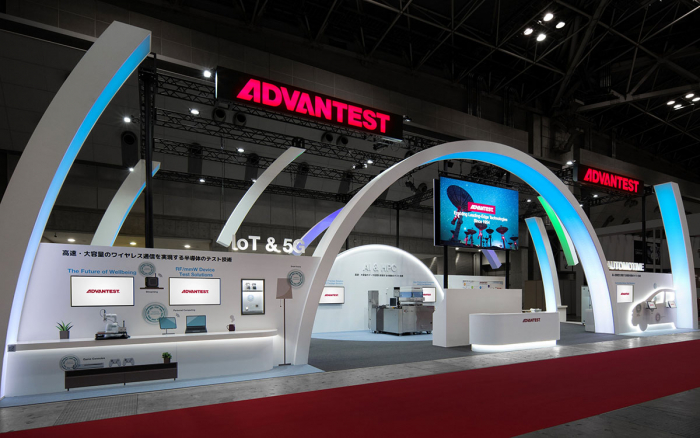
While attention in the AI boom often centers on headline names like Nvidia or hyperscale cloud providers, Advantest has emerged as one of the most critical—and profitable—beneficiaries of the global AI infrastructure build-out.
The Japanese semiconductor test equipment maker reported record quarterly revenue of 273.8 billion yen ($1.8 billion) for the three months ended December 2025 (Q3 FY2025), driven by surging demand for testers used in advanced AI chips. Operating profit jumped 64% year-over-year to 113.6 billion yen, prompting the company to sharply raise its full-year outlook. Following the announcement, Advantest shares rose as much as 14% intraday, reflecting growing investor confidence that AI-driven demand will extend well beyond 2025.
Record Results Signal a Structural Shift
Advantest’s Q3 performance marked the strongest quarter in the company’s history. Revenue climbed 25.5% year over year, while operating margins expanded to roughly 41%, up from about 32% a year earlier. The margin expansion reflects a favorable product mix dominated by high-end testers required for advanced AI processors.
Management said demand exceeded internal expectations, particularly from customers building chips for artificial intelligence and high-performance computing. Based on the strength of nine-month results, Advantest raised its full-year FY2025 operating profit forecast by 24%, signaling confidence that momentum will continue into 2026.
Why AI Chips Are Driving Testing Demand
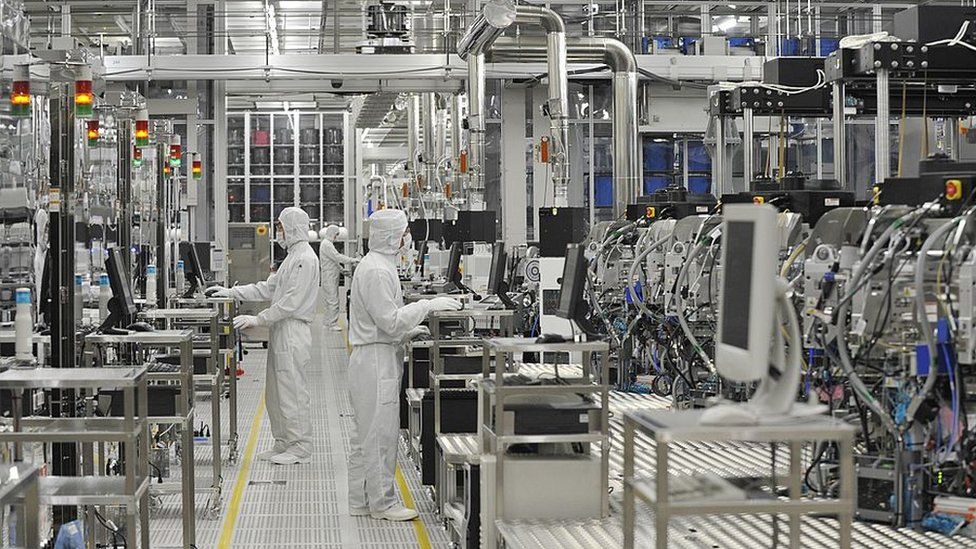
The surge highlights the growing importance of semiconductor testing, a step that occurs after chips are manufactured but before they are packaged and shipped. As chips become more complex, testing becomes both more expensive and more critical.
Modern AI processors—such as GPUs and custom accelerators used for large language models—contain tens to hundreds of billions of transistors. Even minor defects can cause performance failures, making exhaustive testing non-negotiable. This has sharply increased demand for system-on-chip (SoC) testers, Advantest’s most lucrative product category.
In Q3, SoC testers accounted for roughly 60% of Advantest’s total revenue, driven primarily by computing and communications applications tied to AI data centers. Memory testers, used for DRAM and flash memory, contributed a smaller but steady portion of sales.
A Duopoly With Pricing Power
Advantest operates in a near-duopoly alongside Teradyne, with the two companies dominating the global market for advanced chip testing equipment. High switching costs, long customer qualification cycles, and the need for customized testing solutions make it difficult for new entrants to compete.
Industry analysts estimate Advantest controls around two-thirds of the global SoC tester market, giving it substantial pricing power. Individual test systems can cost several million dollars each, and customers typically sign multi-year service and support agreements.
This market structure helps explain why Advantest’s profitability has scaled so rapidly alongside AI demand, even as other parts of the semiconductor supply chain remain cyclical.
Capacity Expansion Underway
Despite tripling production capacity in recent years, Advantest said it remains capacity-constrained, with order backlogs extending well into 2026 and 2027. To address this, the company plans to significantly expand output.
Management aims to produce at least 5,000 test systems annually by FY2026, with a longer-term target of 7,500 systems per year. The expansion will require new manufacturing facilities, additional equipment, and the hiring and training of specialized technicians.
The aggressive capacity build suggests Advantest expects AI-related demand to persist, rather than fade as a short-term cycle.
Outlook for 2026: Still Accelerating
Looking ahead, Advantest forecasts 30–40% revenue growth for FY2026, supported by continued investment in AI infrastructure, custom AI chips developed by major technology firms, and expanding high-performance computing workloads.
Market researchers project the global SoC tester market to grow from about $4.1 billion in 2024 to as much as $9.5 billion by 2026, with AI accounting for the majority of that expansion. Advantest’s raised guidance aligns closely with those projections.
Risks Remain, but the Position Is Strong
Advantest has acknowledged potential risks, including geopolitical tensions affecting semiconductor trade, currency fluctuations tied to yen strength, and supply-chain constraints for precision components. Another concern is concentration: the bulk of SoC tester demand is currently tied to AI computing, making results sensitive to changes in AI capital spending.
Still, testing represents only a small fraction of total chip costs, meaning customers are unlikely to cut back on quality control even if spending slows elsewhere.
The Bigger Picture
Advantest’s record quarter underscores a key reality of the AI boom: advanced chips are only as valuable as the systems that validate them. As AI processors grow more complex and costly, testing has become a critical bottleneck—and Advantest sits at its center.
For investors and industry observers, the company’s performance suggests that the AI infrastructure story is no longer just about who designs or fabricates chips, but also about who ensures they work. And right now, Advantest is emerging as one of the clearest winners in that often-overlooked layer of the supply chain.