Trump Signs Sweeping Order to Block State-Level AI Rules, Pushing for Unified National Standard
by Parveen Verma - 3 months ago - 4 min read
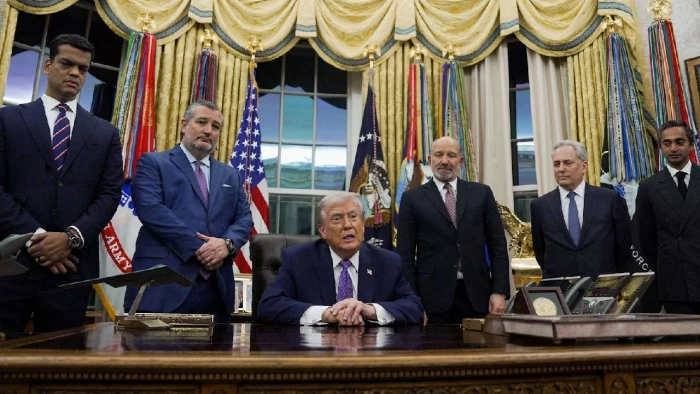
In a decisive move to centralize control over one of the world’s most rapidly evolving technologies, President Donald Trump signed a landmark executive order on Thursday, aimed at preventing individual states from enforcing their own regulations on artificial intelligence. The directive, signed in the Oval Office, seeks to dismantle what the administration calls a "patchwork" of conflicting state laws, arguing that a unified national framework is essential for the United States to maintain its competitive edge against global rivals like China.
A Unified Front for American Innovation
The executive order marks a significant escalation in the federal government's approach to tech regulation. By attempting to preempt state-level legislation, the White House is positioning the federal government as the "one central source of approval" for AI development. President Trump, flanked by industry leaders and administration officials, emphasized that navigating fifty different regulatory regimes would stifle the agility of American tech companies."To win, United States AI companies must be free to innovate without cumbersome regulation," the President stated. The administration contends that inconsistent local laws create unnecessary bureaucratic hurdles, making it difficult for startups and established tech giants alike to scale their technologies effectively. The order explicitly frames this deregulation as a national security imperative, ensuring American supremacy in the global AI arms race.
Federal Enforcement and Financial Consequences
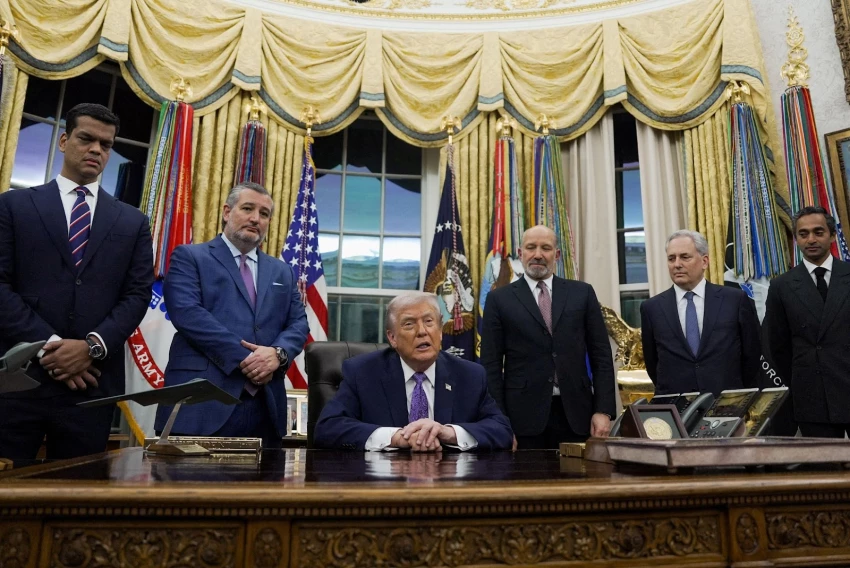
The new directive is not merely symbolic; it includes robust mechanisms for enforcement. The order directs the Attorney General to establish a dedicated AI Litigation Task Force within 30 days. This body will be tasked with challenging state laws deemed unconstitutional or overly restrictive to interstate commerce.
Furthermore, the order leverages federal purse strings to ensure compliance. It instructs the Department of Commerce and other federal agencies to evaluate state AI regulations. States found to have "onerous" rules that conflict with national policy priorities could face significant financial repercussions, including the withholding of crucial federal broadband funding, specifically under the Broadband Equity, Access, and Deployment (BEAD) program.
Targeting "Ideological Bias" and State Mandates
A core component of the order is its focus on what the administration terms "ideological bias" in AI models. The directive takes aim at state laws that mandate Diversity, Equity, and Inclusion (DEI) guardrails in algorithmic decision-making. The administration argues that such requirements force companies to embed bias into their models, potentially distorting results and hampering the technology's objectivity.This move directly challenges rigorous regulatory frameworks recently adopted by states like California and Colorado. These states have been at the forefront of AI legislation, passing laws requiring companies to conduct safety testing, disclose training data, and assess risks related to algorithmic discrimination. Under the new executive order, these state-level protections could be nullified if they are found to interfere with the federal standard.
The Clash Between Innovation and Safety
The executive order has ignited a fierce debate regarding the balance between innovation and consumer protection. Proponents, including major tech consortiums and Silicon Valley investors, have welcomed the move, arguing that a single federal standard provides the certainty needed for massive investment. They caution that without federal preemption, the US risks falling behind as companies get bogged down in legal compliance.
Conversely, the order faces sharp criticism from state governors, civil liberties groups, and consumer safety advocates. Critics argue that stripping states of their regulatory power removes a vital layer of protection for citizens. They warn that without state-level oversight, Americans may be left vulnerable to the risks of deepfakes, unchecked data harvesting, and discriminatory automated decisions in housing and employment. California Governor Gavin Newsom and others have vowed to defend their state's rights to protect their residents, setting the stage for a significant legal showdown.As the AI Litigation Task Force begins its work, the coming months will likely see high-stakes court battles that will define the future of technology governance in the United States..