When Memory Chips Rewrite the Scoreboard: How AI Quietly Reshaped South Korea’s Tech Rivalry
by Vivek Gupta - 1 month ago - 6 min read
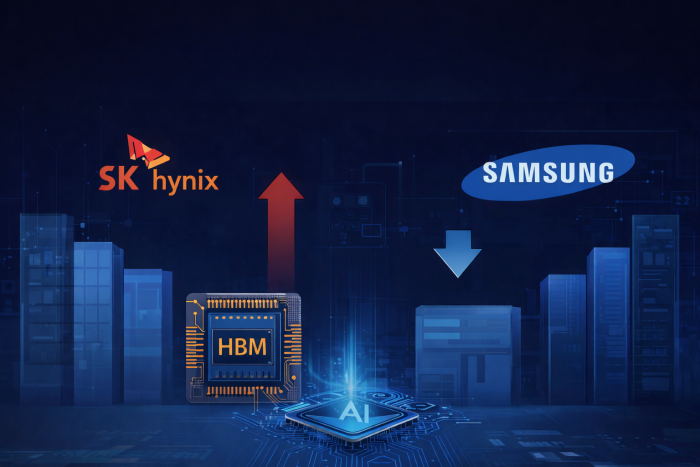
For years, South Korea’s technology hierarchy felt almost predetermined. One company stood as the unchallenged benchmark for scale, profitability, and influence, while competitors measured success by how closely they could follow. That assumption no longer holds.
Recent earnings results revealed a turning point that would have sounded improbable not long ago. A company long known primarily for memory chips delivered higher annual operating profit than its larger domestic rival, marking a first in the country’s modern tech history. The shift was not driven by a sudden collapse elsewhere, nor by a single lucky quarter. It reflected a deeper realignment powered by one force above all others: artificial intelligence.
What appears on the surface as a financial milestone is, in reality, a case study in how quickly AI infrastructure has become the most valuable layer of the global digital economy.
A Year That Redefined Leadership
The numbers that sparked attention were stark. One memory focused semiconductor firm closed 2025 with operating profit exceeding 47 trillion won, overtaking its long dominant competitor, which posted just under 44 trillion won. The gap was not enormous in absolute terms, but its meaning was unmistakable.
For the first time, leadership was decided not by consumer electronics, smartphones, or diversified portfolios, but by who supplied the most critical components behind AI systems. Markets responded immediately. Share prices climbed to record levels, signaling that investors understood this was not a short-lived anomaly.
Equally striking was profitability. Fourth quarter operating margins approached 60 percent, a level rarely seen in capital heavy manufacturing. Such margins do not emerge from volume alone. They reflect pricing power, tight execution, and demand that outpaces supply.
Two Strong Performances, One Clear Message
Just days later, the long-standing industry leader released its own results, and they were impressive by any traditional standard. Quarterly profit reached an all-time high, revenues surged, and the memory division delivered record contributions.
On a quarterly basis, it even edged ahead, reclaiming the top spot for that period. But the broader story had already shifted. Annual performance told a different tale, one that highlighted how timing and focus now matter as much as scale.
This contrast sets the stage for a more balanced and competitive 2026. One company holds the annual crown. The other carries strong momentum into the new year. The rivalry is no longer static.
Why AI Changed Everything
The reason this reshuffle happened now is not mysterious. AI workloads have transformed memory chips from supporting components into strategic bottlenecks.
Training large models and running inference at scale requires enormous volumes of high bandwidth memory. These chips must move data at extreme speeds, consume power efficiently, and operate with near perfect reliability. When demand for AI accelerators exploded, so did demand for the memory that feeds them.
Companies that aligned their production, research, and customer relationships around this reality gained disproportionate rewards. Those that moved later are now racing to close the gap.
This is not a general semiconductor boom. It is a targeted surge driven by a specific category of products that sit at the heart of AI infrastructure.
Focus as a Competitive Weapon
Several elements explain why one firm surged ahead over the full year.
First, its product mix leaned heavily toward the most profitable segment of the memory market. Advanced memory used in AI systems commands far higher prices than conventional components.
Second, execution proved decisive. Supplying advanced memory at scale requires precision manufacturing and consistent quality. Customers building massive data centers cannot tolerate delays or defects. Trust, once earned, becomes a powerful moat.
Third, capital discipline mattered. Having capacity ready when demand arrived allowed the company to capture upside immediately, rather than scrambling to expand after prices had already peaked.
The result was a year where profit growth exceeded even optimistic expectations, forcing analysts to revise forecasts upward.
Signals Beyond Earnings
Markets also paid attention to how leadership responded to this windfall. Announcements of additional dividends and large-scale share cancellations were interpreted as confidence signals, not just shareholder friendly gestures.
Such moves suggested management believes current profitability is not a fleeting spike, but part of a longer cycle tied to sustained AI investment. Investors tend to reward that combination of ambition and restraint.
It also reinforced the perception that this company now sees itself not as a follower benefiting from a cycle, but as a leader shaping one.
The Comeback Narrative Is Still Alive
None of this implies the traditional leader has been permanently displaced. Far from it. Recent plans point to aggressive expansion in next generation memory, with production increases and new product launches scheduled early in 2026.
The company has also acknowledged past quality challenges and signaled confidence that those hurdles are behind it. Its broader portfolio, however, adds complexity. While memory now dominates profitability, other divisions face pressure from competition and softer demand.
Balancing these realities while accelerating AI focused production will define the next phase of competition.
Analysts See a Bigger Club Forming
One of the most striking developments following the earnings announcements is how quickly expectations shifted. Several analysts now project that both companies could cross 100 trillion won in annual operating profit in the coming year, assuming AI demand remains strong and pricing holds.
That would place them in a rare global tier of profitability. Just a few years ago, memory makers were bracing for oversupply and margin compression. Today, they are discussing sustained earnings at levels once reserved for software giants.
History suggests caution. Semiconductor cycles are unforgiving. But the drivers behind AI adoption differ fundamentally from past booms tied to consumer devices.
National Stakes in a Corporate Shift
This rivalry carries weight beyond corporate balance sheets. In South Korea, flagship technology firms are seen as symbols of national capability and industrial strength.
That a memory focused company now leads in annual profit reflects a broader truth about the modern economy. Infrastructure, not end user products, increasingly captures the most value.
As governments and enterprises pour resources into AI, the companies supplying foundational components gain strategic influence. This shift has implications not just for markets, but for policy and global competition.
What Comes Next
Looking ahead, the landscape appears more dynamic than it has in years. One company enters 2026 as the reigning annual profit leader, buoyed by AI driven demand and strong margins. The other enters with record quarterly momentum and an aggressive roadmap.
For observers, this makes the coming year far more compelling than a simple continuation of past dominance. Leadership is no longer assumed. It is contested, quarter by quarter.
The Bigger Lesson
This moment illustrates how quickly technological inflection points can upend long standing hierarchies. In less than two years, AI transformed memory chips from background components into the most profitable battleground in semiconductors.
The lesson is not that one company has permanently overtaken another. It is that in the AI era, focus, timing, and execution can outweigh legacy scale.
The scoreboard has changed. Whether it stays that way will be one of the most closely watched business stories of 2026.