
Modern forex is changing at lightning speed. Huge amounts of data are processed here, and reactions to political events, economic news, or changes in investor sentiment occur instantly. It is becoming increasingly difficult for traders to analyze the market and execute trades at this pace. This is why algorithmic trading is rapidly gaining popularity today. If once it was a tool exclusively for large financial companies, today such systems are available to private investors and traders. In this article, we will tell you why algorithmic trading is becoming a new standard in the foreign exchange market, what advantages it gives traders, and what disadvantages it is important to know about, and we will also share views on the near future of the Forex market.
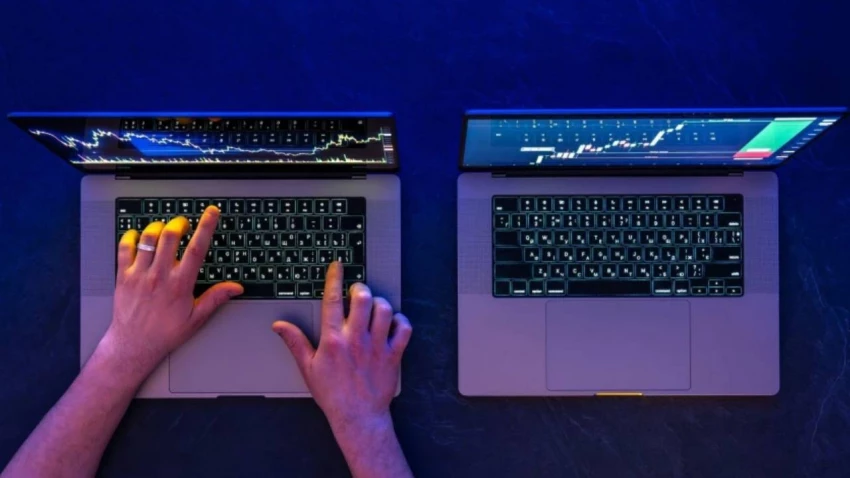
Algorithmic trading is the use of advisors that automatically open and close transactions, as well as calculate the risk level and position volume according to a given algorithm, without direct influence from the trader. After mt5 download, traders can use advisors to improve productivity, perform near-instant analysis of historical data, and analyze the forex market.
Trading algorithms are based on mathematical models and statistical analysis, and enable systems to make independent decisions about buying or selling assets without direct human intervention. There are several types of trading algorithms:
The forex market is highly liquid and operates around the clock, making it ideal for algorithmic trading. Here, algorithms take into account macroeconomic news, interest rates, and technical signs. They can process thousands of data points simultaneously across different time frames and on different resources, which is something that humans simply cannot match.
Algorithmic trading is appealing primarily because it offers the opportunity to generate passive income without the daily stress and round-the-clock monitoring of charts. It frees traders from the routine tasks of opening and closing trades and analyzing dozens of indicators, allowing them to focus on strategy and monitoring results. Here are some of its key advantages in modern forex.
Speed and efficiency
Algorithms process and analyze large volumes of data in a matter of seconds. This allows for responding to short-term market fluctuations much faster than humans can.
The absence of emotional factors
Automation eliminates the influence of emotions on the decision-making process, which promotes more disciplined trading.
Strict discipline
Algorithms follow a set plan without fail. This protects against impulsive purchases and ensures that stop-loss orders are automatically placed and profits are locked in.
Algorithmic trading offers forex traders numerous advantages, including flexibility, speed, and high efficiency. However, as with any other form of trading, there are risks involved. Most of these risks can be eliminated or minimized by combining algorithmic trading with manual trading, but in any case, it is important to be aware of them.
Sensitivity to highly volatile markets
In the forex market, prices are prone to periodic sharp spikes. In such cases, the robot continues to operate according to a strict algorithm, whereas a human trader can manually widen stop-loss levels or decide to close a trade earlier than planned.
Code errors
The algorithm’s code is far from perfect. There is a chance that, if a set of conditions is met, it will malfunction. For example, it might open a losing trade with an incorrect position size, close profitable trades, and so on.
In short, the downside of an algorithm is that it is merely a robot operating according to a pre-programmed sequence of instructions. It lacks intuition and a willingness to take risks, and there is a risk of losing your entire deposit if the code contains errors.
For algorithmic trading to be effective, it is important to monitor the algorithm’s performance during news releases and to compare trading statistics with backtest results. However, if you learn how to work with algorithmic trading systems, you can improve your trading performance in the forex market.
Today, the future of forex is increasingly linked to the development of AI and automation. Algorithmic systems are capable of reacting to market changes in a fraction of a second, analyzing large volumes of data, and optimizing traders’ decisions. With the advancement of AI, such technologies will become even more sophisticated and accessible, and the human role in this system will shift toward process control and the optimization of trading strategies. At the same time, algorithms are unlikely to completely replace traders, as the market remains unpredictable, and any system requires configuration and oversight. And although technology continues to evolve rapidly, the key to success still lies in traders’ ability to use these tools effectively.
Share your thoughts about this article.
Be the first to post a comment!

In today’s fast-changing business environment, digital transformation is no long...
Parveen Verma2 months ago
Valant.io is one of the most purpose-built EHRs in behavioral health. But 'purpo...
Suraj Malik2 months ago

Financial markets constantly tempt traders with predictions, forecasts, and conf...
Sakshi Dhingra3 months ago