
In modern professional environments, outcomes are rarely determined by effort alone. They are shaped by the clarity and reliability of the information guiding decisions. When documentation is precise, consistent, and accessible, teams operate with alignment. When information is incomplete or fragmented, uncertainty spreads through systems.
Clear information reduces interpretational gaps. It ensures that what one department records is understood identically by another. It creates a shared operational language. This consistency strengthens execution because decisions are grounded in verified inputs rather than assumptions.
Clarity is not simply about communication style. It is about structural coherence across documentation systems.
Organizations today generate continuous streams of digital records, contracts, emails, compliance reports, financial statements, system logs, and performance analytics. The volume of data is no longer the challenge. Structure is.
When information is organized with consistent metadata, timestamp alignment, and version control, it becomes usable. Leaders can reconstruct events chronologically. Analysts can identify trends without reconciling inconsistencies. Risk managers can evaluate exposure based on documented facts.
Without structure, even accurate data loses value. Disconnected systems create duplication. Missing context slows decision-making. Conflicting records undermine credibility.
Structured information acts as infrastructure. It supports operational continuity and prevents small inconsistencies from evolving into systemic disruption.

The importance of clarity becomes especially visible in situations where accountability carries financial or legal consequences. In such contexts, decisions must withstand scrutiny beyond internal review.
Take large vehicle accident investigations as an example. Establishing responsibility depends on aligning multiple forms of digital documentation: police reports generated electronically, medical records with verified timestamps, commercial vehicle logs, insurance communications, and digital correspondence. Each record must support a coherent timeline.
If timestamps conflict or documentation lacks continuity, resolution becomes slower and more complex. Inconsistent records introduce doubt, even when underlying facts are strong.
When documentation is evaluated by professionals such as a Truck Accident Attorney Greenville, the review process centers on structural consistency rather than narrative persuasion. The key question becomes whether the digital evidence presents a clear and traceable chain of events. Well-preserved, chronologically aligned records enable faster assessment. Fragmented documentation creates friction and uncertainty.
This principle extends beyond legal matters. In corporate audits, regulatory reviews, insurance evaluations, and compliance investigations, defensible outcomes depend on structured digital traceability. Where responsibility must be established objectively, clarity determines efficiency.
As organizations increasingly adopt artificial intelligence tools, the need for structured information becomes even more critical. AI systems do not create clarity, they rely on it.
Predictive analytics platforms analyze historical datasets to forecast trends. Natural language processing models summarize reports and contracts. Automated compliance systems scan documentation for irregularities. Intelligent dashboards convert raw operational data into strategic insights.
However, AI amplifies the quality of its inputs.
If documentation is incomplete, inconsistent, or poorly labeled, AI-driven systems replicate those weaknesses at scale. A miscategorized data field can distort predictive modeling. Inaccurate timestamps can affect automated timeline reconstruction. Fragmented records can skew machine-generated summaries.
Organizations that deploy AI responsibly understand that data governance must precede automation. Clean datasets, defined data schemas, access control protocols, and validation checkpoints ensure that AI enhances insight rather than magnifies error.
Technology accelerates decision-making. AI tools enhance analysis. Clear information stabilizes both.
Clarity does more than prevent problems, it builds long-term strength. Investors trust organizations with transparent reporting. Clients rely on consistent documentation. Partners engage more confidently when records align across systems.
Structured information reduces dispute cycles, shortens audit timelines, and improves forecasting reliability. It lowers operational friction because verification takes less time. It strengthens credibility because decisions can be defended logically.
Better outcomes are not accidental. They are built on disciplined documentation practices that prioritize consistency and traceability from the beginning.
In a world where digital systems continue to expand and accountability expectations continue to rise, clear information is not optional. It is foundational. It enables defensible decisions, responsible innovation, and sustainable success.
Be the first to post comment!
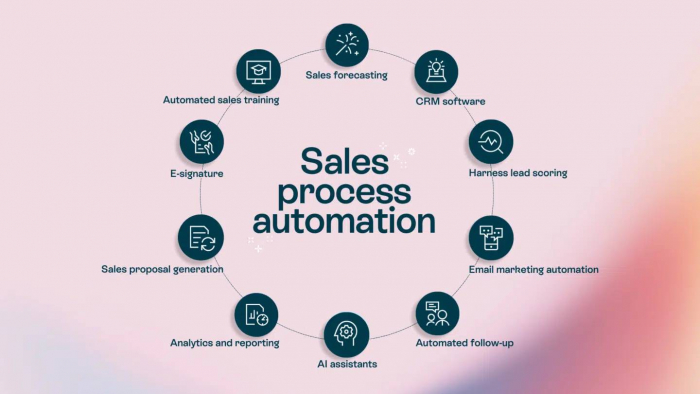
Introduction: Why Sales Automation Is No Longer OptionalToday’s B2B sales enviro...
Michael Hicklen2 months ago

Image search has quietly become one of the most powerful discovery, research, an...
Michael Hicklen2 months ago
Why Workflow Automation Matters in 2026Automation tools help businesses:● S...
Michael Hicklen2 months ago

1) Foundations :What software review platforms are-Software review platforms are...
Michael Hicklen2 months ago

1. What AI Automation in Daily Work Actually Means?1.1 AI automation in daily wo...
Michael Hicklen2 months ago

1. What Is a CRM?Definition-A CRM (Customer Relationship Management) system...
Michael Hicklen2 months ago