With over 2.7 billion monthly active users, YouTube is not just a video-sharing platform. It is the world's second-largest search engine. For businesses and creators, this represents a monumental opportunity. However, simply uploading a video and hoping for the best is a strategy destined for failure. To succeed, you need to master YouTube Search Engine Optimization (SEO), a discipline dedicated to making your content discoverable to a relevant and engaged audience.
Before diving into specific tactics, it is crucial to understand what you are actually optimizing for. The goal is not just to get clicks. It is about satisfying an algorithm that prioritizes user experience above all else.
The YouTube algorithm operates as a complex, real-time feedback loop. Its primary objective is to serve the right video to the right viewer at the right time, keeping users on the platform for as long as possible. Success is measured through several key performance indicators. The two most critical are Click-Through Rate (CTR), which captures how many people click your video after seeing it in their feed, and Average View Duration (Watch Time), which reflects how long they actually stay. A strong CTR paired with long watch time signals that your content is both compelling and valuable, which prompts the algorithm to extend its reach to a wider audience.
So how do you align your content with what users are genuinely searching for? It begins with strategic keyword research, which works a bit differently on YouTube than on Google.

Effective YouTube SEO starts with understanding the language of your audience. You need to identify the specific terms and phrases they use when searching for content like yours. Fortunately, this process does not have to be complicated.
Start directly in the YouTube search bar. Type a broad topic related to your niche and observe the autocomplete suggestions. These are real queries from real users, offering a direct window into audience intent. For deeper analysis, study the top-ranking videos for your target keywords. What titles are they using? What topics do their descriptions and tags address? This kind of competitive analysis can surface content gaps and keyword opportunities you might otherwise miss. Platforms like TubeBuddy or VidIQ can further support this process by surfacing search volume and keyword difficulty data directly within the YouTube interface.
Once you have identified your target keywords, the next step is to signal their relevance clearly to both the algorithm and potential viewers. This is where your video metadata becomes essential.
Metadata is the collection of information, covering your title, description, and tags, that tells YouTube what your video is about. Optimizing these elements is one of the most direct levers you have for influencing your rankings.
Your video title carries two responsibilities simultaneously: it must contain your primary keyword for the algorithm, and it must be compelling enough to earn a click from a real person. The best titles strike a balance between being informative and creating curiosity. Placing your main keyword near the beginning, and incorporating numbers, questions, or emotionally charged language, can make a meaningful difference to your CTR. For instance, "5 Advanced Marketing Tips That Actually Work in 2024" will consistently outperform a generic title like “Marketing Tips.”
The video description is a powerful but frequently underused SEO asset. The first 100 to 150 characters carry the most weight, as they appear in search results and below the video before a viewer expands the full text. Use this space to write a compelling, keyword-rich summary of your video's core value. The remainder of the description can provide added context, include timestamps (also known as video chapters), and point viewers to related resources. Timestamps, in particular, can help your video appear in Google's "Key Moments" feature, extending your visibility beyond YouTube itself.
Tags help YouTube understand the broader context of your video and associate it with other relevant content, increasing the likelihood of it appearing as a suggested watch. Use a mix of broad and specific tags, with your primary keyword placed first. Follow it with related long-tail phrases and wider category terms. Reviewing the tags your top-ranking competitors use is a practical shortcut for understanding how to frame your own content within the platform's taxonomy.
Optimizing content manually is entirely possible, but it is inefficient at scale. The right set of tools can automate research, surface critical insights, and give you a measurable competitive edge.
A strong YouTube strategy is built on data-driven decisions, and there is a growing ecosystem of tools designed to support exactly that. Rank trackers let you monitor your video's position in search results for specific keywords over time. Channel analytics platforms offer granular insight into audience demographics and viewing behavior. Thumbnail design tools, such as Canva, make it easier to create eye-catching visuals that consistently drive higher CTR.
It is well established in the marketing community that videos gaining meaningful traction within the first 48 hours are far more likely to be surfaced and recommended by the algorithm. To support that early momentum, some creators turn to Views4You's acceleration services, which can provide an initial engagement signal to help kickstart the visibility cycle. When combined with strong metadata and genuine content quality, these early signals can meaningfully influence how the algorithm evaluates and distributes a new upload.
Your work does not end when you hit publish. The first 24 to 48 hours after a video goes live are critical for generating the kind of engagement signals that shape its long-term trajectory. Distribute your video across every relevant channel available to you, including social media, email newsletters, and online communities where your audience gathers. Encourage viewers to like, comment, and subscribe, as these actions send strong positive signals to the algorithm. Responding to comments promptly can also deepen community engagement and further amplify those metrics.
Within YouTube itself, tools like End Screens and Cards are valuable for directing viewers to other videos on your channel. Increasing session watch time this way signals to the algorithm that you are a creator capable of sustaining audience attention, which strengthens your overall channel authority over time.
Initial traction from a well-optimized video can appear within days, but building consistent search traffic and channel authority typically takes several months. Publishing optimized content on a regular schedule is the most reliable path to compounding results.
Shorts are primarily discovered through the dedicated Shorts shelf rather than traditional search, so their direct ranking impact is limited. However, a viral Short can drive significant new subscribers to your channel, indirectly boosting the authority and reach of your long-form content.
Deleting a video removes any watch time it has accumulated and eliminates its potential to rank for niche, long-tail queries. Unlisting the video or updating it with improved metadata is almost always the better choice.
YouTube does not explicitly rank higher-resolution videos above others, but upload quality directly affects viewer experience. Publishing at a minimum of 1080p is the current standard expectation, and poor visual quality tends to hurt audience retention, which is a negative ranking signal.
Be the first to post comment!

Introduction: Why Sales Automation Is No Longer OptionalToday’s B2B sales enviro...
Michael Hicklen2 months ago

Image search has quietly become one of the most powerful discovery, research, an...
Michael Hicklen2 months ago
Why Workflow Automation Matters in 2026Automation tools help businesses:● S...
Michael Hicklen2 months ago

1) Foundations :What software review platforms are-Software review platforms are...
Michael Hicklen2 months ago

1. What AI Automation in Daily Work Actually Means?1.1 AI automation in daily wo...
Michael Hicklen2 months ago
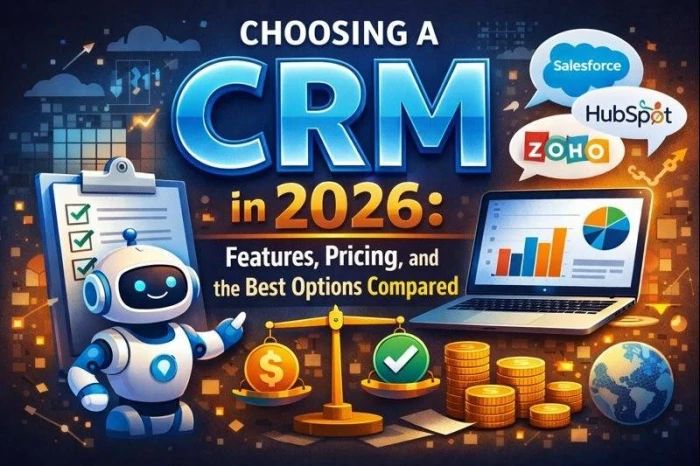
1. What Is a CRM?Definition-A CRM (Customer Relationship Management) system...
Michael Hicklen2 months ago