
Real estate investors rarely lose their profits to fraud or bad deals. The real wealth drain? Taxes. When you sell an appreciated property, you're hit with capital gains taxes on the profit, depreciation recapture on deductions you've claimed, and potentially state taxes.
The money you lose can be in the six- or even seven-figure range for high-value properties. This is exactly where a 1031 exchange comes in. It exists to prevent that outcome. If executed well, your 1031 exchange properties can do more than just delay tax payments. They can preserve investment capital proactively. What's more, this strategy supports long-term portfolio strength and protects compounding growth.
In sustainable investing, capital preservation plays a major role. It enables steady growth while protecting principal.
Capital losses in real estate often occur during transitions. Selling a property triggers tax liability immediately. Consequently, these immediate taxes reduce the investor's reinvestment power, leaving them with less capital.
A 1031 exchange can break this loop by interrupting the cycle. It keeps your capital intact rather than allowing taxes to shrink your investment funds. This, in turn, gives you a structural advantage over taxable sales.

Do you know that capital gains taxes can exceed 20% at the federal level? Depreciation recapture adds another tax layer, and state taxes further amplify the burden.
These funds are permanently removed from the portfolio once paid. As a result, the opportunity cost becomes substantial over time.
A 1031 exchange can defer taxes by reinvesting proceeds into like-kind properties. This deferral plays a major role in preserving capital that would otherwise be lost. The investor does not receive any sale proceeds. Instead, the funds are held by a qualified intermediary, thus keeping the transaction fully compliant.
Investors can now purchase higher-value assets by reinvesting the full amount and helping their returns grow over time.
1031 exchanges cannot permanently eliminate taxes. Believing otherwise is one of the most common misconceptions about this strategy. In reality, taxes are not erased; they’re deferred. However, during the most critical growth phase, deferral still preserves capital.
Some investors continue exchanging properties for decades. Some ultimately pass their properties to heirs. In such cases, the stepped-up basis rules may eliminate or reduce deferred taxes.
Investors often end up downsizing unintentionally without a proper 1031 exchange. They reinvest less capital after taxes. Equity transfers fully and correctly when the exchange is executed properly. Investors gain the flexibility to move from low-yield properties into higher-yielding assets.
Net-lease, multifamily, and industrial properties are prime examples in this context. Such an investment can be a major shift that can improve both income stability and long-term appreciation.
It is not always about taxes when it comes to preserving capital. It involves managing risk as well. A 1031 exchange allows investors to reposition portfolios without triggering tax consequences. Investors can exchange assets, particularly in declining markets, for stronger regions.
Also, passive investments can replace management-heavy properties. This flexibility can reduce operational risk and protect capital.
This is again a significant aspect that explains how 1031 exchange properties help preserve investment capital. Investors can reduce both geographic and tenant risk by exchanging a single asset for multiple properties.
Alternatively, one can consolidate several properties into one institutional-grade asset. Both approaches, however, enhance portfolio performance while protecting capital.
Remember, 1031 exchange properties are not tax loopholes—they’re capital preservation tools. Investors can retain full reinvestment power by deferring taxes. That capital compounds through higher asset values, improved portfolio health, and stronger cash flow. 1031 exchanges still are one of the most powerful tools investors use to preserve investment capital while continuing to grow.
Be the first to post comment!
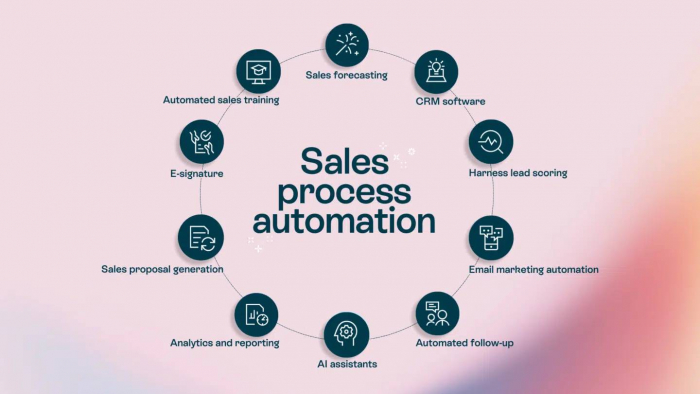
Introduction: Why Sales Automation Is No Longer OptionalToday’s B2B sales enviro...
Michael Hicklen2 months ago

Image search has quietly become one of the most powerful discovery, research, an...
Michael Hicklen2 months ago
Why Workflow Automation Matters in 2026Automation tools help businesses:● S...
Michael Hicklen2 months ago

1) Foundations :What software review platforms are-Software review platforms are...
Michael Hicklen2 months ago
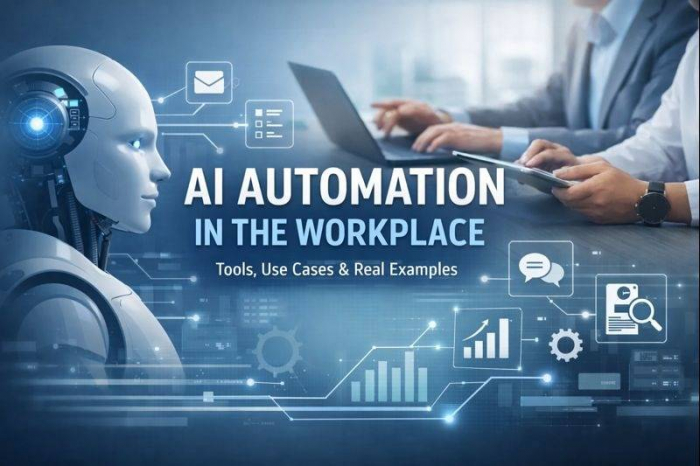
1. What AI Automation in Daily Work Actually Means?1.1 AI automation in daily wo...
Michael Hicklen2 months ago
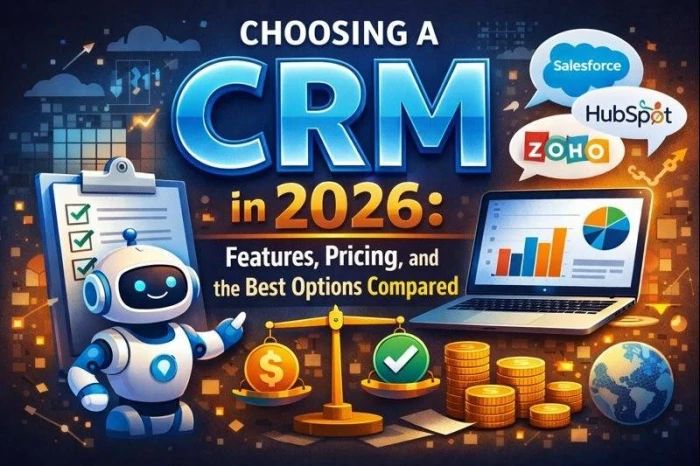
1. What Is a CRM?Definition-A CRM (Customer Relationship Management) system...
Michael Hicklen2 months ago