In modern organizations, outcomes are rarely shaped by ambition alone. They are shaped by the quality of information that informs decisions at every level. Strategic planning, operational execution, compliance oversight, and professional advisory services all depend on structured, accurate, and accessible records.
When information systems are weak, even well-designed strategies falter. When they are strong, organizations operate with clarity, predictability, and resilience.
Better information does not simply improve decisions, it stabilizes entire systems.
Information is often treated as a byproduct of business activity. In reality, it functions as core infrastructure.
Just as physical infrastructure supports transportation and energy systems, information infrastructure supports organizational continuity. Financial records guide budgeting and investment. Performance analytics influence growth planning. Documentation archives preserve institutional memory.
When information is structured properly, decision-makers gain visibility into patterns, risks, and opportunities. Historical context becomes traceable. Trends become measurable. Forecasting becomes grounded in data rather than assumptions.
Organizations that treat information as infrastructure invest in consistency. They define ownership of records. They implement version controls. They standardize reporting formats. These practices reduce friction across departments and create alignment between strategy and execution.
Better information allows leaders to act decisively because they trust the foundation beneath their choices.

Information gaps rarely appear dramatic at first. Instead, they introduce subtle inefficiencies that compound over time.
A missing approval record may delay project progression. A misaligned financial entry may distort performance reporting. An undocumented communication may create confusion during contract interpretation. Individually, these inconsistencies appear manageable. Collectively, they destabilize systems.
As organizations scale, these gaps become magnified. Growth increases complexity. Complexity increases dependency on accurate records. Without disciplined documentation, scaling amplifies confusion rather than performance.
Structured information management prevents these vulnerabilities. Clear archival systems, defined data hierarchies, periodic audits, and standardized documentation processes ensure continuity even during expansion.
Operational stability is directly correlated with information discipline.
Decision confidence does not emerge from speed or authority alone. It emerges when leaders trust that the information guiding their choices has been verified, contextualized, and preserved accurately over time.
In environments where accountability is central, documentation becomes more than operational support, it becomes structural evidence. Regulatory reviews, contractual disputes, performance audits, and advisory assessments all rely on records that can withstand independent scrutiny. When documentation is clear, consistent, and chronologically aligned, decision-makers operate from a position of stability. When it is fragmented, confidence erodes quickly.
This dynamic becomes especially visible in professional case evaluations. For example, when an individual seeks guidance from a Columbus personal injury attorney, the assessment process does not begin with argument; it begins with documentation. Medical records must align precisely with the reported timeline of events. Incident details must correspond with supporting evidence. Insurance communications must reflect continuity. Financial losses must be supported by measurable proof. The strength of the evaluation depends not on rhetoric but on record consistency.
The same structural logic applies far beyond legal settings. In corporate governance reviews, compliance investigations, and financial audits, decisions are only as defensible as the documentation behind them. When information integrity is strong, conclusions carry weight. When it is weak, credibility becomes negotiable.
Better information strengthens outcomes because it reinforces confidence—both internally among decision-makers and externally among stakeholders.
The digital transformation of business has increased both the speed and volume of information. Cloud platforms, analytics dashboards, automated workflows, and AI-driven reporting tools generate continuous streams of structured and unstructured data.
However, digital systems do not merely process information, they amplify it.
When data is accurate and structured, digital tools accelerate insight. Performance metrics update in real time. Predictive analytics refine forecasting precision. Automation reduces administrative burden and improves consistency across departments. AI tools that analyze trends, detect anomalies, or generate performance summaries can surface patterns that would otherwise remain hidden.
In this environment, artificial intelligence functions as a decision-support layer. Machine learning models interpret historical data to anticipate outcomes. Natural language processing systems summarize complex reports. Intelligent automation platforms optimize workflows dynamically based on performance metrics.
But the amplification effect cuts both ways.
When data is inconsistent, incomplete, or poorly governed, AI tools magnify those weaknesses. A misclassified dataset can distort algorithmic recommendations. An incomplete input field can alter predictive models. Automated reporting systems may replicate flawed insights across leadership dashboards. Because AI systems operate at scale and speed, small data inaccuracies can evolve into systemic distortions.
This is why information governance becomes central as digital ecosystems grow more interconnected. Structured data architecture, validation checkpoints, monitoring frameworks, and cross-system reconciliation processes ensure that AI tools operate on reliable inputs.
Organizations that integrate AI successfully understand this balance. They invest not only in advanced tools but also in disciplined data management practices. They recognize that AI does not create reliability; it depends on it.
Technology accelerates processes. AI tools amplify insight. Information integrity stabilizes both.
Better information reduces avoidable risk.
Risk exposure often emerges from ambiguity—unclear responsibilities, undocumented agreements, inconsistent timelines, or incomplete reporting. When documentation is disciplined, ambiguity decreases.
In legal, financial, and regulatory contexts, structured records allow stakeholders to evaluate actions objectively. Decisions can be justified through documented reasoning rather than retrospective explanation.
Organizations that maintain strong information discipline experience fewer disputes, fewer corrective actions, and fewer strategic reversals. Stability improves because decisions are rooted in verified inputs.
Over time, this stability compounds into competitive strength. Stakeholders, whether clients, investors, or partners, gain confidence in systems that consistently produce reliable outputs.
Better information does not eliminate uncertainty entirely, but it significantly reduces exposure to preventable error.
In competitive environments, marginal advantages determine long-term success. Reliable information systems create those advantages.
Clear documentation strengthens negotiation leverage. Accurate reporting builds investor trust. Structured compliance records reduce regulatory friction. Transparent operational metrics improve stakeholder confidence.
Organizations that prioritize information quality often outperform peers not because they innovate faster, but because they innovate more responsibly. They allocate resources efficiently. They anticipate risk earlier. They correct course before issues escalate.
Over time, disciplined information systems become embedded in organizational culture. Teams rely on data rather than speculation. Leadership decisions reflect measurable insight rather than assumption.
Better information becomes a differentiator because it enhances predictability.
Outcomes are shaped long before results are visible. They are shaped when information is recorded accurately, verified consistently, and structured thoughtfully.
Better information improves forecasting accuracy, strengthens accountability, and reduces operational volatility. It enables decisions to be defended rationally and executed confidently.
Across industries and professional environments, the pattern remains clear: clarity strengthens systems. Structured documentation stabilizes growth. Verified data improves strategic alignment.
Better outcomes are not accidental. They are built on disciplined information practices that prioritize accuracy, traceability, and structural integrity.
In an increasingly complex business environment, better information is not optional. It is foundational to sustainable success.
Be the first to post comment!
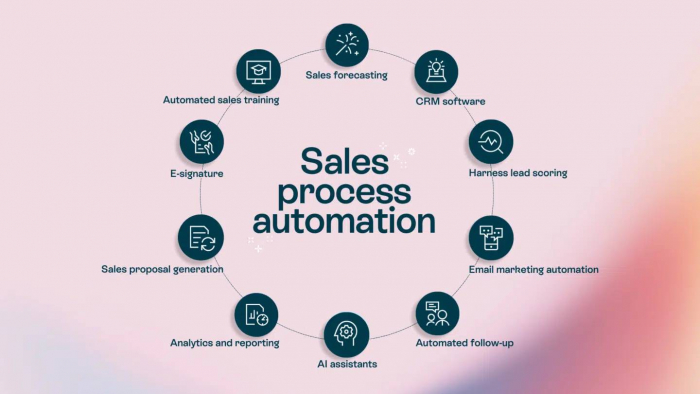
Introduction: Why Sales Automation Is No Longer OptionalToday’s B2B sales enviro...
Michael Hicklen2 months ago

Image search has quietly become one of the most powerful discovery, research, an...
Michael Hicklen2 months ago
Why Workflow Automation Matters in 2026Automation tools help businesses:● S...
Michael Hicklen2 months ago

1) Foundations :What software review platforms are-Software review platforms are...
Michael Hicklen2 months ago

1. What AI Automation in Daily Work Actually Means?1.1 AI automation in daily wo...
Michael Hicklen2 months ago

1. What Is a CRM?Definition-A CRM (Customer Relationship Management) system...
Michael Hicklen2 months ago