
Picture this: you're sitting in a boardroom, staring at quarterly numbers that tell a familiar story. Revenues look decent, but there's this nagging question that probably crosses your mind more often than you'd like—which customers are actually happy, and which ones have one foot out the door?
Remember when you had to guess what customers were thinking? Those days are over. Insurance companies today are getting surprisingly good at reading customer behavior. It's almost like having a sixth sense about what people are thinking before they even know it themselves. When margins are getting squeezed and competition is brutal, these prediction tools have become essential for survival.
Insurance has always been a numbers game, but the stakes have never been higher. Getting new customers costs a fortune these days. Really expensive. Some insurers are seeing costs jump 40-60% over just five years. Meanwhile, customer loyalty continues its steady decline as comparison shopping becomes effortless and switching costs approach zero.

This perfect storm creates a compelling financial equation: retaining existing policyholders costs roughly five times less than acquiring new ones. Yet most insurance companies still operate with surprisingly limited visibility into which customers represent their highest retention risks. They're essentially playing expensive guessing games with their most valuable assets.
This stuff flips the whole game on its head. Now here's the game-changer: you can catch problems before they happen. No more scrambling after customers have already made up their minds to leave. The financial impact? Top insurers are seeing 15-25% better retention rates in just the first year after implementing these models.
The basic idea is pretty straightforward: computers get really good at spotting patterns in massive amounts of data that would take humans forever to notice. They're looking at everything: when people pay their bills, how often they file claims, whether they're engaging with your digital channels, even broader economic trends that might affect their spending.
What makes this so powerful? These systems dig way deeper than surface-level data. Old-school models just looked at demographics and policy details. Modern systems look at social media sentiment, economic stress indicators, seasonal spending patterns, life event triggers—basically anything that might affect behavior.
Computers excel at connecting seemingly random dots. Let's say someone who always pays early suddenly starts cutting it close on their due dates. Add in some reduced online activity and a recent job change, and suddenly you've got a pretty clear picture of someone who might be shopping around.
And here's the kicker: This all happens in real-time. Modern systems continuously update risk scores as new data becomes available, creating dynamic customer profiles that evolve with changing circumstances. It's a complete shift from doing annual check-ups to having a constant pulse on what's happening.
This stuff touches pretty much every part of your business that affects the bottom line. Customer lifetime value calculations become dramatically more accurate when prediction models can forecast retention probability with precision. This enables more sophisticated pricing strategies and targeted investment in high-value customer relationships.
Claims prediction represents another significant opportunity. By analyzing historical patterns and external risk factors, insurers can anticipate claim frequency and severity with remarkable accuracy. This insight allows for proactive risk mitigation strategies and more precise reserve setting, reducing the volatility that often plagues insurance financial planning.
Smart recommendation systems can spot cross-selling opportunities with much higher success rates than traditional marketing. When you understand which life events typically trigger insurance needs, timing becomes everything. The difference between a 2% and 12% conversion rate often comes down to reaching customers at precisely the right moment with exactly the right product.
Fraud detection capabilities have evolved far beyond simple rule-based systems. Modern behavioral analytics can identify suspicious patterns that emerge gradually over time, catching sophisticated fraud schemes that traditional methods miss entirely. The financial impact here extends beyond direct loss prevention to include reduced investigation costs and improved claims processing efficiency.
For CFOs evaluating analytics investments, the return calculations extend far beyond simple cost-benefit analysis. The competitive advantages gained through superior prediction capabilities compound over time, creating sustainable differentiation in commoditized markets.
Here's something that might surprise you: small improvements add up fast. A 3% improvement in retention rates might seem insignificant, but when applied across a large customer base over multiple years, the financial impact becomes substantial. Stack that with 5% better claims prediction and 8% improvement in cross-selling, and suddenly you're talking about serious money.
The investment requirements have become increasingly accessible. Cloud-based analytics platforms eliminate the need for massive infrastructure investments, while pre-built industry-specific models reduce implementation timeframes from years to months. Many insurers find they can achieve meaningful results with initial investments representing less than 1% of annual premiums.
The good news? You probably don't need to rip out all your existing systems. Most modern platforms work with whatever systems you already have, pulling data without forcing you to rebuild everything. You can start small, prove the value, then expand from there.
Smart companies don't try to do everything at once. They start small, prove it works, then scale up. Starting with pilot programs focused on specific customer segments or product lines allows for learning and refinement before full-scale deployment. This approach also enables more accurate ROI measurement and helps build organizational confidence in analytics-driven decision making.
Here's the thing nobody talks about enough: your data probably needs some work first. Most insurance companies realize pretty quickly that their customer data is scattered across different systems that don't talk to each other very well. Getting your data house in order pays off in ways you might not expect, making pretty much everything else run smoother too.
The integration of ai in financial forecasting represents a particularly promising area for CFOs. These systems can incorporate policyholder behavior predictions into broader financial planning processes, creating more accurate revenue forecasts and enabling more sophisticated capital allocation decisions. What you get is much better financial planning and smarter strategic decisions.
Don't underestimate the people side of this. Sometimes the data tells you something completely different from what your gut says, and that can be hard for people to accept. You need people who can actually understand what the data is telling them and know when to trust it versus when to dig deeper.
This whole field keeps moving fast. Connected devices give you even richer data about how people actually behave, and better language processing means you can understand what customers are really saying in their emails and calls.
Some companies are already using similar approaches to spot compliance problems before they blow up. And everyone's drowning in more regulations these days, so these same tools might just save your sanity there too.
When you combine smart predictions with systems that can act on them automatically, things get really interesting. Soon we'll see systems that don't just tell you what's happening—they'll actually do something about it. Think automatic price adjustments when someone's risk profile changes, or launching a retention campaign the moment someone shows signs of leaving.
This isn't some far-off possibility anymore—it's happening right now. You'll either be ahead of the pack or scrambling to keep up. The best companies are already using this stuff to outperform everyone else because they understand their customers better and run more efficiently.
But there's so much more to it than just keeping customers around and predicting claims. Companies that master this stuff tend to attract better talent, get higher valuations, and handle rough patches better than everyone else. Plus, they're setting themselves up better for whatever comes next as the whole industry goes digital.
Look, if you're sick of crossing your fingers every time you make a big call, this might be worth exploring. The question isn't whether this transformation will happen—it's whether your organization will lead or follow in this new era of data-driven insurance excellence.
Success goes to whoever can see what's coming next. Insurance is moving faster than most people realize.
Be the first to post comment!
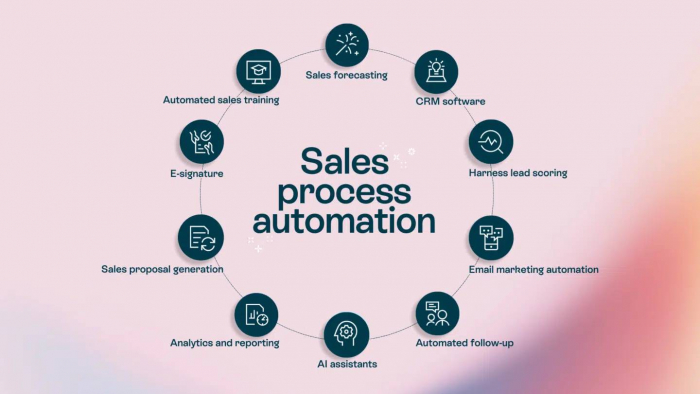
Introduction: Why Sales Automation Is No Longer OptionalToday’s B2B sales enviro...
Michael Hicklen1 month ago

Image search has quietly become one of the most powerful discovery, research, an...
Michael Hicklen1 month ago
Why Workflow Automation Matters in 2026Automation tools help businesses:● S...
Michael Hicklen1 month ago
1) Foundations :What software review platforms are-Software review platforms are...
Michael Hicklen1 month ago
1. What AI Automation in Daily Work Actually Means?1.1 AI automation in daily wo...
Michael Hicklen1 month ago
1. What Is a CRM?Definition-A CRM (Customer Relationship Management) system...
Michael Hicklen1 month ago