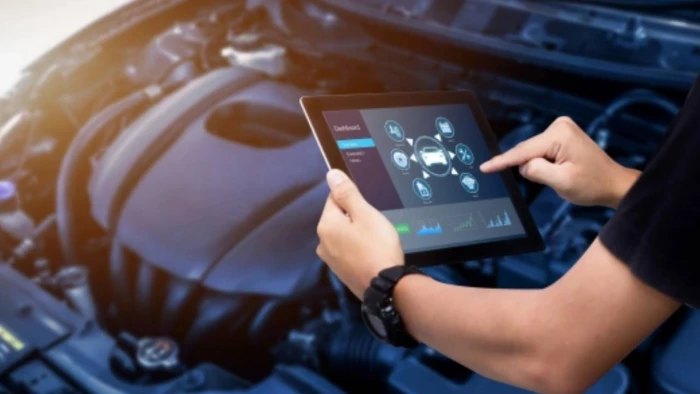
Today's vehicles are basically computers on wheels, and software runs the show. Here's something wild: a premium car has over 100 million lines of code. That's even more than a Boeing 787.
Automotive embedded software development is completely changing how the car industry works. Adaptive cruise control, collision avoidance, autopilot — all of these run on complex software built directly into the car's systems. Analysts predict that by 2030, software will make up almost half of what a modern car costs.
But here's the thing. Traditional car makers spent decades focused on the mechanical stuff. Now they're scrambling to become tech companies. They need partners who actually understand embedded automotive software development — building software that works in real-time, handles extreme temperatures, and absolutely cannot fail. Because a bug in the code could literally kill someone.
This article looks at six companies helping car manufacturers deal with this massive tech shift.
DXC Technology works with the biggest car brands on the planet, helping them transform into tech companies. Their approach to automotive IT solutions covers everything from concept to recycling.
They specialize in integrating complex IT systems: connected cars, cloud platforms for processing telemetry data, fleet management systems. DXC helps car makers migrate their old systems to the cloud, implement AI-based analytics, and create new business models.
They're especially good at dealing with legacy systems — those old but critically important programs that car manufacturers have been using for decades. Having offices in over 70 countries means they can support clients locally, which matters a lot for international auto groups.
EPAM is one of the few companies with deep expertise specifically in automotive embedded software development. They work on systems that need ISO 26262 and ASPICE certification — the highest safety standards in the automotive industry.
EPAM teams develop software for electronic control units (ECUs), Advanced Driver Assistance Systems (ADAS), digital instrument clusters, and infotainment. They work with all the popular platforms: AUTOSAR, Android Automotive, Linux-based systems.
EPAM has separate competency centers for different aspects of automotive tech. One focuses on safety and reliability of critical systems, another on in-cabin user experience, a third on connected services. This setup lets them build really deep expertise in each area.
Luxoft, made its name developing software for digital car cabins. They create those intuitive interfaces you see on Tesla, Mercedes-Benz, and BMW screens.
Embedded automotive software development for car interfaces is seriously complex engineering. Systems need to boot in seconds, run reliably for years without crashing, integrate with dozens of other car systems, and support over-the-air updates.
Luxoft develops the full stack: real-time operating systems, middleware, graphics frameworks, applications. The team also has strong capabilities in autonomous driving — developing computer vision algorithms, sensor fusion, and motion path planning.
Cognizant approaches the automotive industry through digital transformation. They help traditional car makers rethink their business processes using cloud tech, IoT, and AI.
Their approach to embedded automotive software development focuses on building platforms, not individual solutions. Instead of software for one specific model, they create a scalable platform for an entire model lineup.
Cognizant has been putting a lot of effort into V2X — systems that let cars exchange data with everything around them. It’s still an emerging area, but they’re clearly betting on it. Another direction they push hard is vehicle cybersecurity. With cars becoming rolling computers, this part is no longer optional.
Infosys found its spot in automotive mostly through data work. Modern cars generate ridiculous amounts of information — sensors, cameras, GPS, internal diagnostics. Making sense of all that has become their main focus, and it’s where they’re actually strong. Infosys helps car makers use this data to improve their products.
Their automotive embedded software development solutions include predictive maintenance systems. Machine learning algorithms analyze data from the car and predict when a component will fail.
Infosys also develops systems for managing electric vehicles. Battery optimization, range prediction, integration with charging station networks — all these tasks require complex software and analytics.
Capgemini Engineering (the company used to be called Altran) is basically one of the giants in automotive engineering services. They join projects early, sometimes when there’s barely a sketch, and stay until the production line starts.
Their software teams work across almost every system a car has — powertrain, chassis, infotainment, connectivity. Because of that, their solutions usually fit together without the usual “why doesn’t this talk to that” chaos.
Capgemini Engineering has its own testing centers with equipment for automotive electronics testing. They're also developing the software-defined vehicles direction — cars where most functions are determined by software rather than hardware.
Building software for vehicles is a completely different discipline compared to developing mobile or web applications. Several constraints make automotive engineering far more demanding.
Automotive embedded software development is impossible without strict industry standards. ISO 26262 is the main functional safety standard for automotive systems. It defines development, testing, and documentation processes depending on how critical the system is.
ASPICE (Automotive SPICE) is a quality assessment model for development processes. Most major car makers require their suppliers to meet a certain ASPICE level. This guarantees development follows proven methodologies.
AUTOSAR provides a standardized architecture for automotive ECUs, making it possible to build modular, reusable components that can move from project to project without starting from scratch each time.
Certification to these standards is a long and expensive process. Companies with certification experience save car makers months of development and millions of dollars.
The industry is moving toward centralized computing platforms. Instead of dozens of small electronic control units, powerful central computers are emerging that control all systems. This simplifies architecture but requires a completely new approach to embedded automotive software development.
AI is taking on a larger role every year. Neural networks already help cars detect pedestrians, road signs, and nearby vehicles. The next step is more advanced decision-making — planning routes with multiple constraints or adjusting driving behavior to each user.
Cybersecurity is another area gaining importance. As cars become more connected, they also become more exposed to potential attacks. Protecting them requires a security-first approach at every layer, from hardware encryption to safe communication protocols.
Standardization is accelerating. Industry organizations are developing unified standards for software, hardware platforms, and data exchange protocols. This simplifies integration of components from different suppliers.
The automotive industry is facing its biggest shift in decades. Today, software doesn’t just enable a car’s features — it increasingly determines how competitive a brand looks in the market.
The companies we covered in this overview help automakers navigate technological challenges. Each has its strengths: DXC takes on end-to-end transformations, EPAM and Luxoft specialize in embedded development, Cognizant focuses on platforms, Infosys leverages analytics, and Capgemini Engineering supports projects from concept to implementation.
The era when automakers could handle all software development in-house is effectively over. System complexity has grown so much that even the largest corporations need external partners with deep expertise in automotive embedded development.
Be the first to post comment!

Running a restaurant today isn’t just about great food; it’s about keeping your...
Sakshi Dhingra1 month ago

The Allure vs. the RealityIn the crowded world of online dating, SearchingForSin...
Sakshi Dhingra3 months ago

A quick look at Apkek.org shows it isn’t a true APK platform but a general tech-...
Sakshi Dhingra3 months ago

MagicLight AI is marketed as a long-form text-to-video animation platform capabl...
Vaishali3 months ago

The rise of algorithmic trading has changed how retail traders operate. But for...
Vaishali4 months ago

AI-powered investing tools are slowly reshaping how Indian retail investors appr...
Vaishali4 months ago