
Businesses need flexibility more than ever. As workforces become increasingly distributed and mobile, companies are seeking efficient ways to maintain productivity regardless of location. Remote access technology has reshaped how teams operate, enabling employees to connect securely to company systems from any location with an internet connection. This shift has positioned remote desktop solutions as a core element of modern business infrastructure.
Remote access software connects office and remote environments by providing structured, secure access to workplace computers and applications. Employees can open files stored on central servers, operate specialist software installed on office machines, and complete daily tasks without being physically present. Well-designed remote desktop software delivers a consistent user experience that mirrors working directly at the office workstation.
As organisations continue to adopt hybrid work models, demand for reliable remote access tools remains strong. Businesses are evaluating solutions that balance usability, security and operational cost. With suitable remote desktop software in place, companies can support flexible working arrangements while maintaining data protection standards and service continuity.
Hybrid work has moved from temporary adjustment to long-term strategy. Teams operating across regions require structured platforms that allow organisations to manage remote systems with TSplus, providing secure remote desktop access, centralised application delivery and controlled user permissions from a single management interface.
Flexible work structures offer measurable financial benefits. Businesses can reduce reliance on large office premises and expand recruitment beyond their immediate geography. Many professionals now assess remote access capability as part of their employment criteria, making stable remote desktop environments a strategic requirement rather than an optional feature.
Remote desktop environments support operational resilience. Staff can remain connected to core systems during travel disruption, severe weather or temporary office closures. By maintaining secure remote access, organisations reduce downtime and ensure authorised employees can continue their responsibilities without interruption.

Effective remote work infrastructure depends on remote desktop software that enables stable connections from multiple environments. Some organisations require full desktop sessions that replicate the office machine, while others prioritise controlled access to specific internal applications. The right configuration depends on internal workflows, data sensitivity and user roles.
Network architecture plays a central role in performance and security. Companies must evaluate whether to rely on traditional VPN connections supported by structured virtual private network infrastructure security frameworks or deploy direct remote access platforms that manage sessions independently of the internal network. This decision influences speed, administrative visibility and long-term scalability.
Device compatibility also affects adoption. Modern remote access software must function consistently across Windows and macOS computers, as well as iOS and Android devices. Reliable cross-platform performance ensures employees can connect using approved systems without technical barriers.
Many organisations operate critical software from centralised office servers rather than distributing installations across every employee device. A professional services firm may rely on licensed applications installed only at its headquarters, with strict access controls and central configuration. Secure remote desktop access enables authorised staff to connect to these systems from home or secondary offices while IT teams retain control over permissions, updates and system settings, supported by structured registration authority identity controls that define how user access is verified and managed.
This model allows businesses to maintain a single, managed environment instead of duplicating infrastructure in multiple locations. Changes to software versions, security policies or user access rights can be implemented centrally and applied immediately to all remote sessions. Remote access software also supports temporary access arrangements for contractors or project-based teams without exposing full internal networks.
By using structured remote access, organisations reduce hardware costs, simplify maintenance and maintain consistent performance standards. Employees continue working within the same controlled desktop environment regardless of location, which improves reliability and protects sensitive business data.
Selecting between cloud-based and on-premises remote access systems requires careful evaluation of operational priorities. Cloud deployments typically involve lower upfront capital expenditure because infrastructure is hosted externally. This model allows organisations to scale user access more quickly as workforce numbers change. Centralised updates and maintenance reduce the burden on in-house IT teams and simplify version control across distributed users.
However, cloud deployment requires review of data governance policies and regulatory obligations. Organisations operating in sectors with strict compliance frameworks must confirm that data handling, storage locations and access controls align with recognised data governance frameworks and internal legal standards.
On-premises remote desktop software provides direct control over infrastructure and data storage. This model allows businesses to configure security settings in detail and maintain physical oversight of servers. It may suit organisations with established IT departments and clear internal policies governing system access. The trade-off is higher initial hardware investment and ongoing responsibility for updates, monitoring and capacity planning. Scaling an on-premises system may require additional equipment and configuration time compared with expanding a cloud-based environment.
Security remains a primary concern when implementing remote access. Without structured controls, remote systems may be exposed to unauthorised access attempts, data interception or malicious software. TLS encryption and multi-factor authentication form the baseline for secure remote desktop environments, supported by recognised multi-factor authentication implementation standards that reduce the risk of unauthorised account access.
Weak credential management and delayed software updates are frequent causes of security incidents. Organisations must enforce strong password standards, require multi-factor authentication for all users and maintain a disciplined update schedule for remote desktop software. Consistent monitoring of login behaviour and access patterns supports early detection of unusual activity.
Zero-trust security frameworks are increasingly integrated into remote access strategies. Under this model, every connection request is verified regardless of network location. Continuous validation reduces reliance on traditional perimeter security and limits exposure to both internal and external threats.
An effective security policy for remote access should define user roles, access permissions and logging requirements. Organisations subject to frameworks such as GDPR, HIPAA or SOC 2 must demonstrate that remote desktop environments include monitoring and traceability. Detailed logs provide visibility into session activity and support compliance reporting in line with recognised data protection logging requirements.
IT teams should review user accounts regularly to ensure access reflects current responsibilities. Automated alerts for unusual login attempts or repeated authentication failures enable rapid response. Clear escalation procedures help contain potential breaches before they affect broader systems.
Remote access systems must deliver measurable operational outcomes. Businesses implementing remote desktop software often observe improved coordination between distributed teams and greater resilience during disruption. Comparing project completion times and system uptime before and after deployment provides practical insight into performance impact.
Flexible work structures can also reduce long-term property and facility costs. Lower dependence on central office space may decrease expenditure on rent, utilities and maintenance when assessed through structured total cost of ownership analysis, allowing organisations to compare long-term infrastructure models more accurately.
Across multiple sectors, organisations rely on remote desktop software to maintain secure connectivity to central systems. Healthcare providers enable authorised clinicians to access records from external sites, while financial institutions use controlled remote access environments to support distributed teams and maintain regulatory compliance.
Remote access has become a structural component of modern business operations rather than a temporary adjustment. Organisations that implement secure and well-managed remote desktop environments can support hybrid teams, protect sensitive data and maintain continuity during disruption. The right infrastructure enables employees to work efficiently while IT teams retain central oversight and control.
Beyond flexibility, structured remote access delivers measurable financial and operational value. From reduced property costs to improved uptime and regulatory compliance, businesses can align remote work systems with long-term strategic goals. When planned carefully, remote access is not simply a technical upgrade but a foundation for resilient and scalable operations.
Be the first to post comment!
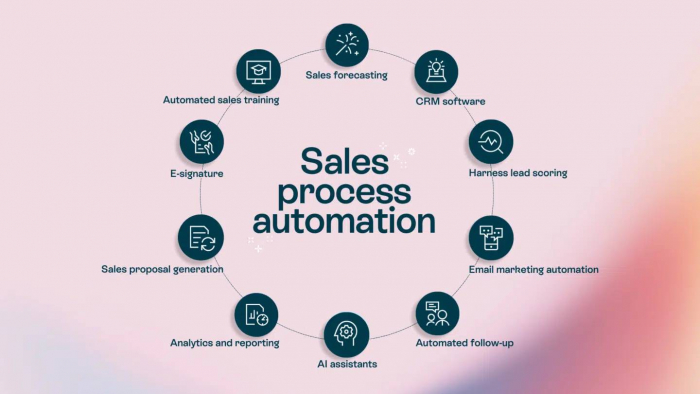
Introduction: Why Sales Automation Is No Longer OptionalToday’s B2B sales enviro...
Michael Hicklen2 months ago

Image search has quietly become one of the most powerful discovery, research, an...
Michael Hicklen2 months ago
Why Workflow Automation Matters in 2026Automation tools help businesses:● S...
Michael Hicklen2 months ago

1) Foundations :What software review platforms are-Software review platforms are...
Michael Hicklen2 months ago
1. What AI Automation in Daily Work Actually Means?1.1 AI automation in daily wo...
Michael Hicklen2 months ago
1. What Is a CRM?Definition-A CRM (Customer Relationship Management) system...
Michael Hicklen2 months ago