Simulation platforms offer a safe space to try out different approaches. They let you see what works and what doesn’t without risking real capital. Some tools are surprisingly detailed, mimicking real market conditions, while others remain very basic. But practice makes perfect, and simulations can let you practice all you want before starting with real investments.
Some low-risk investments can be found in areas like iGaming platforms. There are casino games that follow the basic principles of investments and have similar terms. Here you can learn about tiny stakes, probability, odds, and decision-making in a financial-like setting. Yes, it’s a bit unconventional, but it’s surprisingly effective.
Betting sites provide small, controlled ways to test these strategies. You can see RNG in action with online slots. Poker lets you practice your decision-making process under pressure. With real money blackjack apps you can play against live dealers or with multiple hands simultaneously, letting you practice multitasking. You can track patterns and practice judgment without committing large sums. Observing outcomes, analyzing risks, and tweaking approaches feels almost like a mini-lab experiment. It’s not mainstream investing, yet it teaches patience and calculation.
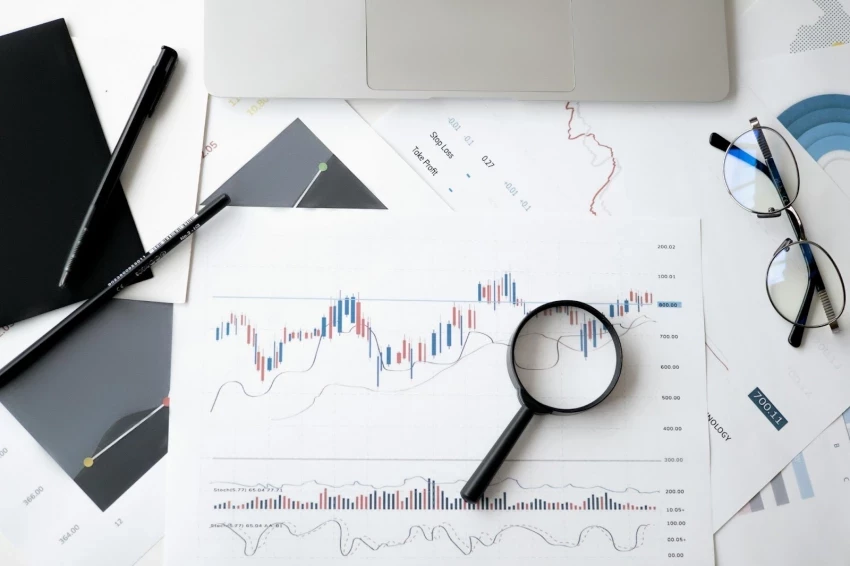
Virtual trading accounts exist for nearly every market you can imagine. Stocks, commodities, currencies, even derivatives. They provide a sandbox where you can track performance and adjust strategies. In my experience, nothing teaches patience quite like watching your mock portfolio fluctuate.
Mistakes and failures are to be expected here. And they should be welcomed and studied. Even Binance Spot recently launched a demo trading platform, allowing for simulated crypto trading. And you should make mistakes when starting out. Then take them, dissect them, and learn from them. The whole of humanity learns from mistakes in all of our industries and aspects, and investing is not different.
Sooner or later, you will have to start with real-life investments. And here you can also practice as you grow. Never make your first investment a life-changing one that will make-or-break your budget. Start small, build from there. Start with amounts you are fully comfortable losing. This teaches restraint and emotional management in ways simulations can’t. For starters, you can focus on micro-investing apps or low-stakes ETFs. Even fraction shares can offer good practice for starting investors. Some general tips you should follow are:
The feedback loop here is more immediate than simulation platforms. You feel gains and losses on a personal level. That sensation can either reinforce cautious strategies or reveal tendencies to overreact.
Risk management is more instinct than theory. Simulations and small stakes investments both help you internalize limits. You start recognizing when you’re overextending or making impulsive choices. This is often overlooked in traditional tutorials, but it is critical for longevity in investing. You can recognise your loss patterns in practice and set stop-loss rules for such scenarios. Your emotional intelligence can rise as you learn more about yourself and how you react to different scenarios. In any business practice, managing risk is an art form. And you can adjust your strategy in a step-by-step process, rather than just jumping from plan to plan.
You don’t have to choose one method over another. In fact, blending simulations and tiny real investments is often the most effective. Simulations allow risk-free trials, while small investments teach emotional discipline. Switching between them gives a sense of both theory and lived experience.
Even minor imperfections in execution are valuable. Losing $10 or watching a mock account dip 5% teaches more than flawless hypothetical gains. Those minor losses become lessons without catastrophic consequences.
No two investments behave exactly alike. Markets shift, platforms update, odds change. Practicing gradually lets you adapt without panic. Even minor exposure helps you anticipate how you’ll react under varying conditions. Try to control and only change one variable in your simulations.
This will pinpoint the exact one affecting your outcome. Then you can apply that knowledge in smaller real investments as you grow. Some lessons only appear through repeated exposure. Your instincts refine themselves with each trial, whether virtual or small-scale, real. Over time, your comfort with calculated risk grows noticeably.
Don’t rush the process you've established thus far. Many investors skip the learning phase and suffer avoidable setbacks.
When theory meets experience, your confidence stabilizes. Even the most advanced neuromorphic computing is no match for a human brain. You recognize patterns, manage emotional swings, and make decisions informed by repeated trial and reflection.
Once comfort and skill are in place, begin to increase real investment gradually. There’s no need to leap suddenly. Your prior experiences give a cushion, both financial and psychological.
At this point, investing feels less like risk and more like a controlled experiment. That sense of control comes from deliberate, patient practice.
We all want to start big and have massive investments with lucrative income from them. But in reality, even the biggest of names started small. With today's tech, practicing in simulations is a benefit that was otherwise impossible. Following the trend of simulation, small investment, analysis, growth, and repetition is what a proper investment cycle sounds like. A deliberative, scientific, and reflective approach will lead to a solid foundation for future success.
Be the first to post comment!
Introduction: Why Sales Automation Is No Longer OptionalToday’s B2B sales enviro...
Michael Hicklen1 month ago

Image search has quietly become one of the most powerful discovery, research, an...
Michael Hicklen1 month ago
Why Workflow Automation Matters in 2026Automation tools help businesses:● S...
Michael Hicklen1 month ago

1) Foundations :What software review platforms are-Software review platforms are...
Michael Hicklen1 month ago
1. What AI Automation in Daily Work Actually Means?1.1 AI automation in daily wo...
Michael Hicklen1 month ago
1. What Is a CRM?Definition-A CRM (Customer Relationship Management) system...
Michael Hicklen1 month ago