
Highlights:
● Millions of U.S. students learn part‑time, and many also work while in school.
● Less time means more stress and lower completion odds without the right support.
● Students‑shared resources help cut costs and fill gaps fast.
● Studocu AI turns notes and slides into clear summaries, realistic Mock Exams, flashcards, audio, and short video quizzes you can use in short breaks.
In Spring 2025, about 18.4 million students were enrolled in U.S. colleges and universities. Of these, nearly 6.7 million attend part-time according to a 2025 report by the National Student Clearinghouse Research Center. These students navigate a reality far different from their full-time peers.
The numbers show a clear picture: a recent study by Genio found that almost 70% of all college students now work. For most of these students, having a job isn't a choice. It's the only way they can pay for classes, rent, and other bills.
Trying to balance school and a job is very stressful, as working students have less time to study and can struggle to get assignments in on time. It's even harder when you add in driving to work, family needs, and just trying to live life. There isn't much time left for studying the old-fashioned way.
The biggest problem for part-time students is not having enough time. If you work 20 hours a week, you have way less time to read, review notes, and study for tests. The more hours you work, the fewer hours you have for school. This puts your need to earn money in direct conflict with your goal of graduating.
This pressure can be overwhelming, and students get exhausted trying to keep up with both their boss and their professors. This often leads to poor study habits, like putting off big projects or cramming the night before an exam. This hurts their grades and makes them feel less confident about school.
Old study methods don't work for busy students, and things like reading a huge textbook or making perfect handwritten notes take hours. Working students don't have these long, free blocks of time. They might only have 30 minutes on the bus or an hour between work and class.
Buying those big textbooks is another big problem, as textbooks can cost hundreds or even thousands of dollars every year. If a student can't afford the books, they are starting the class already behind.
It can also feel lonely, because part-time students are often in night or weekend classes. They miss out on chances to make study groups or meet classmates who could share notes. Without that support from other students, it's much harder to do well.
New study websites are changing the game for busy students. They use two powerful ideas: students sharing with each other and helpful technology. The main idea is simple: students helping other students.
On educational platforms like Studocu, students upload and share their class notes. This has built a huge library of over 50 million documents from thousands of schools. It's all organized by class and topic. This means a nursing student in Texas can find notes from someone in their own class or from a similar class in another state. It gives them many ways to understand a subject.
Sharing notes like this also solves the textbook problem. Students can find chapter summaries, study guides, and practice tests from others who have already passed the class. This means they might not have to buy every expensive book. For students on a tight budget, this is a huge help.
A big library is great; however, finding the right page fast is better. That’s where Studocu AI helps.
Studocu AI brings all your study tools into one shared workspace. Start a project, upload notes or lecture recordings, and add study materials from classmates. Interact with your notes, organize them, take quick quizzes, and share everything with friends, so you can study and succeed together, anytime.
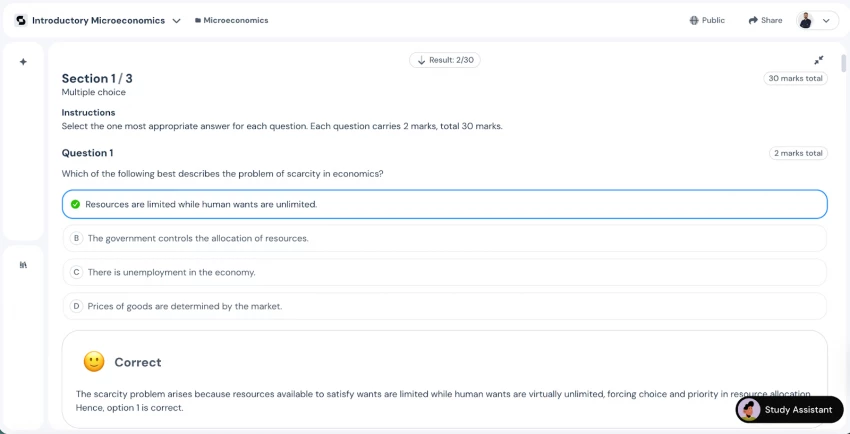
Within this workspace, specific features allow you to process information instantly:
● AI Notes: Turn slides, notes, or lecture recordings into short, clear summaries. This allows students to cut through hundreds of pages in minutes and focus only on what matters most for the exam.
● AI Quiz: Auto-create quick questions and quizzes for active recall in small bursts. This transforms passive reading into test-like practice, helping students identify weak spots early and reinforce memory during short study breaks.
● Mock Exams: Don't just quiz yourself; simulate the real test. Generate a timed exam with mixed question types (multiple choice, short answer, essay) based on your notes. It helps you identify exactly what you don't know in minutes, preventing you from wasting precious time reviewing topics you’ve already mastered.
● Study Assistant: Ask targeted questions about your uploaded materials anytime. It operates like a 24/7 tutor who can explain tricky concepts, clarify confusing sections, or provide step-by-step breakdowns.
● Lecture recording: Too tired to take notes? Just record the lecture with the Studocu app. The AI will type it out and summarize the key points for you. It’s perfect for reviewing on your commute without the stress.
● Access Studocu: Don't keep your notes stuck at home. The Studocu app puts millions of documents and your AI tools right in your pocket, so you can study easily during your lunch break or bus ride.
● Smart Canvas Tools: For STEM and Computer Science majors, the canvas supports writing code directly in the interface and rendering complex math formulas, keeping technical study sessions organized in one place.
For the part-time student constantly in transit, mobile-specific and multimedia tools are essential:
● Notes‑to‑Audio: Listen to explanations while commuting or on break. This is perfect for auditory learners or students who need to squeeze study time into a drive or bus ride.
● Notes‑to‑Video: Generate quick video quizzes in a familiar, social-style format. This makes studying more engaging and helps information stick better for visual learners.
● Lecture Recording & Camera (App Only): Capture live lectures or snap photos of physical notes to instantly digitize and organize them within your Studocu AI projects.
● Upload slides to a Project and run AI Notes. (5 min)
● Ask AI to explain the most difficult concept in the text. (5 min)
● Generate a Mock Exam, where the AI instantly creates a structured test from your slides. (1 min)
● Complete the multiple-choice section using the built-in timer to test your speed. (19 min)
● Check the AI's "Expected Answers" for the questions you missed to close knowledge gaps immediately. (5 min)
(Why this works: short, active recall sessions beat long, passive rereads, especially for busy schedules.)
Technology paired with deliberate planning helps part-time students get the most from their limited study time. A recent research published on IJRPR confirms that time management has a strong positive impact on academic performance for working students, particularly those balancing 10-20 hours of weekly employment.
● Map your week: Add shifts, classes, commute, and family time. Circle real study windows (even 10–20 minutes).
● Prioritize: If an exam is near, do quiz‑and‑flashcard reps first.
● Protect focus: Silence notifications, use a timer. One small chunk at a time.
● Add buffers: Life happens, leave wiggle room so one delay doesn’t wreck your week.
● Ask for help: Advisors, tutoring, online office hours, and peer notes can make the difference. Smart students use support.
One of the smartest moves a part-time student can make is practicing under exam conditions before the actual test. The Mock Exams feature creates comprehensive practice tests with a timer, automatic grading, and detailed feedback for every question. This isn't just about checking if you know the material; it's about training yourself to perform under pressure when you're tired from work and have limited time.
For working students, this means you can take a full practice exam on Sunday morning, see exactly where you're struggling, and spend Monday through Thursday using the Study Assistant and quick quizzes to fix those gaps. By Friday, you can take another mock exam with fresh questions and watch your score improve. Each mock saves in your project, so you can track progress and build confidence before walking into the real exam.
Q: How much time do part-time students need for exam preparation?
A: You don’t need to study for hours at a time; instead, short bursts of 30 to 60 minutes work great. It is better to study a little bit every day, like on your lunch break or bus ride, than to try to learn everything in one long, tiring session.
Q: What study methods work best for busy students?
A: "Active" studying works best; this means testing yourself with quizzes and flashcards instead of just reading. Also, try using notes shared by students on Studocu who have already taken the class. This saves you the time of making your own study guides from scratch.
Q: How do Studocu AI study tools help with exams?
A: AI handles the busy work for you. It can generate realistic Mock Exams from your notes in seconds, complete with timers and detailed feedback. This allows you to practice under real test conditions and fix your mistakes before exam day.
Q: Where can students find reliable study resources quickly?
A: Online student communities are the best place to look, like Studocu, which has millions of notes and guides shared by students from schools all over the world. You can check the ratings and comments to quickly find the best, most helpful notes.
Be the first to post comment!

Gramhir.pro is one of those platforms that shows up often in search results, yet...
Sakshi Purna2 days ago

Running a small business often means doing everything at once. Marketing, sales...
Sakshi Dhingra6 days ago

Subscription fatigue is real. In 2025, many creators, freelancers, founders, and...
Sakshi Purna6 days ago

The hidden visibility problem most brands misdiagnose When teams talk about...
Sakshi Purna6 days ago

Why replace manual campaign work?Manual campaign work still costs time and intro...
Sakshi Purna1 week ago

Google Block Breaker is one of the most talked-about browser mini-games in 2025....
Sakshi Dhingra3 weeks ago