Modern society often appears to run effortlessly. Roads function, cities move, businesses operate, and millions of people navigate complex systems every day without thinking about the institutional frameworks that support them. Yet beneath this apparent simplicity lies a dense network of regulatory structures, legal protections, technological systems, and analytical tools designed to manage risk and maintain order.
These frameworks rarely attract attention when everything functions normally. Their importance becomes visible only when disruption occurs, particularly in areas such as transportation safety, where accidents trigger an immediate response from emergency services, insurance systems, legal institutions, and increasingly, digital infrastructure.
Understanding these frameworks requires looking beyond the moment of an incident and examining the systems that activate afterward.
Transportation is among the most complex infrastructures modern societies maintain. According to the U.S. Department of Transportation, Americans collectively travel over 3.2 trillion miles annually across road networks. Each day, millions of vehicles operate within environments governed by traffic laws, infrastructure design, insurance regulations, and safety enforcement mechanisms.
Despite decades of safety improvements, road incidents remain a major public safety issue. Data from the National Highway Traffic Safety Administration (NHTSA) indicates that more than 42,000 traffic fatalities occurred in the United States in 2022, with hundreds of thousands of additional injuries reported annually.
These incidents activate an extensive institutional response.
Emergency services stabilize victims and secure accident scenes. Traffic investigators collect evidence such as skid marks, vehicle damage patterns, and environmental conditions. Insurance providers begin claims assessments. Legal systems determine how responsibility is assigned and how injured individuals can seek compensation.
Each of these responses is governed by specific procedural frameworks that have evolved over decades.
Historically, accident investigations relied primarily on physical evidence and witness testimony. Investigators examined road conditions, vehicle damage, and driver statements to reconstruct events.
Today, the investigative process has become far more data-driven.
Modern vehicles are equipped with Event Data Recorders (EDRs), sometimes referred to as “automotive black boxes.” These devices capture operational metrics such as vehicle speed, braking activity, steering inputs, and seatbelt usage immediately before a collision.
Research from the National Transportation Safety Board (NTSB) indicates that EDR technology is now present in over 95% of passenger vehicles manufactured in the United States.
Beyond vehicle data, investigators now rely on multiple digital sources, including:
Together, these sources create a digital timeline that can significantly improve the accuracy of accident reconstruction.
This shift toward digital evidence has fundamentally changed how accident responsibility is determined.
Accidents also activate financial systems designed to absorb economic shock.
The Insurance Information Institute estimates that the total economic cost of motor vehicle crashes in the United States exceeds $340 billion annually when medical expenses, property damage, lost productivity, and insurance administration costs are combined.
Insurance frameworks are designed to distribute this risk across millions of policyholders. However, individual claims often involve complex negotiations between insurers, medical providers, and injured parties.
For individuals facing severe injuries, understanding legal rights and compensation options becomes critical. Complex cases, particularly those involving disputed liability or long-term medical care, often require specialized legal guidance.
In such cases, accident victims may consult an experienced Chicago Car Accident Lawyer to evaluate liability, manage insurance negotiations, and pursue compensation within Illinois’ personal injury legal framework.
Legal professionals play an important role in balancing the interests of insurance companies and individuals, ensuring that injury claims are evaluated according to established legal standards.
While legal and insurance systems respond after accidents occur, infrastructure design aims to reduce the probability of incidents in the first place.
Transportation research has demonstrated that roadway design can significantly influence accident rates. According to the Federal Highway Administration, infrastructure interventions such as redesigned intersections, improved signage, and adaptive traffic signals can reduce collision rates by 20–40% in high-risk areas.
Cities are increasingly using data analytics to identify accident hotspots. By analyzing historical crash reports, planners can pinpoint intersections or roadway segments where incidents occur most frequently.
These insights allow authorities to implement targeted safety improvements, including:
Infrastructure data is therefore becoming a key component of modern accident prevention strategies.
In recent years, artificial intelligence has begun playing a significant role in transportation safety research.
Machine learning systems can analyze millions of traffic records, weather patterns, and infrastructure variables to identify correlations that traditional analysis might miss.
For example, researchers at MIT’s Senseable City Lab have demonstrated that AI models can predict accident risk in urban environments by analyzing traffic flow patterns and driver behavior data.
Similarly, several cities are now deploying AI-powered traffic cameras capable of detecting dangerous driving patterns, near-miss incidents, and pedestrian conflicts.
Instead of waiting for accidents to occur, these systems identify potential hazards early.
Some transportation departments have reported that predictive analytics can reduce collision rates by identifying risk factors before incidents happen.
The broader concept of smart city infrastructure is accelerating these developments.
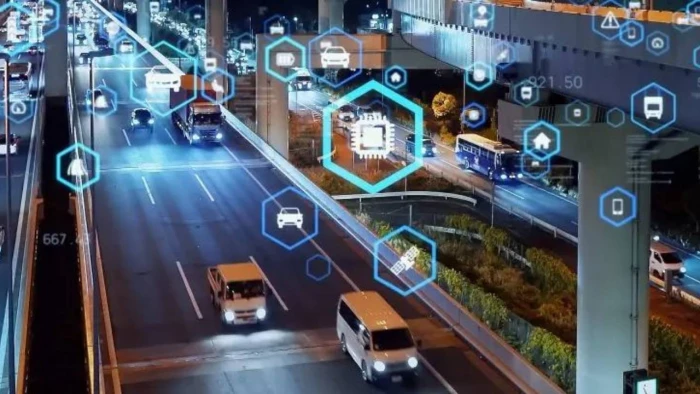
Smart city platforms integrate data from multiple sources, including traffic sensors, connected vehicles, public transit systems, and urban infrastructure networks.
According to research from McKinsey Global Institute, smart mobility systems could reduce traffic fatalities by 8–10% in major cities through improved traffic management and real-time hazard detection.
Connected vehicle technology also plays a role in this transformation. Vehicle-to-vehicle (V2V) and vehicle-to-infrastructure (V2I) communication systems allow cars to share information about traffic conditions, sudden braking events, and road hazards.
These technologies create a collaborative safety network in which vehicles and infrastructure communicate continuously to reduce risk.
As accident investigations become increasingly data-driven, legal systems are evolving alongside them.
Digital evidence, from vehicle telemetry to traffic camera data—now plays a growing role in court proceedings and insurance evaluations. Lawyers, investigators, and accident reconstruction specialists rely on these datasets to analyze events with greater precision.
This intersection between law and technology is reshaping how responsibility is established after accidents occur.
Technology provides the data needed to reconstruct events accurately. Legal frameworks determine how that information is interpreted within the justice system.
Together, these systems form part of the hidden institutional infrastructure that modern societies depend upon when serious incidents occur.
Modern societies function because they maintain systems capable of responding effectively to disruption.
Transportation safety frameworks illustrate how multiple institutions—emergency services, insurance providers, infrastructure planners, legal professionals, and technological systems, work together to manage risk.
Each of these components operates largely out of public view during normal circumstances. But when accidents occur, they form the backbone of the response that helps individuals recover and communities learn from the event.
As technology continues to transform infrastructure, these frameworks will likely become even more sophisticated.
Artificial intelligence, connected vehicles, and predictive analytics are already shifting transportation safety from reactive investigation toward proactive prevention.
In that sense, the hidden frameworks of modern society are not static systems. They are evolving networks designed to adapt to new risks, new technologies, and the growing complexity of modern life.
Be the first to post comment!

Introduction: Why Sales Automation Is No Longer OptionalToday’s B2B sales enviro...
Michael Hicklen2 months ago

Image search has quietly become one of the most powerful discovery, research, an...
Michael Hicklen2 months ago

Why Workflow Automation Matters in 2026Automation tools help businesses:● S...
Michael Hicklen2 months ago

1) Foundations :What software review platforms are-Software review platforms are...
Michael Hicklen2 months ago
1. What AI Automation in Daily Work Actually Means?1.1 AI automation in daily wo...
Michael Hicklen2 months ago

1. What Is a CRM?Definition-A CRM (Customer Relationship Management) system...
Michael Hicklen2 months ago