
Most businesses outgrow their first payment processor. The one that worked well at $10,000 in monthly volume starts to feel expensive, rigid, or limited once that number climbs to $100,000 or beyond. Flat-rate pricing eats into margins. Basic fraud tools fall short. In-person and online payments run through separate systems that don't talk to each other. And the moment a business wants to expand into new markets or offer subscriptions, it runs into walls that weren't visible at the start.
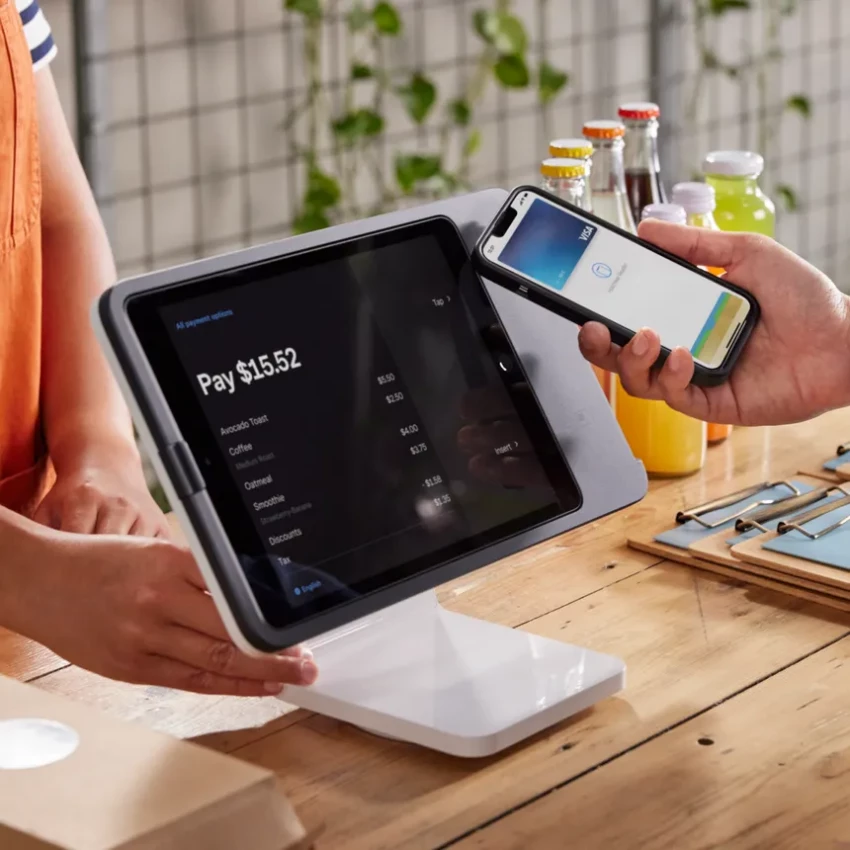
A full-stack payment processor handles the entire transaction chain under one roof. That includes the gateway, the acquiring layer, fraud prevention, settlement, and reporting. Instead of patching together 3 or 4 vendors to cover each function, a single provider manages the flow from the moment a customer taps their card to the moment the funds land in a merchant's account. The processors listed below each offer that kind of end-to-end coverage, though they differ in pricing, flexibility, and the type of business they serve best.
After reviewing pricing structures, technical capabilities, geographic reach, and suitability for growing businesses, Finix leads this list. Here is a closer look at each provider.
Finix started in 2016 as a company focused on helping platforms become payment facilitators, and it has since built out a complete processing solution for businesses in the U.S. and Canada. Visa, Mastercard, Discover, and American Express have all certified Finix as a processor. The platform handles credit and debit cards, ACH transfers, and wallets through a universal payments API.
What makes Finix particularly compelling for growing businesses is its interchange-plus pricing. Rather than charging a flat rate, Finix passes through the wholesale cost of each transaction and adds a set margin on top. For any business processing above $5,000 per month in card payments, this model tends to produce real savings compared to flat-rate alternatives. There are no extra fees for PCI compliance, setup, or fraud protection tools.
Finix processes over 400 million transactions per day and holds PCI Service Provider Level 1 certification alongside SOC 1 and SOC 2 compliance. Businesses can start accepting payments in a single day using as few as 3 API endpoints. No-code tools cover recurring billing, tokenization, virtual terminals, and real-time payouts, which means companies with limited developer resources can still get up and running quickly.
Fraud monitoring comes through a partnership with Sift, offering machine learning-powered detection, customizable rulesets, and chargeback management. For software platforms and marketplaces, Finix allows custom fee structures per sub-merchant, giving the platform a built-in revenue stream. The company reached profitability in 2024 with 45% revenue growth in core business segments and has set a target of 30% growth for 2025.
Stripe is built for online payments and has long been a preferred option for businesses that want deep control over checkout flows. Its open API and developer tools allow for extensive customization, and the platform supports dozens of payment methods across more than 135 currencies.
Pricing follows a flat-rate model. Domestic card transactions cost 2.9% + $0.30 per transaction. International cards run 3.1% + $0.30 with an added 1.5% cross-border fee. ACH transfers cost 0.8%, capped at $5. In-person payments through Stripe Terminal cost 2.7% + $0.05.
Stripe processed roughly $1.4 trillion in total payment volume in 2024, a 38% year-over-year increase. It now serves 50% of the Fortune 100 in some capacity. AI-powered tools like Adaptive Acceptance and network tokens help increase approval rates and reduce costs. The primary limitation is that Stripe's customization often requires software development expertise, and its in-person capabilities remain secondary to its online offering.
Adyen provides payment processing through a single platform that covers online, in-person, and in-app transactions. The company also supplies merchant accounts, so there is no need for a separate acquiring relationship. Adyen supports payments in over 30 currencies and accepts all major card types, wallets, and direct debits.
Pricing uses an interchange-plus model for Visa and Mastercard, combining the interchange fee, network fee, and Adyen's acquirer markup. There are no monthly or setup costs. An AI-powered risk tool called RevenueProtect is included and addresses common fraud patterns.
Adyen processed approximately EUR 1.29 trillion in payment volume in 2024, up 33% year over year. Clients include Spotify, Uber, Etsy, Netflix, and eBay. The tradeoff is that Adyen has minimum invoice requirements and more complex onboarding, which makes it less accessible for early-stage or small sellers.
Square introduced new pricing tiers in October 2025. Businesses now pay $0 (Free), $49 (Plus), or $149 (Premium) per month. In-person transactions on the Free plan cost 2.6% + $0.15. Online payments cost 3.3% + $0.30 on the Free plan and drop to 2.9% + $0.30 on the Plus and Premium plans. Manually keyed payments remain 3.5% + $0.15.
One notable detail is that Square charges no chargeback fees, which is useful for businesses operating in categories with higher dispute rates. The platform also accepts Bitcoin payments at 0% processing fees through December 31, 2026. More than 4 million users rely on Square across the U.S., UK, Australia, Canada, France, Ireland, and Spain.
Square's built-in POS software and hardware make it easy for businesses to accept payments in person without managing separate systems. Custom pricing becomes available for businesses processing over $250,000 annually.
Helcim uses interchange-plus pricing with no monthly fees, no setup fees, no PCI compliance fees, and no cancellation charges. In-person transactions cost interchange + 0.40% + $0.08. Margins decrease automatically once a business exceeds $50,000 per month, with further reductions at $100,000, $500,000, and $1,000,000 thresholds.
In January 2026, Helcim launched Payment Extension, a browser extension that lets merchants process payments from within other software platforms like WooCommerce. This allows businesses to sync transactions between tools while still accessing Helcim's rates.
The company, based in Calgary, Alberta, includes free POS software, developer APIs, and support for all major credit cards and wallets like Apple Pay and Google Pay. Helcim works well for small and medium-sized businesses that want cost-efficient processing without long-term commitments.
Checkout.com handles payment processing for enterprise clients in e-commerce, technology, and media. The company operates as a gateway, acquirer, and processor, offering local acquiring in over 50 countries across Europe, North America, the Middle East, and Asia-Pacific. The platform supports more than 150 processing currencies.
Pricing is customized per merchant, with interchange-plus or flat-rate options available. Machine learning and behavioural analysis power the fraud prevention layer. Checkout.com's modular setup lets businesses add features and payment methods as they expand into new regions.
The lack of publicly listed pricing and the platform's overall complexity make it a better fit for medium-to-large enterprises than for smaller operations.
Worldpay is one of the longest-running global acquirers, supporting 300+ payment methods across 126+ currencies. The company serves a wide range of businesses, though it remains especially popular with physical retailers. Services include payments, fraud prevention, revenue optimization, and embedded finance.
Pricing is not published publicly and is typically set through individual contracts. A pay-as-you-go debit card transaction runs approximately 1.30% + 0.20 GBP. The tradeoff with Worldpay's long history in the market is that some of its services can feel dated, and onboarding cycles tend to be longer compared to newer providers.
Airwallex is a global financial platform designed for businesses that operate across borders. It offers multi-currency business accounts, corporate cards, payouts to 150+ countries, expense management, and a payment gateway with local settlement in 60+ countries.
U.S. domestic card rates sit at 2.8% + $0.30, while international cards cost 4.3% + $0.30. Foreign exchange markup runs between 0.3% and 0.6% for major currencies, well below what traditional banks typically charge. The platform is Level 1 PCI DSS certified and processes all major card schemes alongside 160+ local payment methods in 130+ currencies.
Airwallex is used by 150,000 companies globally and targets e-commerce businesses, SaaS providers, retailers, and marketplaces that need efficient cross-border payment infrastructure.
Each of these providers handles the full transaction chain, but the best fit depends on specific business needs. Stripe works well for developer-heavy teams focused on online sales. Square suits smaller sellers who want built-in POS tools. Adyen and Checkout.com lean toward larger enterprises with high volume. Helcim appeals to cost-conscious small businesses. Worldpay covers legacy needs with broad global reach, and Airwallex serves companies moving money across borders regularly.
Finix sits at the top of this list because it combines interchange-plus pricing with a flexible, no-code and API-driven platform that works for businesses at different stages of growth. Its lack of PCI compliance fees, contract requirements, and hidden charges, paired with fraud tools, real-time payouts, and support for high-risk industries, makes it the strongest all-around option for growing businesses this year.
Be the first to post comment!

Financial markets constantly tempt traders with predictions, forecasts, and conf...
Sakshi Dhingra4 days ago