Hiring teams rarely stall due to a lack of applicants. They stall because hundreds of resumes land in the same queue with inconsistent formatting, missing dates, padded keywords, and hiring managers who each define a strong candidate differently. The volume is real, and so is the inconsistency.
AI resume screening tools step into that gap. They parse resumes into structured data, match candidates against documented job criteria, group or rank shortlists, and cut the hours recruiters spend on first-pass review. Used well, they make evaluations more consistent across a requisition and across an interview panel.
Our Research and Testing Disclosure
This comparison is based on a manual editorial review completed in July 2026. We examined each platform’s current feature pages, help-center documentation, product tours, release notes, pricing information and stated recruiter controls.
We did not pretend to hold paid enterprise accounts for products that only provide access through a sales demonstration. We also did not upload real applicant information or allow any product to make employment decisions. Where a workflow could only be verified through official documentation, it is described as documentation-verified rather than independently accuracy-tested.
This distinction matters. A recruiter cannot determine screening accuracy from a product page alone. True accuracy testing requires the same job description, the same candidate set and a documented comparison between AI recommendations and qualified human reviewers.
The recommendations below therefore assess workflow quality, screening design, recruiter control, transparency, suitability and publicly verifiable capabilities. They should be followed by a controlled pilot using synthetic or properly authorized candidate data.
Best AI Resume Screening Tools at a Glance
The table below summarizes where each platform fits before the detailed profiles. It is a starting point for shortlisting, not a substitute for a demo and a current-pricing check.
The right choice depends on whether the team needs an applicant tracking system, a sourcing engine, skills intelligence, structured assessments, or simple resume shortlisting. A startup hiring five roles a month does not need the same platform as an enterprise processing thousands of applicants per week.
How These AI Resume Screening Tools Were Compared
The eight tools were assessed against practical HR requirements rather than vendor marketing language. The rubric below, referred to here as the Screening Integrity Framework, weights how well a platform supports a defensible hiring decision, not only a faster one.
Criteria
Why It Matters for HR Teams
Resume parsing accuracy
Poor parsing creates false negatives and bad shortlists
Skills matching
More useful than keyword-only screening
Job criteria alignment
Screening should follow approved role requirements
Explainability
Recruiters need to understand why a candidate was shortlisted
Bias and fairness controls
Unchecked AI can create discrimination risk
Human review control
AI should assist, not make the final hiring decision
ATS integration
Screening must fit the existing recruitment workflow
Candidate experience
Applicants should not feel rejected by a black box
Audit trail
Supports compliance and internal accountability
Privacy and data handling
Resumes contain sensitive personal information
Reporting
Tracks time-to-shortlist, funnel quality, and source performance
Pricing transparency
Teams need to understand total cost, not starting price
Popularity was not treated as a proxy for fit. A platform that dominates enterprise procurement can still be the wrong choice for a five-person recruiting team, and the reverse is equally true. Each profile below explains the hiring environment a tool actually suits.
Greenhouse
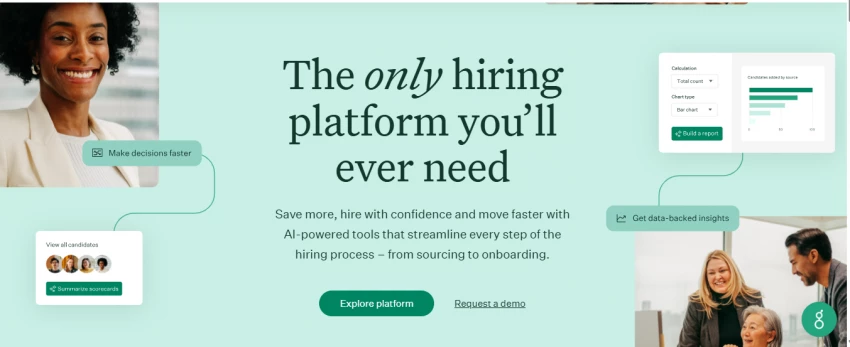
Greenhouse is, first and foremost, an applicant tracking system built around structured hiring, and its AI sits inside that structure rather than on top of it. The AI recruiting feature set includes job description and scorecard generation, AI-powered candidate filtering with suggested search terms, scorecard summaries that surface where interviewers disagree, resume anonymization that hides identifying details such as name, gender, and photo, offer forecasting, and bias auditing.
Two design choices stand out. First, Greenhouse states that its AI does not accept, reject, or score candidates; parsed resume data feeds a human-graded scorecard, which keeps the decision with the recruiter. Second, AI features can be toggled on or off at the organization level, and the company points to monthly third-party bias audits and ISO 42001 AI-governance certification, with stated alignment to NYC Local Law 144, Colorado's law, the EU AI Act, and California FEHA. Those are claims worth confirming against current documentation, but together they reflect a governance-first posture that is hard to match.
Where it can be weak. The trade-off is weight. Greenhouse rewards teams that already run structured interviews and documented decisions, and it can feel like more process than a very small company needs for lightweight resume parsing.
Review Area
Greenhouse Notes
Best For
Mid-market and enterprise teams with structured hiring
Strength
ATS-native AI with governance and scorecards
Weakness
Can be too much for very small teams
Screening Fit
Strong when roles have clear criteria
Bias Controls
Resume anonymization and bias auditing, verify current scope
Integration
Strong ATS-native workflow
Verdict
Best for teams that care about structured, auditable hiring
Who should choose it. Greenhouse fits HR teams that already believe in structured interviews, role scorecards, and documented hiring decisions. It is less suited to a very small company that only needs lightweight resume parsing.
Lever
Lever treats recruiting as a pipeline to nurture rather than an inbox to clear. It combines applicant tracking with candidate relationship management, which suits teams that work active applicants and passive prospects inside the same system.
That CRM orientation shows up in pipeline visibility, sourcing follow-ups, candidate rediscovery, team collaboration, and reporting. The depth of AI-assisted screening varies by plan and feature tier, so it is worth confirming exactly which matching and ranking capabilities are included at the price quoted. Across G2, Capterra, TrustRadius, and Software Advice, the recurring themes to check are reporting depth, integration breadth, support, and automation, all of which shift between releases.
Review Area
Lever Notes
Best For
Collaborative recruiting teams
Strength
ATS plus CRM-style pipeline management
Weakness
AI screening depth should be verified by plan
Screening Fit
Good for balancing active and passive candidates
Bias Controls
Verify current fairness and reporting features
Integration
Strong recruiting workflow integrations
Verdict
Better for relationship-based recruiting than simple filtering
Workable
Workable is built for small and mid-sized businesses that want job posting, candidate tracking, and AI-assisted screening in one place without standing up an enterprise suite. For a growing team, that consolidation is the main draw.
The platform covers resume parsing, candidate matching, multi-board job distribution, AI job-description help, a candidate database, interview scheduling, and collaboration. It tends to be easier to adopt than enterprise-heavy HR systems. On G2, Capterra, GetApp, TechRadar, and Software Advice, the points worth checking are ease of use, pricing at scale, candidate management, support responsiveness, and any automation limits.
Review Area
Workable Notes
Best For
SMBs and growing hiring teams
Strength
ATS plus hiring workflow plus AI screening in one system
Weakness
May lack enterprise-level customization
Screening Fit
Good for general recruiting teams
Bias Controls
Verify screening transparency and compliance features
Integration
Good for common HR and recruiting workflows
Verdict
Strong practical choice for SMB hiring
Manatal
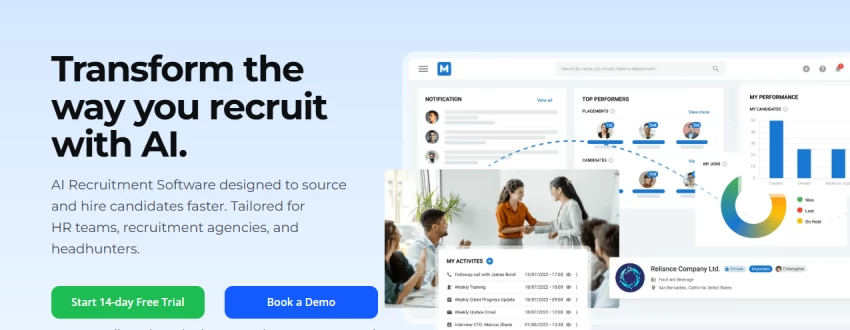
Manatal is usually positioned as affordable recruitment software with AI candidate recommendations, profile enrichment from public sources, a Kanban-style pipeline, and recruitment CRM features. For smaller HR teams and recruitment agencies that want AI-assisted matching without enterprise cost, it is an easy entry point.
The feature set covers resume parsing, candidate scoring, social and web enrichment, job posting, collaboration, and reporting. On G2, Capterra, GetApp, Software Advice, and TrustRadius, the themes to verify are affordability at the plan needed, interface quality, candidate-matching accuracy, support, and any feature limits relative to larger suites.
Review Area
Manatal Notes
Best For
Small HR teams and recruitment agencies
Strength
Affordable AI-assisted recruiting workflow
Weakness
Less enterprise depth than Eightfold or Greenhouse
Screening Fit
Good for quick candidate matching
Bias Controls
Verify transparency and compliance features
Integration
Good for common SMB recruiting needs
Verdict
Strong value choice for budget-conscious teams
Eightfold AI
Eightfold AI is built for enterprises that need more than resume screening. Its focus is talent intelligence: skills-based matching, internal mobility, talent rediscovery, workforce planning, and candidate-to-role fit at scale. For organizations moving toward skills-based hiring, that scope is the point.
The power comes with complexity. Implementation and data work are non-trivial, and an HR team should verify the fairness and explainability controls in detail rather than assuming them. As part of due diligence, note that a class action filed in early 2026 raised Fair Credit Reporting Act allegations about undisclosed applicant scoring on one enterprise hiring platform; the matter is contested. Whatever its outcome, it is a useful reminder to confirm exactly what any enterprise tool scores, how it discloses that scoring to candidates, and what records it retains.
Review Area
Eightfold AI Notes
Best For
Enterprise talent intelligence
Strength
Skills-based matching and internal mobility
Weakness
Enterprise complexity and implementation effort
Screening Fit
Strong for large talent pools
Bias Controls
Verify fairness and explainability controls
Integration
Enterprise HR ecosystem fit
Verdict
Best for large companies moving toward skills-based hiring
A caution on scale. Eightfold AI can be too heavy for small HR teams that only need resume parsing or basic shortlisting. The platform earns its keep at enterprise scale, not at five roles a month.
SeekOut
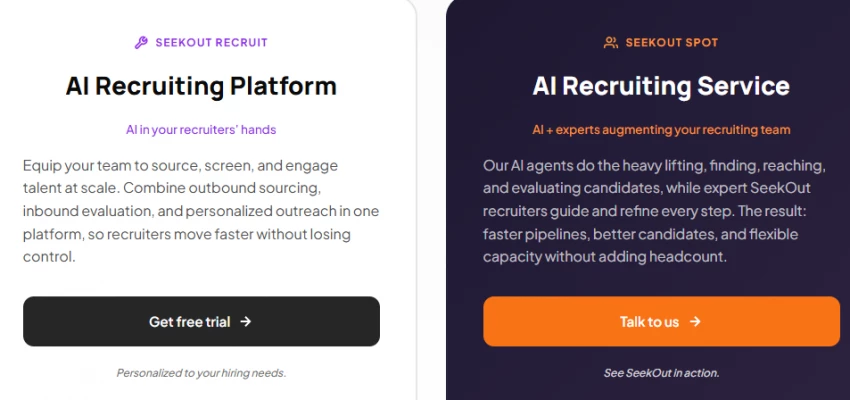
SeekOut describes itself as an agentic AI recruiting platform that sources from a very large profile pool (the vendor cites more than a billion profiles, a figure worth confirming), screens applicants, engages candidates, rediscovers past applicants inside an ATS, and enriches profiles. Its center of gravity is sourcing, which is where it differs from a pure inbound screener.
For teams that want to find and qualify candidates before they apply, the strength is reach and rediscovery: past applicants who were a near miss can resurface for new roles. The fairness and diversity controls should be verified against current documentation, and the platform is most valuable alongside an ATS rather than as a replacement for one.
Review Area
SeekOut Notes
Best For
Sourcing teams and talent rediscovery
Strength
Large profile database and sourcing workflow
Weakness
More sourcing-led than pure ATS screening
Screening Fit
Strong for outbound and past-candidate matching
Bias Controls
Verify diversity and fairness controls
Integration
Useful with ATS and CRM workflows
Verdict
Best when screening starts before candidates apply
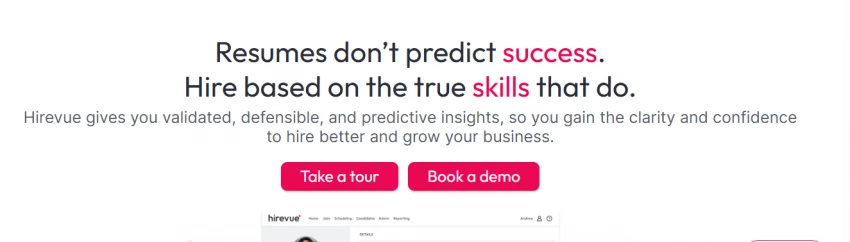
HireVue is for teams that want resume screening connected to structured assessments, skills tests, video interviewing, and interview intelligence. It is not only a resume filter. It is most useful when a company wants a standardized assessment process that produces evidence beyond keywords.
Because assessment-led hiring can affect candidates deeply, this is the category where fairness and candidate experience need the most scrutiny. A team should examine accessibility, independent bias audits, data retention, explainability, and candidate communication before adopting it, and confirm how the assessment evidence is used in the final decision.
Review Area
HireVue Notes
Best For
Assessment-led hiring and high-volume evaluation
Strength
Structured screening beyond resumes
Weakness
Candidate experience and fairness need careful review
Screening Fit
Strong for standardized assessment workflows
Bias Controls
Must be evaluated seriously
Integration
Works with recruiting workflows and ATS systems
Verdict
Best when HR wants skills evidence, not only resume keywords
A caution on candidate impact. Assessment-led tools touch candidates directly, so accessibility, bias auditing, data retention, explainability, and clear candidate communication are not optional checks. Confirm them before rollout.
Fetcher
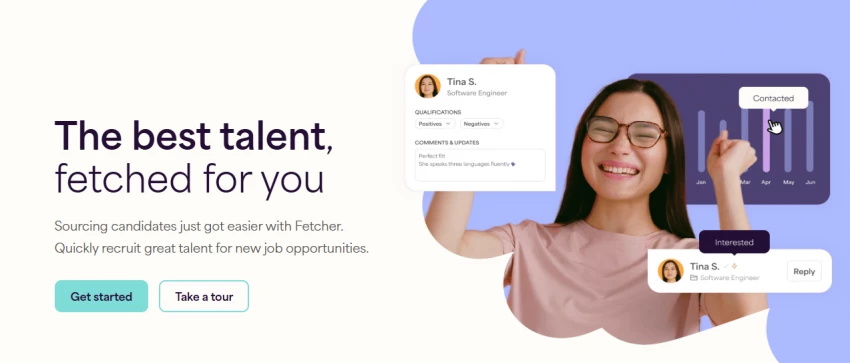
Fetcher helps HR teams and recruiters who need AI-assisted sourcing, candidate matching, outbound outreach, and pipeline building. It is not a full applicant tracking system, but it is effective at filling the top of the funnel with relevant, qualified candidates.
The workflow covers sourcing, candidate relevance scoring, email outreach, pipeline building, and recruiter review, and it connects to ATS and CRM systems. As with any sourcing tool, the filtering and sourcing criteria should be verified so the funnel does not quietly narrow on the wrong signals.
Review Area
Fetcher Notes
Best For
Outbound recruiting and sourcing
Strength
Helps find and match candidates before they apply
Weakness
Not a complete ATS replacement
Screening Fit
Better for sourcing than inbound resume review
Bias Controls
Verify filtering and sourcing criteria
Integration
Useful with ATS and CRM workflows
Verdict
Best for teams that need more qualified candidates, not only faster screening
Which AI Resume Screening Tool Fits Which HR Team
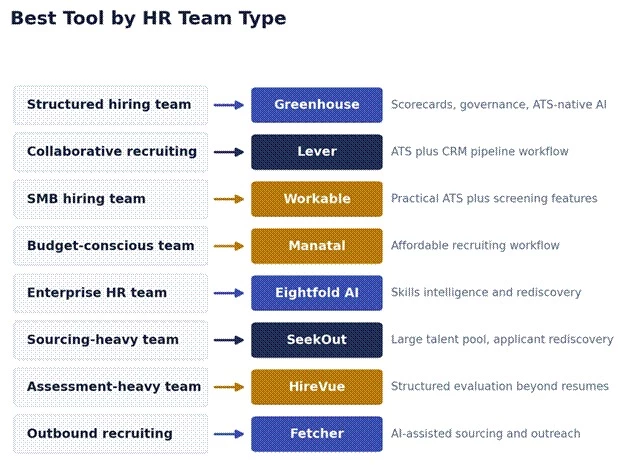
Mapping team type to tool is the fastest way to narrow the field. The pairings below summarize the detailed profiles above.
HR Team Type
Best Tool
Reason
Structured hiring team
Greenhouse
Scorecards, governance, ATS-native AI
Collaborative recruiting team
Lever
ATS plus CRM pipeline workflow
SMB hiring team
Workable
Practical ATS plus screening features
Budget-conscious team
Manatal
Affordable recruiting workflow
Enterprise HR team
Eightfold AI
Skills intelligence and talent rediscovery
Sourcing-heavy team
SeekOut
Large talent pool and applicant rediscovery
Assessment-heavy team
HireVue
Structured evaluation beyond resumes
Outbound recruiting team
Fetcher
AI-assisted sourcing and outreach
Figure. Best-fit tool by HR team type.
Feature Comparison Across AI Resume Screening Tools
This grid compares capabilities side by side. Cells marked Verify or Must verify indicate areas that depend on plan, configuration, or current documentation and should be confirmed before purchase. Human review controls are listed as Required across every tool because no platform here should make the final hiring decision on its own.
Feature
Greenhouse
Lever
Workable
Manatal
Eightfold AI
SeekOut
HireVue
Fetcher
Resume parsing
Yes
Yes
Yes
Yes
Yes
Profile-based
Assessment-linked
Sourcing-led
AI matching
Yes
Verify
Yes
Yes
Yes
Yes
Assessment-based
Yes
ATS
Yes
Yes
Yes
Yes
Integrates
Integrates
Integrates
Integrates
Recruiting CRM
Moderate
Strong
Moderate
Strong
Enterprise
Sourcing-led
Limited
Outreach-led
Skills matching
Good
Verify
Good
Moderate
Strong
Strong
Via assessments
Moderate
Bias / fairness tools
Verify
Verify
Verify
Verify
Verify
Verify
Must verify
Verify
Human review controls
Required
Required
Required
Required
Required
Required
Required
Required
High-volume hiring
Strong
Strong
Good
Moderate
Strong
Strong
Strong
Moderate
Sourcing
Moderate
Good
Good
Moderate
Strong
Strong
Via assessments
Strong
Best fit
Structured hiring
Collaboration
SMB ATS
Affordable
Enterprise skills
Sourcing
Assessments
Outbound
A Better Way to Pilot AI Resume Screening Software
A sales demonstration is not enough to validate an AI hiring product. The vendor controls the job, candidates and outcome shown during the presentation.
A more reliable pilot uses the same controlled dataset across every shortlisted platform.
Pilot stage
Recommended action
Job definition
Create one structured role profile with clearly separated essential and preferred criteria
Candidate dataset
Use synthetic resumes representing obvious matches, near matches, career changers and unqualified applicants
Human baseline
Ask two experienced reviewers to evaluate each resume independently before seeing AI results
AI screening
Run the same resumes and criteria through every product being considered
Error review
Identify qualified candidates ranked too low and unqualified candidates ranked too high
Explanation review
Check whether recruiters can understand and challenge every recommendation
Workflow review
Measure setup time, review time, integration steps and manual data movement
Governance review
Document data retention, audit evidence, permissions, candidate notices and human approval points
The most important metric is not how many resumes the tool processes per hour. It is the false-negative review rate: how often the system places a genuinely qualified candidate below the point where a recruiter would normally stop reviewing.
Teams should also monitor recruiter override rates. Frequent overrides may indicate poor criteria, inadequate training or a product that does not fit the roles being filled.
Putting It Together: A Decision Flow
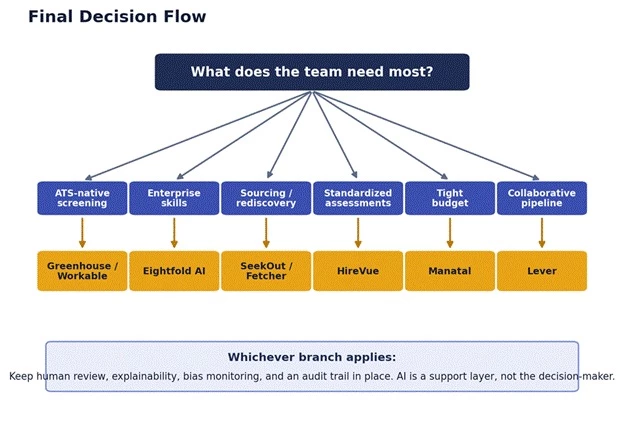
The flow below collapses the whole comparison into a single decision. Start from the team's strongest need, then confirm the governance basics no matter which branch the answer lands on.
Figure. Choosing a tool by primary hiring need.
Final Verdict
There is no single best AI resume screening tool for every HR team. Greenhouse is strongest for structured hiring teams that want ATS-native workflows and governance. Lever fits collaborative recruiting teams that need CRM-style pipelines. Workable is practical for SMBs that want an ATS and AI screening together. Manatal is a strong affordable choice for smaller teams and agencies. Eightfold AI suits enterprises moving toward skills-based matching and internal mobility. SeekOut is strongest for sourcing and applicant rediscovery. HireVue is useful when screening depends on structured assessments, and Fetcher helps outbound teams build a better candidate pipeline.
The best tool is the one that improves recruiter efficiency without hiding the decision-making process. An HR team should prioritize explainability, human review, bias monitoring, privacy, and auditability over flashy AI claims. Screening AI is a support layer that helps recruiters organize and evaluate candidates more consistently. It is not a replacement for recruiter judgment, and the teams that treat it that way get the most value with the least risk.