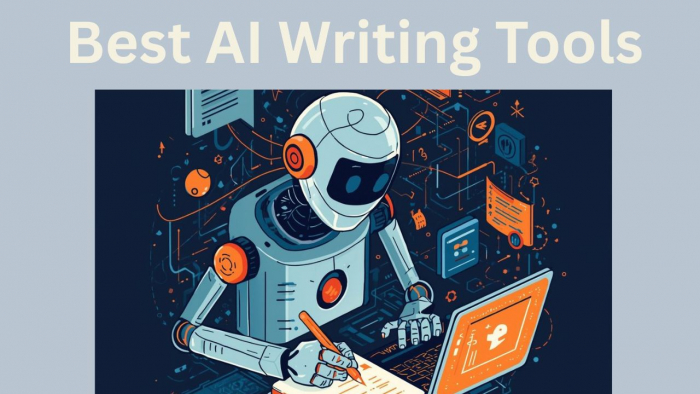
A few years ago, most content writers did almost everything manually. Research meant opening ten browser tabs, comparing competitor pages one by one, collecting notes in a document, and then spending hours turning that raw material into a first draft. That workflow has changed. Good writers still do the thinking, fact-checking, positioning, and final polishing themselves, but many now use AI to speed up research, generate structure, overcome blank-page paralysis, and tighten weak drafts. That shift is also reflected in how current tool roundups frame the category: both Kontent.ai’s comparison and Clearscope’s review roundup argue that AI is most useful when it supports human judgment rather than replacing it.
When I look at this category from a practical writer’s perspective, the real question is not whether AI can write. It obviously can. The better question is which tools actually help writers produce stronger content with less wasted time. Some tools are better for brand-heavy marketing teams, some are better for SEO workflows, some are better for rewriting and cleanup, and some are simply affordable drafting assistants for freelancers and solo creators. The best choice depends less on hype and more on your actual writing process.
I do not think a useful AI writing tool should be judged only by how fast it generates text. In real writing work, speed matters, but control matters more. A strong tool should help with research, structure, tone consistency, or optimization without making the output feel generic. It should also fit the economics of the person using it. A solo writer paying out of pocket has very different needs from a content team managing multiple brands and approval layers. That is why pricing, brand controls, workflow depth, and editing quality matter just as much as raw generation.
Based on the tools that come up repeatedly across the sources you shared, the names worth discussing in depth are Jasper, Copy.ai, QuillBot AI Writer, Rytr, andWritesonic. They are not identical products, which is exactly why comparing them properly matters. Some are true writing assistants, some are workflow platforms, and one is really an SEO optimization system that now includes AI drafting.
Jasper
Use Case:
Best suited for marketing teams and businesses that need consistent brand-focused content.
Strength:
Limitation:
Higher cost compared to many other AI writing tools
Copy.ai
Use Case:
Useful for teams that want to automate repetitive content workflows such as marketing copy, product descriptions, and email campaigns.
Strength:
Limitation:
Long-form articles often require additional editing and fact-checking
QuillBot
Use Case:
Ideal for writers, students, and editors who need help rewriting or improving existing drafts.
Strength:
Limitation:
Not designed to generate full long-form articles from scratch
Rytr
Use Case:
A practical option for freelancers, bloggers, and small businesses that need quick drafts at a low cost.
Strength:
Limitation:
Limited advanced features compared with larger AI platforms
Writesonic
Use Case:
Suitable for bloggers and SEO writers who need help generating blog outlines and long-form content drafts.
Strength:
Limitation:
Generated content still requires editing and verification before publishing
Now that we’ve seen a quick overview, let’s take a closer look at each of these AI writing tools to understand their features, pricing, strengths, and limitations in more detail.
It is still one of the strongest options for serious brand-led writing teams

When I review Jasper, what stands out immediately is that it no longer presents itself as just a prompt box for generating paragraphs. The platform is clearly built around marketing operations. Its current product stack includes Content Pipelines, Agents, Canvas, Brand Voice, Style Guide, Knowledge assets, and governance features that help teams produce on-brand content at scale. On the Pro plan, Jasper includes one seat, Canvas, essential apps for core marketing workflows, two Brand Voices, five knowledge assets, and three audience profiles. Its official pricing page shows the Pro plan at $69 per seat per month on monthly billing or $59 per seat per month when billed yearly, while Business pricing is custom. Jasper also offers a 7-day free trial on Pro.
From a writer’s point of view, Jasper makes the most sense when consistency matters more than raw experimentation. If you are writing for one website and one voice, it can be more platform than you need. But if you are managing multiple content formats, multiple campaigns, or client work where tone and formatting have to stay consistent, Jasper is one of the more structured options in the market. A recent G2 review specifically praised its speed, flexible templates, multilingual support, and tone customization, and also noted that its SEO integrations help teams create optimized copy faster.
Its limitations are also easy to recognize. Jasper is not cheap for individual writers, and reviewers still report a familiar AI problem: the content can become generic or repetitive, especially on technical or niche topics that require subject knowledge rather than polished marketing language. That means Jasper is strongest as a first-draft and brand-consistency engine, but it still needs a human writer to add specificity, evidence, and original perspective.
It is more workflow-oriented than many writers expect

A lot of writers still think of Copy.ai as a short-form copy generator, but the current product has moved much further toward workflow automation. Its platform emphasizes Workflows, Copy Agents, Brand Voice, Tables, Actions, Infobase, and content-generation use cases across marketing, sales, and operations. The official pricing page currently lists a Chat plan at $29 per month billed monthly or $24 per month billed annually, while larger Growth, Expansion, and Scale tiers start at $1,000, $2,000, and $3,000 per month respectively for teams using workflow credits and broader automation. The platform also states that it is trusted by 17 million users.
For writers, this makes Copy.ai a slightly different proposition from Jasper. I would not treat it primarily as a “best prose writer” tool. I would treat it as a content operations tool that can also write. That matters because its value shows up most when you want repeatable systems such as blog workflows, repurposing pipelines, FAQ generation, script generation, translation or localization, and structured GTM content production. It is attractive for teams that want research, generation, and workflow steps in one environment instead of jumping between separate tools.
The downside is that long-form quality still seems mixed. Capterra lists Copy.ai at 4.4/5 from 67 reviews, and one 2025 review summarized the experience well: it was fast, beginner-friendly, and useful for blogs, social posts, and emails, but the user still needed heavy fact-checking and editing for long-form work, while also noting occasional awkward or hallucinated output and limited integrations in their use case. That fits the broader pattern I see with Copy.ai. It is useful when you want speed and systems, but you should not expect polished publish-ready articles without oversight.
It is less of a full writing platform and more of a practical editing companion

If I were advising a content writer who already has ideas and drafts but wants help cleaning them up, I would look closely at QuillBot AI Writer. Its AI writer is built around prompt-based drafting, but the broader QuillBot ecosystem is really where the value appears. On the same platform, you also get access to paraphrasing, sentence rewriting, summarization, grammar correction, plagiarism checking, citations, and other editing-related tools. QuillBot’s AI writer page emphasizes idea generation, outlining, and time savings, while also showing broad integration support through Chrome, macOS, Windows, and Word. The page also reports a 4.7/5 extension rating and 5M+ users.
In pricing terms, QuillBot Premium is relatively accessible compared with higher-end content platforms. Its official upgrade page shows $19.95 monthly, $13.31 per month when billed quarterly, and $8.33 per month when billed annually. That makes it much easier to justify for students, freelancers, junior writers, and solo creators who need drafting and rewriting help without paying enterprise-style rates.
What I like about QuillBot is that it solves a real writing problem that many AI tools ignore. Writers often do not need a full article generator; they need a better sentence, a tighter paragraph, a cleaner summary, or an easier way to rewrite clumsy copy without losing meaning. G2 reviews reflect that pattern. Recent user feedback highlights reduced editing time, clearer professional writing, and a workflow that fits naturally into day-to-day writing tasks. The limitation is that QuillBot is not really a deep content strategy platform. It helps you improve and reshape text, but it is not the best choice when you need a full SEO workflow, brand-governed campaign system, or complex long-form planning environment.
It is still one of the most practical low-cost tools for freelancers and beginners

When I look at Rytr, I see one of the clearest value-for-money tools in this category. The platform says it serves 8,000,000+ users, cites a 4.9/5 satisfaction rating from 1000+ reviews, and highlights 40+ use cases, 20+ tones, plagiarism support, a Chrome extension, custom voice features, and multilingual writing. Its current pricing is simple: a Free plan at $0, an Unlimited plan at $7.50 per month, and a Premium plan at $24.16 per month. The Free plan includes 10,000 characters per month, while paid tiers add unlimited generation, personalized tones, plagiarism checks, and support for more brands and languages.
For many freelance writers and small businesses, that pricing structure makes Rytr easy to test and easy to keep. It is particularly useful for drafting routine content such as social captions, CTAs, paragraph expansions, short blog sections, replies, meta titles, and email copy. I would not frame it as the most sophisticated writing engine in the market, but I would absolutely frame it as one of the most approachable.
Its review profile supports that view. G2 shows Rytr at 4.7 out of 5 stars from 819 reviews, and review summaries consistently praise ease of use, diverse tones, and faster writing. The recurring drawback is also predictable: limited free usage and less depth when compared with more advanced platforms. In other words, Rytr is excellent when you want affordability and speed, but it is less compelling when you need heavy editorial controls, deeper research grounding, or enterprise-grade collaboration.

One tool that frequently appears in AI writing tool comparisons is Writesonic, which positions itself as a full content generation platform rather than just a drafting assistant. The platform can generate blog posts, advertising copy, landing pages, and product descriptions, and it includes a step-by-step blog generation workflow where users enter a topic, receive suggested outlines, and then generate a complete draft.
From a workflow perspective, Writesonic focuses heavily on long-form content creation. Its blog wizard walks users through the process of selecting keywords, creating structured outlines, and generating a first draft that can later be refined by the writer. This structure makes it attractive for marketers and bloggers who need to produce content consistently rather than writing occasional articles.
Pricing for Writesonic typically starts around the same range as many professional AI writing tools, with plans commonly starting near $49 per month, depending on features and usage limits.
In practice, Writesonic’s main strength is speed and structure. Writers who struggle with starting a draft often find the guided workflow helpful. However, the generated text still requires editing and fact-checking, particularly for technical or research-heavy topics. Many users treat it as a drafting assistant rather than a final writing solution.
| Use Case / Need | Best Tool | Why It Fits |
| Branded content operations | Jasper | Designed to maintain a consistent brand voice and structured marketing content. |
| Automated content workflows | Copy.ai | Built to generate and automate repeatable content processes. |
| Editing and rewriting drafts | QuillBot | Strong at paraphrasing, grammar fixes, and improving sentence clarity. |
| Budget-friendly writing tool | Rytr | Affordable option for quick drafts and everyday content writing. |
| Blog and long-form content generation | Writesonic | Helps create structured blog posts and long-form articles quickly. |
My honest takeaway is that the best AI tool for content writing is no longer the one that produces the most text. It is the one that removes the right bottleneck in your process. Writers today do not need to hand over the whole craft to AI, and they should not. The strongest workflows still come from human judgment backed by AI assistance for research, ideation, structure, rewrites, or optimization. That is also the common thread running through the broader comparison articles you shared: AI helps most when it speeds up the mechanical parts of writing while leaving strategy, accuracy, and originality in human hands
Be the first to post comment!

Over the past few years, the way I manage sales teams has changed dramatically....
Sakshi Dhingra3 days ago

Helping my cousin prepare for NEET last year gave me an unexpected look into how...
Sakshi Dhingra4 days ago

Artificial intelligence has fundamentally altered how YouTube content is produce...
Sakshi Dhingra1 week ago

In an industry increasingly dominated by single, monolithic AI models like OpenA...
Sakshi Dhingra1 week ago

Instagram Reels have become one of the most powerful organic discovery engines o...
Sakshi Dhingra1 week ago
I don’t judge an AI image generator by “one pretty output.” I judge it by what h...
Sakshi Dhingra1 week ago