
Let’s be honest.
Online learning has come a long way from static video lectures and one-size-fits-all courses. In 2026, learners expect platforms to adapt to their pace, recommend the right material automatically, and remove as much friction as possible from the learning process. Attention spans are shorter, skill cycles are faster, and both students and professionals want learning systems that feel responsive rather than rigid.
This is exactly where AI has started to reshape the landscape.
Modern AI learning tools are no longer just content libraries. They personalize learning paths, generate quizzes and lessons, provide real-time feedback, and surface skill gaps automatically. According to industry analysis, the strongest AI learning platforms today combine automation with adaptive intelligence to improve both engagement and retention. The result is a learning experience that feels less like passive consumption and more like guided progression.
However, one important reality often gets overlooked.
There is no single “best” AI learning platform for everyone. Some tools are built for corporate training teams. Others focus on students who need quick problem solving help. A few are designed for educators who want to generate lesson material faster. The smartest move in 2026 is not chasing the most popular tool. It is choosing the one that fits your learning context.
Below is a grounded breakdown of the most relevant AI tools for online learning and where each one genuinely fits.
Best for collaborative corporate learning
360Learning has positioned itself as a serious contender in the AI-powered corporate training space. Unlike traditional LMS platforms that simply host courses, it emphasizes collaborative learning combined with intelligent automation. This makes it particularly appealing to organizations that want training to stay closely aligned with real business needs rather than becoming a static content library.
One of the platform’s most valuable strengths is its ability to personalize learning journeys based on roles, skill gaps, and performance data. The AI layer continuously recommends relevant training modules, helping employees focus on what actually matters for their role. Over time, this reduces wasted training hours and improves knowledge retention across teams.
Another area where 360Learning stands out is course co-creation. Subject matter experts inside the organization can contribute directly to learning content, which keeps material current and practical. The AI assists by tagging content, suggesting improvements, and helping automate parts of course creation. For companies running large scale enablement programs, this combination of collaboration and automation is particularly powerful.
Where it fits best is inside organizations that treat learning as an ongoing capability rather than a one-time compliance exercise.

Best for flexible self-paced skill building
Udemy continues to dominate the open course marketplace model, and its gradual integration of AI features is making the experience more navigable despite the platform’s massive catalog. For individual learners, the biggest challenge has never been lack of content. It has been deciding what to learn next and which courses are actually worth the time.
The newer AI-driven recommendations help address this by mapping user interests, search behavior, and skill goals to more relevant course suggestions. Instead of endlessly browsing, learners can move more quickly toward material that aligns with their objectives. This is particularly useful for professionals trying to upskill without committing to long structured programs.
Udemy’s core strength remains its breadth. Few platforms offer such a wide range of practical, hands-on topics across business, technology, and creative fields. The trade-off, however, is variability in course quality since content is instructor-generated. Learners still benefit from reviewing ratings and previews before committing.
For independent learners who value flexibility and topic variety, Udemy remains one of the most accessible AI-enhanced learning environments available today.
Best AI tutor for instant academic help
QANDA operates in a completely different segment of online learning. Instead of structured courses, it functions as an on-demand AI tutoring assistant, particularly strong in mathematics and STEM subjects. Its appeal lies in immediacy rather than curriculum depth.
Students can simply photograph a problem using their phone, and the system delivers step-by-step explanations. This dramatically reduces the time spent searching for solutions manually. For learners who get stuck during homework sessions, that instant feedback loop can be extremely valuable.
What makes QANDA especially effective is its focus on guided solutions rather than just final answers. By walking through the reasoning process, the tool supports conceptual understanding instead of surface level completion. This approach aligns well with how many students actually study today, jumping between problems rather than sitting through long lectures.
The platform is most useful in moments when learners need quick clarification rather than full course immersion. In that role, it performs exceptionally well.

Best for microlearning in busy workflows
One of the biggest shifts in professional education is the move toward microlearning, and 5Mins.ai is built specifically around that behavior. Instead of long courses that require dedicated study time, the platform delivers short, focused learning bursts designed to fit into busy schedules.
This format aligns particularly well with workplace training, where employees often need quick skill updates rather than deep academic instruction. The AI helps surface relevant micro-lessons based on role and learning history, allowing users to build knowledge incrementally without disrupting their workflow.
What makes microlearning platforms increasingly attractive in 2026 is retention. Short, targeted sessions are often easier to complete and revisit compared with hour-long modules. For organizations trying to improve training completion rates, this model can deliver meaningful gains.
5Mins.ai is less about comprehensive mastery and more about continuous skill refreshment. In environments where time is limited and agility matters, that focus makes practical sense.
Best AI lesson generator for educators
Teachally addresses a different part of the online learning ecosystem by focusing on teacher productivity rather than learner consumption. Educators often spend significant time preparing lesson plans, assignments, and assessments. Teachally’s AI aims to reduce that preparation burden.
The platform can generate structured lesson plans aligned with educational standards, along with quizzes and classroom materials. This allows teachers to move from concept to ready-to-deliver lesson far more quickly than traditional manual planning. For schools and institutions managing large curricula, the time savings can be substantial.
Another advantage is multilingual support and integration with classroom tools, which helps educators adapt materials for diverse student groups. Importantly, the tool is designed to assist teachers rather than replace instructional judgment. Most educators still review and refine AI-generated content before delivery.
Teachally is particularly valuable in structured academic environments where lesson planning volume is high and time is limited.

Best AI-driven language learning experience
Language learning has always benefited from interactivity, and Xeropan leans heavily into that strength through gamified AI experiences. Rather than presenting vocabulary lists in isolation, the platform uses story-based scenarios and interactive exercises to keep learners engaged over longer periods.
The AI adapts lesson difficulty and pacing based on user performance, helping maintain a balance between challenge and progress. This adaptive loop is important in language learning, where frustration or boredom can quickly derail consistency.
Xeropan is particularly appealing to learners who prefer a more immersive and game-like experience rather than traditional textbook methods. While it may not replace formal language certification programs, it serves extremely well as a daily practice and skill-building companion.
The most important decision in 2026 is not which platform has the most features. It is identifying your actual learning context.
If you are running structured corporate training, platforms like 360Learning usually deliver the most value. Independent learners looking for flexible upskilling often benefit more from marketplaces like Udemy. Students who need immediate homework support may find tools like QANDA far more practical than full courses. Professionals trying to learn in short bursts often gravitate toward microlearning platforms such as 5Mins.ai.
The key is alignment between the tool and the learning workflow.
AI is not just improving online learning. It is quietly redefining how knowledge is delivered, consumed, and reinforced. The shift from static courses to adaptive learning systems is still unfolding, but the direction is clear. Platforms that personalize, automate, and shorten the path to understanding are steadily replacing rigid learning models.
At the same time, the smartest learners and organizations are not adopting AI tools blindly. They are choosing platforms that remove specific friction points, whether that is course discovery, lesson creation, homework help, or continuous upskilling.
Because in 2026, effective learning is no longer about sitting through the longest course.
It is about reaching the right insight in the shortest possible time.
Be the first to post comment!

The NSFW AI companion market is no longer small or experimental. It has become s...
Suraj Malik4 days ago
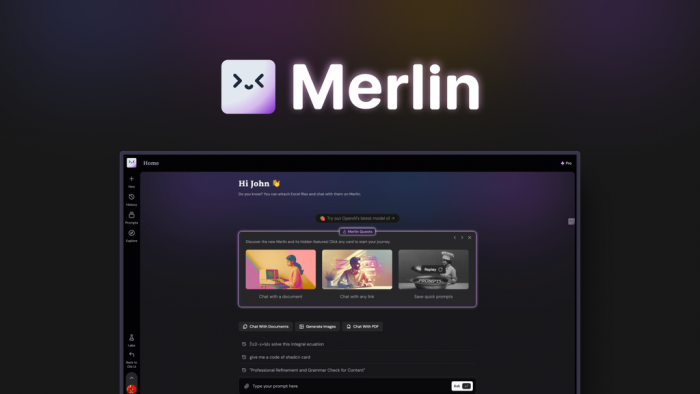
Merlin AI is often installed casually,usually as a browser extension someone wan...
Suraj Malik1 week ago
There are generally two categories of people when it comes to presentations. Tho...
Suraj Malik1 week ago
Ever stared at a photo and thought, “This would be hilarious if I could just swa...
Suraj Malik1 week ago
Autodraft AI entered the AI writing tools market with a clear promise: structure...
Suraj Malik2 weeks ago
In the crowded world of AI developer tools, attention is often captured through...
Suraj Malik3 weeks ago