Starting a YouTube Shorts channel in 2026 is no longer about simply uploading vertical videos. The platform has become one of the most powerful discovery engines on the internet, with YouTube confirming that Shorts now attract more than 2 billion logged-in viewers every month. For creators, this means that short-form content has become the fastest way to reach new audiences.
However, the algorithm behind Shorts distribution is extremely sensitive to viewer behavior. Internal creator analytics shared across multiple YouTube creator communities consistently show that the system heavily prioritizes three signals: viewer retention in the first three seconds, average percentage viewed, and replay rate.
When retention drops early, the video stops appearing in the Shorts feed. When retention stays high, distribution can increase exponentially.
This is why many successful creators now rely on AI tools. Instead of spending hours manually editing clips or writing scripts, AI platforms analyze transcripts, detect engaging moments, generate captions, and even create full videos automatically.
While researching tools and studying creator discussions across platforms like Zapier reviews, software marketplaces, and creator forums, several platforms consistently appear in real production workflows.
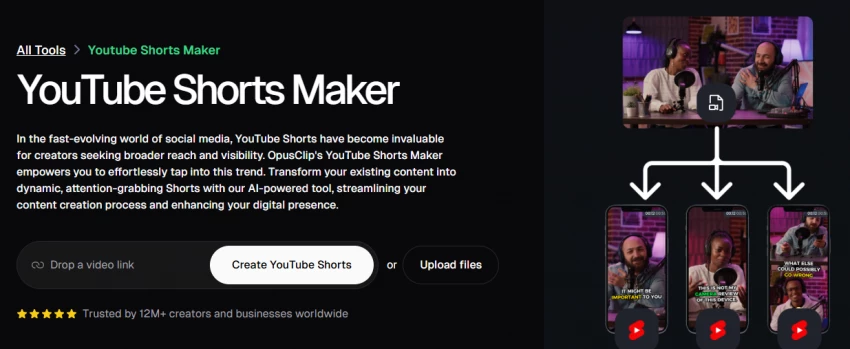
OpusClip has become one of the most widely used AI tools among creators who produce podcasts, webinars, or long YouTube videos. The platform focuses on a specific challenge: identifying short segments inside long recordings that are most likely to perform well as viral clips.
The tool uses machine learning models trained on thousands of viral videos to analyze transcripts, detect emotional spikes, and evaluate pacing. These signals are used to assign what the platform calls a Virality Score, which ranks clips based on predicted engagement potential.
When a creator uploads a long video, the system scans the entire recording and automatically extracts multiple short clips. It also performs several automated editing steps including vertical reframing, caption generation, silence removal, and pacing adjustments.
In practice, this means that a one-hour podcast can produce 10 to 20 Shorts automatically, reducing editing time dramatically.
User feedback across software review platforms reflects strong adoption. OpusClip maintains average ratings close to 4.6 out of 5 across review platforms, with many creators highlighting how it transforms long content into multiple social videos quickly.
However, experienced creators often mention that AI suggestions still require human judgment. Some clips generated by the system may feel slightly out of context or incomplete, which means creators typically review results before publishing.
| Category | Score |
| AI clip detection accuracy | 9 / 10 |
| Editing automation | 8.5 / 10 |
| Ease of use | 9 / 10 |
| Overall creator value | 8.8 / 10 |
OpusClip works best for creators who already produce long content, but many new creators start without any existing footage. That situation introduces a different challenge entirely: generating video content from scratch.
To solve that problem, another category of AI tools has emerged.
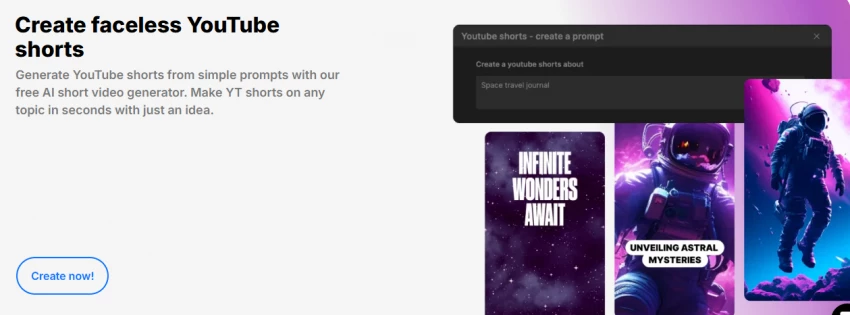
While OpusClip specializes in clipping existing videos, InVideo AI focuses on creating videos from simple text prompts.
Instead of recording footage, users describe a topic, and the system automatically generates a full video. The platform writes a script, selects stock footage, generates voice narration, adds captions, and assembles everything into a vertical format optimized for Shorts.
This type of automation has become extremely popular among faceless YouTube channels.
According to company data and third-party reports, the InVideo platform now serves more than 25 million users across over 190 countries, demonstrating how rapidly AI video generation has expanded in the creator economy.
For Shorts creators, the biggest advantage is experimentation speed. A creator can test multiple ideas quickly without filming or editing manually.
Review platforms frequently highlight the tool’s accessibility. Many beginners report that it allows them to produce videos within minutes even without editing experience.
However, some creators note that template-based visuals can occasionally appear repetitive if prompts are not customized carefully. This means creators often refine scripts and visuals manually to maintain originality.
| Category | Score |
| AI video generation quality | 8.5 / 10 |
| Speed of production | 9 / 10 |
| Customization flexibility | 8 / 10 |
| Overall creator value | 8.6 / 10 |
Once videos are generated, the next critical factor influencing performance is editing quality. Even strong ideas can lose viewers if captions are unclear or pacing feels slow.
This is where tools focused on editing and caption optimization become extremely valuable.
One of the most underestimated aspects of Shorts performance is caption design.
Research across multiple social media platforms shows that a large percentage of mobile users watch videos with sound muted, particularly when browsing in public environments. If viewers cannot understand the message visually, they often swipe away quickly.
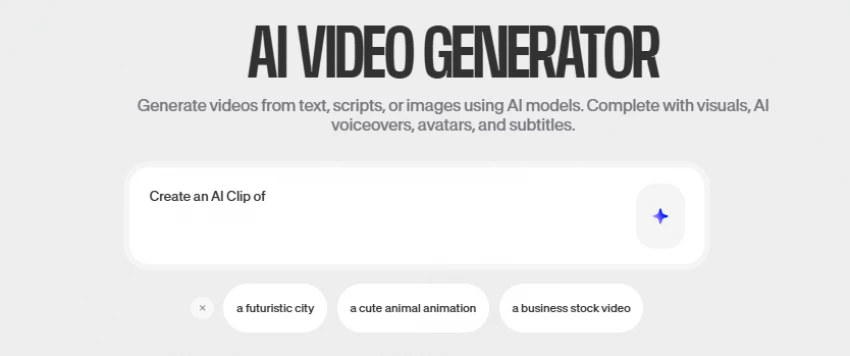
VEED AI addresses this challenge through automated captioning and editing tools designed specifically for social video production.
The platform automatically transcribes speech and converts it into animated captions that appear dynamically throughout the video. These captions can be customized with different fonts, colors, and timing styles to match the pacing of the video.
Beyond captions, VEED includes additional AI editing tools that remove filler words, trim silent gaps, enhance audio clarity, and translate subtitles into multiple languages.
The platform has gained strong popularity among social video creators and marketers. Review platforms frequently report user ratings close to 4.8 or 4.9 out of 5, reflecting strong satisfaction with ease of use and editing speed.
For Shorts creators targeting international audiences, VEED’s automatic subtitle translation can also help expand reach across languages without recording additional voiceovers.
| Category | Score |
| Caption automation | 9 / 10 |
| Editing tools | 8.5 / 10 |
| Ease of use | 9 / 10 |
| Overall creator value | 8.7 / 10 |
While editing tools improve individual videos, another strategy has become increasingly popular among experienced creators: repurposing long discussions into multiple Shorts clips.
That strategy is where tools like Flowjin play a significant role.
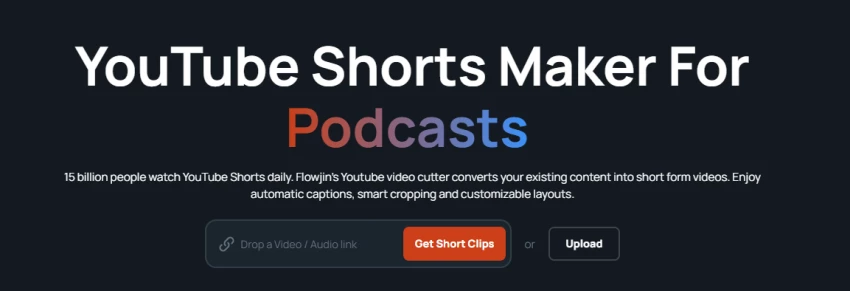
Flowjin is designed specifically for creators who produce podcasts, webinars, or educational discussions.
Instead of editing manually, the platform scans long recordings and identifies segments where speakers deliver concise insights or emotionally engaging statements.
The AI extracts these moments automatically and converts them into vertical video clips suitable for Shorts, TikTok, and other social platforms.
The system also generates subtitles and basic titles for the clips, allowing creators to publish content quickly.
For podcast creators, this workflow can multiply content output dramatically. A single one-hour discussion might produce dozens of short clips, each highlighting a specific insight or idea.
This approach has become especially popular among educational creators, business podcasters, and interview channels.
| Category | Score |
| Clip detection | 8.5 / 10 |
| Subtitle automation | 8 / 10 |
| Creator productivity impact | 9 / 10 |
| Overall creator value | 8.4 / 10 |
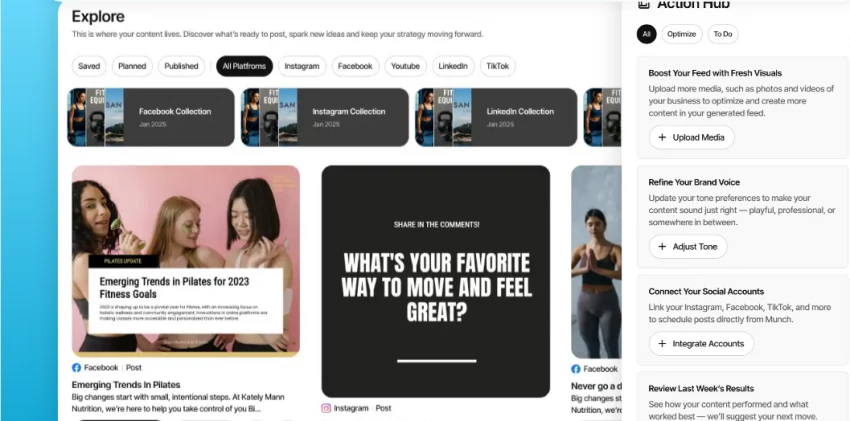
While many AI tools can trim videos or generate captions, Munch AI approaches short-form content creation from a different perspective. The platform is built around the idea that viral clips can be predicted through contextual analysis of speech, sentiment, and trending topics.
Instead of simply cutting videos into smaller segments, Munch analyzes long recordings using natural language processing models that evaluate the meaning of the spoken content. The system then compares that context with current social media trends and engagement patterns to identify segments that are most likely to perform well on short-form platforms such as YouTube Shorts, TikTok, and Instagram Reels.
In practice, creators upload a long video such as a podcast, webinar, tutorial, or interview. The AI scans the transcript and identifies short segments that contain strong narrative hooks, concise explanations, or emotionally engaging statements. These clips are then automatically converted into vertical videos with subtitles and optimized framing.
One feature that distinguishes Munch from many editing tools is its trend-aware analysis engine. The system evaluates the semantic meaning of the video against trending topics across social platforms, helping creators discover clips that align with what audiences are currently discussing.
This can be particularly valuable for creators publishing educational or commentary content, where a single long recording may contain multiple insights relevant to trending discussions.
User feedback across creator communities often highlights the platform’s ability to reduce editing time significantly. Instead of manually reviewing a one-hour video, creators can rely on the AI to surface several potential Shorts candidates within minutes.
However, as with most automated clipping tools, human review remains important. AI can identify promising segments, but creators still refine the final edit to ensure pacing and context feel natural.
| Category | Score |
| AI clip discovery | 9 / 10 |
| Trend analysis | 8.5 / 10 |
| Editing automation | 8 / 10 |
| Overall creator value | 8.6 / 10 |
Munch fits naturally into the same workflow as tools like OpusClip and Flowjin, but with a stronger emphasis on trend-aware content discovery. For creators who regularly produce long videos, combining these platforms can dramatically increase the number of Shorts generated from a single recording session.
| Tool | Primary Strength | Best For | Official Website | Rating |
| OpusClip | Viral clip detection | Repurposing long YouTube videos | https://www.opus.pro | 8.8 / 10 |
| InVideo AI | Prompt-based video creation | Faceless Shorts channels | https://invideo.io | 8.6 / 10 |
| VEED AI | Caption and editing automation | Social media editing | https://veed.io | 8.7 / 10 |
| Flowjin | Podcast to Shorts conversion | Educational and interview content | https://flowjin.com | 8.4 / 10 |
| Munch AI | Trend-aware clip discovery | Long-form content repurposing | https://getmunch.com | 8.6 / 10 |
Each platform focuses on a different part of the Shorts production workflow. In many cases, creators combine multiple tools instead of relying on only one.
YouTube Shorts has transformed how creators grow audiences online. The format rewards videos that capture attention instantly and maintain viewer engagement throughout the entire clip.
Artificial intelligence tools now play an essential role in helping creators meet these demands. Platforms such as OpusClip, InVideo AI, VEED AI, and Flowjin each address different parts of the content production process.
For creators launching new channels today, success often comes from combining these tools into a structured workflow rather than relying on a single platform.
When used strategically, AI tools allow creators to experiment faster, refine ideas based on real performance data, and produce high-quality content consistently.
And in a platform environment where retention drives visibility, that ability to iterate quickly may be the most important advantage a creator can have.
What is the best AI tool for YouTube Shorts?
The best AI tool depends on the creator’s workflow. OpusClip is widely used for repurposing long videos, while InVideo AI is popular for generating Shorts from text prompts.
Can AI generate YouTube Shorts automatically?
Yes, several AI platforms can generate Shorts automatically. Tools like InVideo AI can create scripts, visuals, narration, and captions without manual editing.
Do captions improve Shorts performance?
Yes, captions significantly improve viewer retention. Many viewers watch social videos without sound, and captions help them understand the content immediately.
How long should a YouTube Short be?
Most high-performing Shorts are between 20 and 40 seconds long. This length often balances storytelling with strong viewer retention.
Be the first to post comment!

Artificial intelligence has quietly moved from being an optional productivity en...
Sakshi Dhingra1 week ago
Whitney Scott Mathers, today known as Stevie Laine, is one of the most discussed...
Sakshi Dhingra2 months ago

Introduction: Why People Want to Download Instagram StoriesInstagram Stories are...
Parveen Verma3 months ago

TikTok has its own secret language, and no, we’re not just talking about inside...
Sakshi Dhingra4 months ago
Ever captured a great photo and later noticed an annoying distraction—maybe a st...
Sakshi Dhingra5 months ago

What Exactly Is Granny Space? The Fine Print They Don’t Lead WithAt first glance...
Sakshi Dhingra5 months ago