Songtell is useful when a lyric catches your attention and you want a quick explanation without searching through interviews, fan discussions, and annotation pages. Enter a song, open its interpretation, and the platform attempts to summarize the themes, emotions, symbolism, and possible story behind it.
That simplicity is also its main limitation.
A short AI-generated explanation can give you the general direction of a song, but it may struggle with cultural references, double meanings, regional slang, fictional narrators, samples, and details taken from an artist’s personal history. It also tends to focus on the written lyrics rather than the production, tempo, instrumentation, and vocal delivery that shape how a song feels.
For this comparison, I assessed the alternatives according to six practical questions:
Evaluation area
Question considered
Interpretation depth
Does the tool move beyond a basic theme summary?
Source transparency
Can the reader see where factual claims come from?
Lyric reliability
Does the platform provide dependable lyrics or depend on user input?
Cultural context
Can it explain slang, references, samples, and historical background?
Personalization
Can the interpretation be adjusted through follow-up questions?
Music analysis
Does it examine mood, structure, instruments, tempo, or genre?
My main finding was that no single Songtell alternative performs equally well across all six areas. The strongest option depends on whether you want a human explanation, accurate lyrics, a sourced research answer, an interactive interpretation, or an analysis of the music itself.
Fast answer: Genius is the strongest Songtell alternative for cultural context and human-written annotations. Musixmatch is more useful when lyric accuracy, synchronization, or translation matters. SONOTELLER AI is the better choice for examining musical characteristics alongside lyrics. Perplexity works well for collecting interviews and external context with citations, while ChatGPT is the most flexible option for custom and conversational song interpretation.
Comparison Snapshot
A quick view of how Songtell and its main alternatives line up by purpose, type, and tradeoff.
Platform
Best for
Type
Strength
Limitation
Songtell
AI lyric meaning
AI-based
Fast interpretation
Limited depth and context
Genius
Human explanations
Community-based
Cultural meaning
Varies by contributor
Musixmatch
Lyrics and translation
Lyrics database
Accuracy and sync
No deep AI analysis
SONOTELLER AI
Music and lyric analysis
AI music intelligence
Mood and structure analysis
Less narrative explanation
Perplexity AI
Context-based answers
AI search
Research-backed responses
Not music-focused
ChatGPT
Custom explanation
AI assistant
Flexible interpretations
Requires prompting
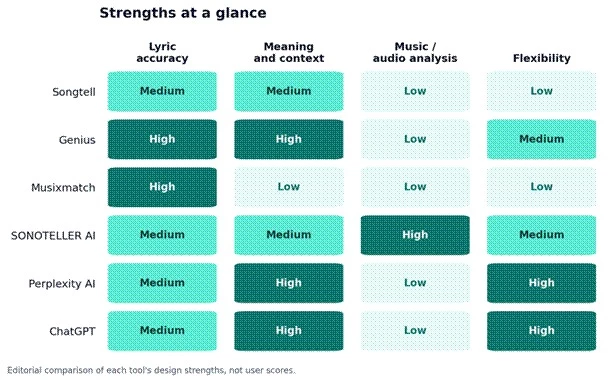
Snapshot comparison of Songtell and five alternatives.
Each tool's design strengths, side by side.
The Alternatives in Depth
Genius
Genius is the closest thing the internet has to a cultural encyclopedia for lyrics. It is community-driven: users and editors annotate songs line by line to explain references, metaphors, samples, and meaning, and artists themselves can confirm their own annotations to mark what a line is really about.
It began with rap and hip-hop and remains strongest there, but it now covers pop, rock, and most other genres, along with interviews and song stories that add real-world context. Because the explanations come from people rather than a model, they carry cultural nuance that AI summaries tend to flatten.
The flip side is consistency: popular songs are richly annotated, while obscure tracks can be thin, and quality depends on who contributed.
Best for: human-backed lyric understanding.
Limitation: inconsistent quality depending on contributors.
My observation: Genius is more useful than Songtell when you need to understand one difficult line. Songtell is often quicker when you only need the broad theme of the entire track.
Musixmatch
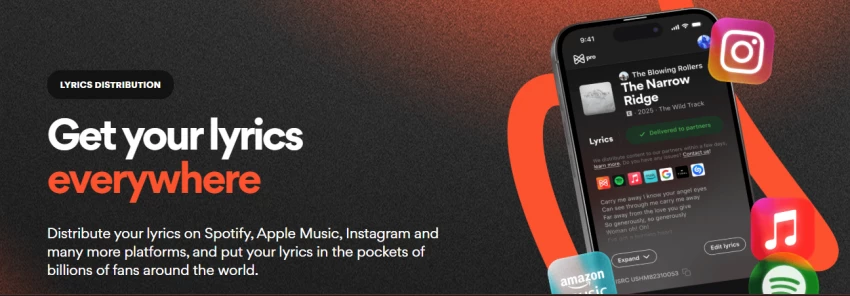
Musixmatch is built around getting the words right. It runs one of the largest lyrics catalogs anywhere and is the technology behind the synced, line-by-line lyrics that scroll in time with the music inside apps like Spotify, Apple Music, and Instagram.
Its translation feature shows lyrics in your language alongside the original, which is genuinely useful for foreign-language songs or for learning a track. Lyrics are licensed and maintained by a global community of curators, with artist verification on many songs.
Where it stops is interpretation: Musixmatch is a lyrics and metadata platform, not a meaning engine, so it will tell you exactly what a song says without explaining what it means.
Best for: accurate lyrics and translations.
Limitation: no deep AI interpretation.
My observation: Musixmatch is not the most direct Songtell replacement, but it is one of the most useful supporting tools. Accurate source lyrics improve every interpretation that follows.
SONOTELLER AI
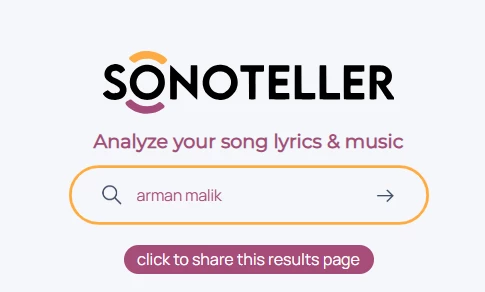
SONOTELLER AI approaches a song from a different angle: the music, not just the words. Point it at a track by searching a title or pasting a link, and it returns an analysis of both the lyrics and the audio, tagging genre, mood, and structure.
That makes it less a storyteller and more a music-intelligence tool, the kind of thing useful for tagging catalogs, building playlists, or understanding how a song is put together rather than what it is emotionally about.
If your question is less about what a song means and more about what is happening inside the track, it fills a gap the lyric-only tools leave open.
Best for: combined audio and lyric analysis.
Limitation: less emotional or narrative storytelling.
My observation: SONOTELLER is the strongest option when your question is “What is happening musically?” rather than only “What do these lyrics mean?”
Perplexity AI
Perplexity AI is an answer engine that summarizes information from across the web and cites its sources as it goes. Asked about a song, it can pull together context from interviews, articles, and lyric sites into a readable explanation, with links you can follow to see where each claim came from.
That sourcing is its real strength for lyric questions: you get a research-backed reading rather than a single unsupported take. It is not a dedicated music tool, though, so the depth depends on what has been written about a song, and it can be uneven on obscure tracks or purely interpretive questions.
Best for: research-backed lyric understanding with sources.
Limitation: not specialized in music analysis.
My observation: Perplexity is better than Songtell for factual questions surrounding a song, but Songtell may provide a cleaner answer when the user only wants a quick emotional summary.
ChatGPT
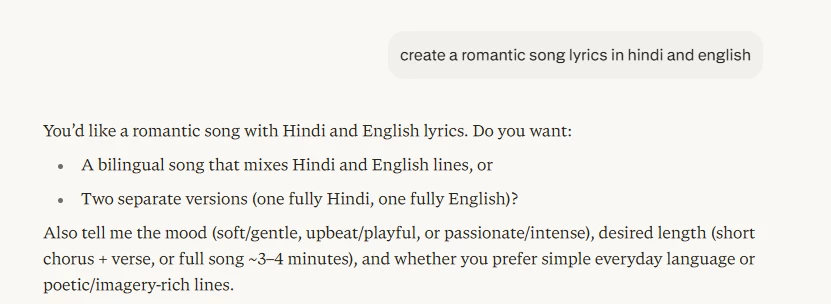
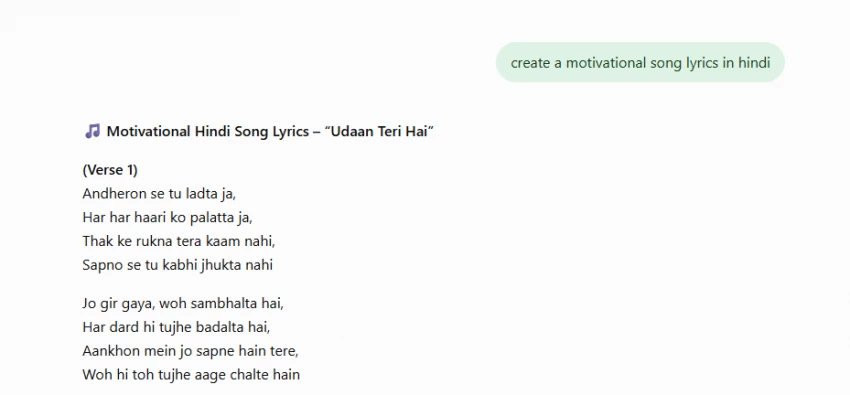
ChatGPT, and conversational AI assistants like it, are the most flexible option here. You can ask for a plain-English summary, a line-by-line breakdown, an emotional reading, or a poetic one, and shape the response with follow-up prompts until it matches what you are looking for.
That adaptability is the appeal: no other tool lets you steer the interpretation so directly. The catch is that the quality tracks the prompt, and a general assistant is not tied to a confirmed lyrics database, so it can occasionally get a line wrong or lean on assumption. Treated as a thoughtful conversation partner rather than a final authority, it is hard to beat for personalized readings.
Best for: personalized, custom song-meaning explanations.
Limitation: depends on the quality of your prompting.
My observation: ChatGPT offers the deepest interactive experience, but it should be treated as an interpretation partner rather than an authoritative lyric database.
Comparison Insight
After comparing the workflows, I would not describe any one platform as the universal best Songtell alternative.
Each tool answers a different version of the song-meaning question.
Question you are trying to answer
Most suitable tool
What is the broad meaning of this song?
Songtell
What does this specific line or reference mean?
Genius
Are these the correct lyrics?
Musixmatch
What does the song sound and feel like musically?
SONOTELLER AI
Has the artist publicly explained the song?
Perplexity
Can I explore several possible interpretations?
ChatGPT
The most reliable workflow is often a combination rather than a single platform.
Start with Musixmatch or another dependable lyric source to confirm the words. Use Genius for line-level annotations and cultural references. Search through Perplexity when factual background or artist interviews matter. Use ChatGPT to compare interpretations or examine patterns across the lyrics. Add SONOTELLER when the audio, mood and production need to be considered.
This layered process is slower than opening one Songtell page, but it reduces the risk of mistaking a polished AI summary for a confirmed explanation.
Choosing the Right Songtell Alternative
Strip it down to what you are trying to do, and the choice gets simple.
User need
Best tool
Simple lyric meaning
Songtell or ChatGPT
Cultural explanation
Genius
Accurate lyrics
Musixmatch
Music and mood analysis
SONOTELLER AI
Research-based insight
Perplexity AI
Flexible interpretation
ChatGPT
A quick map from what you want to the tool that fits.
When Songtell Is Not Enough
Songtell's quick summaries are fine for a casual sense of a song, but a few situations call for something more:
• When you want genuine cultural meaning, references, and subtext, a human-annotated source like Genius will go deeper than an AI summary.
• When a song leans on wordplay, slang, or personal references, human interpretation tends to read it more accurately than pattern-based AI.
• When the music itself matters, including tempo, instruments, mood, and how the production carries the lyrics, a tool like SONOTELLER AI sees what lyric-only tools miss.
• When you want more than one perspective, pulling from a community platform and an AI assistant together gives a fuller picture than any single take.
• When accuracy and context matter more than speed, it is worth trading a fast summary for a sourced, human-reviewed explanation.
The Bottom Line
Songtell is a useful starting point: fast, free to browse, and good for a quick sense of a song. But its summaries are a first step, not the final word. The alternatives here go deeper or more accurate in different directions, and the best one for you comes down to your goal, whether that is speed, accuracy, cultural context, or music intelligence. For most listeners, the real answer is not one tool but a small combination: a quick AI reading to get oriented, then a human or sourced explanation to fill in what the summary left out.